
“What wine is good?” – the sacred question of a series of “in what force, brother?” And my favorite question about the wines.
Because any expert returns to Earth and casts doubt on all his experience, forcing us to summarize all that he understood or even learned.
Symmetrical the answer is simple: a good wine that will give pleasure. Only he is shameless. Love the capacity, but fully useless.
“No need to complicate. It’s a bad or a good wine?”
Why do you want to complicate things? Why, the longer you study wine, the more difficult it is to talk about it briefly?
Compare: “Doctor, I feel sick. Without the complexities? Just give me the happy pill”
There is no difficulty, if the question specifies familiar people, addiction is known, and it is clear what he is looking for. Or obviously tastes the same – you can just recommend their favorite.
Is there no simple answers? Is:
For those who want the “good wine” without delving into the details: find kinomanov, tastes coincide with yours, and drink the same as they are.
Professional same subject, “good wine” for a stranger must disclose skillfully, like an oyster.
And it’s a rare occasion when the answer a question with a question is the correct one. Because the true recommendation will depend on the answer to the following question:
What do you want from wine?
- Inexpensive, and so everyone liked it
- Choose wine as a gift
- Choose the wine to the food
- To try special
- To the surprise of the bottle
- Profitable to invest
- To be in the news
- Cook mulled wine
And for each option will be your answer to the question “which wine is better?”
Good cheap
“So everyone liked” is the most succinct criterion to the question “which wine is better?” at shelves in the supermarket.
If you want to choose an inexpensive wine for a party and try to please everyone, you should choose a neutral, easy-drinking wine that does not require special attention. Landmark wine “glasses” in the wine lists of nice cafes (not restaurants), there is wine in this category. Is your crib in case friendly holidays. Look what they write and looking for the same thing in stores.

Cheap good white (dry):
- Soave (Italy). This is not variety, is the territory of production. On the big label it – “Soave”.
- Pinot Grigio (Italy). It is the variety. On the label look for it – “Pinot grigio”
- Chardonnay (same grade) from Argentina, South Africa, New Zealand, Russia. Aged in oak barrels Chardonnay is softer, “fatter” and seem a little sweeter, aged in steel livelier and sourer.
Information on the ageing of Chardonnay is almost always possible to find at the counter the label on the back side of the bottle.
On the main label just says “Chardonnay”
A very good Chardonnay in steel making, for example, Russian Lefkadia. However, the price tag is depressing. - “Green wine” (Vinho verde), Portugal. Very light white wine with refreshing acidity, slightly sparkling. Only 9-11° ALC. The perfect summer option. Surprisingly rare in the menu of schools, but in the specialized wine retail is not difficult.
On that note: simple dry white wine should not be straw colour, if it is not aged in oak. Unfortunately, in this price segment white wine (especially Russian) are often perechisleny, but because of the opaque bottle is not possible to assess the condition of the wine by its colour. If the bottle is transparent – it is better to choose something lighter, or paler green. And younger.
Good semi-sweet white:
Hungary – the birthplace of Tokai – offers a very pleasant semi-dry and sweet wines from the local varieties Furmint and Harslevelu. When well chilled, these wines retain the unique aromatic and easy to drink.
Through good times be semi-dry Spanish. But it’s easy to miss. So, caught a good bottle – take the box.
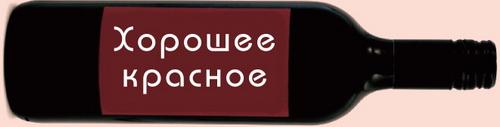
Cheap good red (dry):
- Merlot (almost every country, including Russia). It is the variety. On foreign labels, the words “Merlot”. Wine from this variety is not pungent, with a calm aroma.
- Shiraz (also any… but better than Australian 🙂 It’s grade. The label will indicate either “Shiraz” or “Syrah”. The aroma is bright, the taste full-bodied.
- Malbec (this grade) from Argentina. Find in a store shelf, “Argentina”, and on it a label with the inscription Malbec. Quite soft on the palate, but bright in flavor with berry and slightly spicy bouquet.
- If you want a very tart, powerful wine, your choice of Chile, Cabernet Sauvignon. But be prepared for the fact that to many it will seem rude. The head also ships fairly quickly, if we are talking about inexpensive samples (up to 700r.).
Acceptable semi-sweet red:
Why the dismissive “acceptable”? Because I’m a snob.
“Half-measures” cease to be interesting almost everyone who moves in cognition vennogo the world, and remains a devoted fan of drinking on the 3rd course of the Institute.
But I liked sweet when I was a kid. Therefore, it is not right to judge people who like it. Moreover, such people much more than me. And they are stronger.
Next will be a purely subjective, specific Troika, which emerged during a recent tasting “on duty” from what is on the shelves in Moscow supermarket chains:
- Black Montenegrin (Montenegro)
- Domaines Arnaud (France)
- Robertson Winery (South Africa) is already sweet, not semi-
They are no more than 600R. in retail and among many stand out for the better.
What to pay attention to where it did! The hit of a recent tasting – Chateau Grenadier Klin spill. The entire label is in French and on French manners. And to counter the label – the answer to the mystery of the price tag 350R.
“Comrade, remember!” cheaper 400r./booth. is a risk. Always.
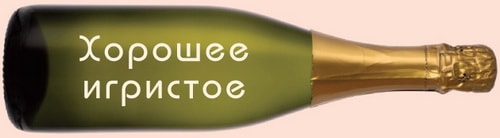
The best national sparkling:
- Prosecco (Prosecco) Well, who doesn’t know him. Mass Italian sparkling wine made from the local glera. Mostly dry wines, at least half-some. Red and rosé Prosecco is not sweet – very rare.
- The Russian alternative to Prosecco: a dry sparkling wine Aristov (on the English), is a very decent budget range from Kuban Wine, Charmat brut Fanagoria ZSU – dry sparkling wine from own grapes grown in the Kuban. (approx. ZSU – Protected Geographical Indication)
- Asti (Asti) Sweet Italian superhit from Muscat. No comment.
- Lambrusco (Lambrusco) is a fragrant sparkling wine from Italy of all degrees of sweetness.
“Fun and delicious” (C) is Also possible. Be careful. Especially if it is not the first. In the evening it sweetly smiles, and in the morning presses on the mind and trying to put it on the street. - Kava (Cava) sparkling wine from Spain. Basically dry. Still affordable, but with character. Gently with him: accustomed to the taste Prosecco, cava may sound bitter (Yes, Spanish wine cava masculine. Because wine).
Is it possible to drink wine in boxes?
Can. But only dry and mostly not Russian (if to speak about the value of wine as a standalone drink, not raw materials for mulled wine).
Of the pleasant discoveries of the last time – dry white “Viorica nutmeg” from the southern Wine Company (group Ochakovo), is a very striking example of the quality table wine from the same varieties (bought in the Magnet in the Krasnodar Region for 360r./2n).
Otherwise, Montenegrin and Italian dry wines in cardboard is a good choice for mindless filling in a noisy party. Of note Italian Trebbiano white because white is easier to miss. Trebbiano – a simple an easy strain to which it is difficult to find fault with and also hard to mess up.
(The question “what kind of wine is bad?” partially disclosed below in item No. 7)
Good wine
Good wine is textbook exemplary wine that is known to most connoisseurs. And the “best wine” is clearly in favor of the taste of who is presented.
- You can give a visit to a wine tasting
Each winefile love for wine goes through various stages: periods of passion to a powerful red replaced by white novels with a fragile, intricate stories with the port and sherry and the inevitable moments of revelation with the natural sweet. Try to find out at what stage the donee resides – and buy him the star in this segment.
What to choose when it is necessary to solve quickly?
If you want to choose wine as a gift, but access to information about the preferences is very limited, then give dry red wine.
If you have the opportunity to find out the attitude to other categories, then you are more likely to please and be original total mass of the giver.
Examples of wines in the category of “already ideologically, but not beyond”
(2000P.-6500r. in retail):
Dry white
- Riesling Trocken (Riesling trocken) Germany – simply the aroma of wine with bright acidity. The Riesling grape. Trocken means “dry”.
- Chablis premiers CRUs (Chablis Premier Cru) France – classic “mineral” Chardonnay.
- Puligny Montrachet (Puligny-Montrachet) France – classic soft Chardonnay, aged in oak.
- Lafoa (“Lafoa”) Italy – bright aroma of Sauvignon with herbaceous notes.
- Sancerre (Sancerre), France – a quiet Sauvignon with notes of “hewn flint”.
- Orange wine – very rich, nekreplenoy white on the “red” technology. For fans of the original.
Dry red
- Saint Emilion Grand CRU classé (Saint Emilion Grand Cru Classe) France – a classic Bordeaux “right Bank”.
- Margaux CRU bourgeois (Margaux Cru Bourgeois) France – a classic Bordeaux, left Bank.
- Chateauneuf-du-Pape (Chateauneuf-du-Pape) France – spicy expression with animal scents.
- Barolo Cannubi (Barolo Cannubi) Italy – classic seasoned Italian wine, preferably not younger than 7 years. Barolo – the name of the wine, or rather appellation, i.e. it is an Italian DOC. Cannubi – the name of the vineyard. Manufacturers can be different.
- Chianti Rufina (Chianti Rufina) Italy – just a nice Chianti:)
- Tannat (this grade) from Uruguay. No kidding. If you find it. “Tannat” on the label. But not cheaper than the 1200r.
- Private line: a new Russian brand “Phantom” (the vineyard in the Rostov region). A very interesting version of the “7030”, which is 70% Russian autochthonous krasnostop and 30% Cabernet Sauvignon. Bright, well-coordinated, really interesting wine. Of the risks – a high price in the absence of a proven ability to longevity. But the opposite until proven …
Sparkling
- Champagne Champagne, France!
- Franciacorta (Franciacorta) Italy.
Sweet white
- Sauternes (Sauternes), France.
- Ice wine (Eiswein), Austria – the so-called “ice wine”.
- VIN Santo (Vin Santo) In Italy.
- Recioto di Soave (Italy).
- Trockenbeerenauslese (Trockenbeerenauslese) Germany – if your birthday boy will be able immediately to read it, then You’ve come to the point: this wine knowledgeable people refer to him with awe.
Sweet red
- Recioto della Valpolicella (Recioto) Italy.
Fortified dry
- Sherry (Jeres, Sherry) of course, Spanish.
- Madeira (Madeira) of course, Portuguese – in my opinion, the best choice for fortified, from the point of view of a present to 5000r.
Fortified sweet
- Sweet sherry Pedro Ximenez (Pedro Ximenez) – the legendary sherry of English novels.
- Port (e.g. brands such as Quinta do Noval, Taylor’s).
- Marsala (Marsala) Italy (white).
In this collection there is no special system examples, cheat sheet in case the fire. C accents that you quickly realized in the wine boutique)
Kavist competent (consultant in the boutique) will offer a line of the desired category based on the amount to buy, it adequate the Council is impossible.
So feel free to read the budget and ask consultants. Emphasize that asking makes sense consultants, wine boutiques, and wine is not the guards of the divisions of Department stores.
The wine to the food
Wine meets food three facets: flavor, aroma, alcohol.
The alcohol is what makes wine as an ingredient. More on that below. Otherwise, you can compare the wine with the sauce – and you will understand that it is not so difficult. After all, the basic tastes are only 4, and we have a wealth of experience to their combination.
Simple parallel: black tea + lemon + sugar = combination of tart, sweet and sour. Who doesn’t love lemon, some won’t put sugar, the point is that we are able to intuitively choose flavors that complement each other and guess what it will be tasty and what is not.
Example: Sour+sweet – YES,
Bitter+sweet – YES.
Sour+bitter – NO ,
Bitter+bitter – Hardly*
* it is possible to take a combination of sour wine and sour food, bitter wine and bitter food, but in these cases the wine should be less sourbitter in taste than an appetizer. But in the case of sweet-sweet – on the contrary: with the ice cream well sugary wine (classic – a Pedro Ximenez sherry with vanilla ice cream). Here are the tricks:)
Of course, it is easier to pick up the food after a personal acquaintance with the wine, not the description. But in the descriptions of the wines, as a rule, are the main focus of their taste.
Some common examples:
- Wines that have a bitter taste: dry white wine from varieties of Gewurztraminer, torrontes, Verdejo white dry wine of southern Italy and Spain.
- Wines with pronounced acidity: dry German Rieslings, champagne, young Sauvignon.
- Salty wines: dry sherries, some Greek white wine.
- Sweet: Sauternes, Recioto, ice wine, port wine, sweet sherry.
Here it is possible not to complicate. The wine has a taste, the rest is taste, and these tastes should be combined the way we like. “Good wine” to eating something that makes you good.
In the example taken tea as a parallel to the “fifth taste” of red wines, astringency (i.e., “astringent taste”, called in wine “tannins”).
Picking up the combination of wine – use Parallels with unheated food:
If this dish for the tart wine?
– imagine it with the cooled strong black tea.
If it is acid to blame?
– what happens if you drop in this dish is the lemon?
If this is to bitter wine?
– what happens if you jam it the olive?
Etc.
Wine and food should not argue about taste. They should complement each other, like everything else on the plate.
The proportionality “weight category” of wine and food is more important than the rules of “white – fish” because they are arising from.
Weight class – is the force with which the dishwine attack our receptors. If you took a SIP, and you immediately impressions mouth full – you in the glass of bright wine. The dish should select comparable, at least in the power of perception (unless, of course, we are talking about gastronomy, not the appetizer tasting, which aims to slow down the intoxication, without distracting from the wine).
Wine and food should not argue who is steeper.
It’s about the intensity of flavor and aroma, regardless of their profile. If the advantages of one completely stifle the dignity of another – a friend to them individually.
Significant parameters that determine the intensity of the taste of wine:
– tannins (=bitterness)
fortress
Pay attention to these options in the descriptions and during the tastings.
Wine with a strength above 13,5%, I tend to think “a wine with a high proof” (for whites from 13%).
Red wines in General are perceived brighter whites, and meat of animals, as a rule, brighter fish, that’s where the popular rule is “white – white”. Hence the exception: light red wine (not oaky and not too alcoholic) may accompany the fish. But if the fish is distinctive (for example, aromatic flounder) with some red it will be more interesting than the other white.
In General, aromas are not so simple. But you know better than anyone what flavors you like and I’ll name a few nice combinations. If the wine has a rich aroma, it is possible to focus only on taste. If you have close your eyes and imagine that you want to this bouquet.
For lovers of short cuts:
A quick way to find a meal under wine – see typical combinations in the area where it came from.
Another thing is that at hand may not be ham under Spanish Tempranillo or stew of hare under Chianti Rufina, but the search direction will be clear. (see review of the food under Italian wine)
Amendments for alcohol
Ethanol is a universal catalyst of sensations. In the broadest sense, including gastronomy.
Hence the rule:
Not to wash down food with wine, until dozhevyvaete if you are not sure combined.
This is one of the most simple advice I can give. If mouthful to pour a perfectly matched wine, the alcohol will come out and pull with all the disadvantages of the combination. Take a breath between the parcels in the mouth portions. If the balance is close to perfect, this rule can be neglected. In other cases, you will be surprised how much better compatibility;)

Some more useful NOT: