Bordeaux – the most famous of French wine regions, and its impact on the global wine industry cannot be overstated. Bordeaux wine has been exported already in the early 14th century. No other region can match this French icon wine in commercial success and influence.
Wine from Bordeaux was so popular for centuries that grape varieties of Bordeaux origin – led by Merlot and Cabernet Sauvignon – were planted in many places, and the so-called “Bordeaux blend” has become one of the standards for winemakers.
But leadership is seldom stable. There are times when there are new competitors and there are internal contradictions. Once the GM was out of reach, but with a European, then Japanese, and now Korean manufacturers have made GM a dangerous competition even in its home market.
Beginners can improve and introduce new products that are more attractive or simply more understandable for consumers. It happened to a more soft and simple wines of the New world, a straight line expressing the character of the grape varieties, not terroir of one of the 60 appellations of Bordeaux. Changes in consumer tastes can also lick the seeming inviolability of the leaders.
For Bordeaux this tectonic shift has been a serious decline in wine consumption in France over the last decade. Critics point to the tendency of bogosav to withdraw into oneself and not to hear criticism from the outside: complacency and rigidity become barriers to necessary changes.
Luckily, Bordeaux has another side – a dynamic, energetic and relatively open to the new. This region is not alien to change as most people think outside. But even if you have the desire, the ability to adapt to changing market realities requires overcoming structural barriers.
As we all know, Bordeaux is not in control of global market forces and their destructive impact on the region. Many small producers of the most prestigious appellations will have to adapt or perish. This process has already begun.
Many do not even realize the scale of wine production in Bordeaux.
Imagine: the local average annual production of 5.5 million hectoliters (not counting the extremely poor harvest in 2013) is nearly half of the volume produced by, say, the whole Chile or Australia.
And yet, this huge region with incredible history is less than 1% of the U.S. market. Moreover, its share is declining, consumption in the U.S. is growing, and delivery from Bordeaux remain the same. Why is this happening? And what the future of Bordeaux, especially in the American market?
The changing landscape
Bordeaux under the onslaught of serious change. Sales in America grew in the last two decades, despite the fact that this market became the largest in the world. And it’s not just Bordeaux. French wine in General was under pressure, and Bordeaux, as the leading trading region, accounted for a respectable share of negativity. The global wine market have made a breakthrough, but France won’t be able to keep up with him. Over the past 10 years French exports did not show any significant dynamics.
Now you can see recovery and some growth, but it is connected rather with changes in the structure of exports and rising prices. The lack of growth in physical terms in this case would not be so bad, if not declining domestic demand. Wine consumption per capita (persons over 15 years) in France has declined from 160 liters per person in 1965 to less than 57 liters in 2010, according to France Agrimer (the structure of the Ministry of agriculture).
The rate of regular consumption of wine has fallen from 51% in 1980 to 17% in 2010, while the proportion not drinking at all has doubled from 19% to 38%.
Trends on the local market was exacerbated by the inaction of France in the global, where competitors have taken the lion’s share of the growing pie. French wine exports hovered around 150 million boxes for the period from 1998 to 2012 (according to the Fédération des Exportateurs de Vins et Spiritueux). Think about it: global wine sales during this period has doubled – from 50 to 100 million hectoliters (Office International de la Vigne et du Vin).
Inaction means someone else takes the crop. If we go back to the period 1980-2000, the share of France in the world wine market averaged a quarter. Over the next 12 years it dropped to 14%.
Indicators other traditional producers of old Europe, such as Italy, Spain, Germany and Portugal, remained fairly stable from the point of view of market share: in aggregate, it amounts to about half of the total turnover.
The biggest beneficiaries of global changes in the steel producers of the southern hemisphere, especially Australia, South Africa, Argentina, Chile and New Zealand. And the United States. This group of countries in the New world now accounts for nearly 25% of the world market – a decent growth of 15% in 1996-2000 and impressive – 2% of the much smaller market in early 1980s. The role has changed, and France is among the losers.
Meanwhile, the United States became the largest consumer in the world, with a total volume of 360 million cases (12 bottles., = 9 litres) in 2012, of which 123 million – ie an impressive 34% are the import (according to California Board of Equalization)
For the period from 2000 to 2012, wine consumption in the U.S. jumped almost 50% and many experts will continue to grow. Logically, the us market should be a priority for Bordeaux. But then it turned aggressive competitors, not wishing to give the slightest share of this growth.
Where found, where lost
There is no doubt that the producers of the New world gripped in the rapidly growing world market. Bordeaux was at the center of this massive redistribution, because it represents the largest component of the French exports of wines of controlled origin (share of 16% in 2012). In monetary terms, Bordeaux is owned 29% of the total – second only to the champagne region with its 31% – but only 8% in quantitative terms.
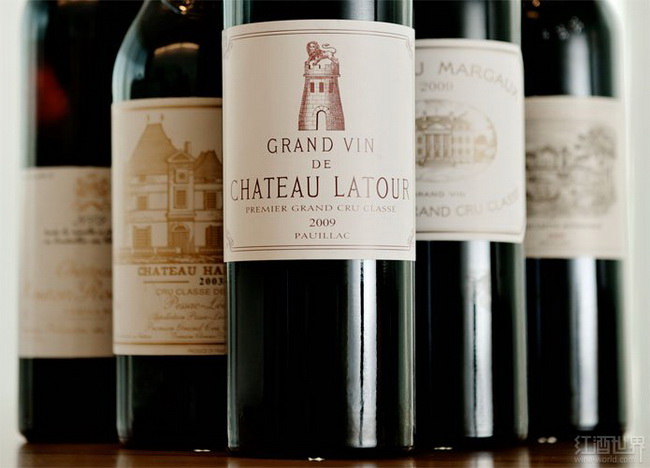
There is a huge price gap between luxury and basic Bordeaux: 59,5 Euro per liter for public Medoc versus 4.4 Eurosliter for regional Bordeaux red wine. The matter is complicated by the fact that a handful of renowned appellations in fact determines the financial picture of the region.
We all know them: Margaux, Pauillac, Saint-Julien, Saint-Estèphe and Pomerol. They account for approximately 10% of Bordeaux’s exports in terms of quantity, but 50% in cash.
Moreover, these areas (5 out of 60 Bordeaux appellations) occupy only 5% of the area under vineyards but account for 50% of the value of the land (data from La Direction Régionale de l’alimentation, L’agriculture et de la Fôret d’aquitaine). An acre of land in Pauillac costs an average of $888000 vineyard and simple category Bordeaux – only $8000 (Wines & Vines, September 2013).
The prices for prestigious vineyards remained (and even increased), crisis in 2008-2009, the Contrast of the picture was added the falling of prices on earth of the basic categories. As they used to say some commentators, “drove the locomotive without cars”.
In other words, the elite of the vast portfolio of Bordeaux wines dominates the financial, but not in forces to pull out of the ordinary appellations represent more than half of the regional portfolio.
Producers of basic wines of Bordeaux have already suffered. Low price vineyards represent only a modest evaluation of the regional category for Bordeaux AOP. Many households have found themselves on the verge of profitability, and their performance continue to deteriorate. According to the “Agricultural Census” in 2010, in 1998, the vineyard holdings, there were more than 12,000, and in 2010 only 7000 with low.
The smallest disappear altogether: their owners just can’t live on the income from the sale of their wines, given the current prices and turnover is small. As a result, increased the average size of farms (approximately 15 hectares) as a result of buying smaller new players.
Larger industries can be a positive for the region, but there are other problems. The younger generation prefers to work in other industries, and it promises serious difficulties, since a significant portion of business owners older than 50, and every second there is no receiver.
According to estimates by the French Ministry of agriculture, the future of 30000 110000 hectares of Bordeaux vineyards looks foggy.
Bordeaux had to be tight at all, had it not been for the explosive demand from China in the mid-2000s, became his foreign client # 1 with purchases of nearly 6 million.
Now Asia accounts for almost 40% of exports of Bordeaux wines in terms of value. This compensated for the significant decline in demand from old consumers.
USA took the sixth volume in the export article in 2012 (1.9 million boxes). The money the US has become the fourth, with the amount of 215 million Euros, China is second with 338 million Euros, after the UK (data from Conseil Interprofessionnel du Vin de Bordeaux)
An incredible way France took about 50% of the Chinese market – compared to 4% of consumption in the United States. The old Foundation laid by French winemakers, brought to fruition, coupled with the charm that surrounded in Asia of French goods and Bordeaux in particular. But the Chinese factor is already priced in, and future trends are not easy to predict, especially in light of the outbreak in China in 2013, the proceedings in relation to discriminatory trade policy on the part of France and Spain.
Error price positioning
Despite decreasing the number of wineries in Bordeaux, the region remains the preserve of small farmers. Their wines can proudly bear the name of château, but the picture on the label often depicts a rural house, not a feudal castle. As elsewhere, small winemakers can resist change or simply don’t have the funds for modernization of the cellar, and hiring well-known consultants.
Although it would be untrue to say that small farms gradually acquire new presses and vats. In fact, change has always been characteristic of Bordeaux. If this were not so, the region could not survive for centuries and definitely would not have become the icon of winemaking.
It is also true that the image of Bordeaux formed the apex of a pyramid of local wines. A broad base at its base – is in grave danger. Regional red wines and Bordeaux Supérieur (by law, with lower yields and longer exposure) form the basis of the region: half of total production. And this is a very significant amount – an average of 27 million hectoliters (30 million 9-litre crates) for the most recent vintages.
There are many examples of well-done regional red wines and dry whites – in a style that can compete with the New World at a lower price. But most, according to critics, lack of fruit and density to please the tastes of modern wine lovers.
There’s no mystery to why Bordeaux is losing ground or not to increase share in key foreign markets. Only a tiny increase in shipments brought the wine, which is sold in America below 15$ in retail, or certainly less than 20$. Moreover, approximately 80% is wine cheaper than 12$.
Focusing marketing efforts in the US on the wines with a retail price of 55$, as did the CIVB (Bordeaux Wine Council), you cannot count on significant sales growth. This strategy is obviously dictated by the needs of producers, not consumers. The market clearly demonstrated that the most significant factor for the American consumer that determines his purchasing decision, is the ratio quality-price. But this is the Achilles heel of Bordeaux.
Surveys in 2011 showed that American consumers are not the best opinions about Bordeaux wines, in terms of the reasonableness of their prices. Only 4% rated value for money as “excellent” and 17% as “good” (21% strongly positive evaluations), while 32% found them “acceptable,” and 12% were “weak”. For comparison, the Rhone Valley, 51% of respondents rated as “excellent” and “good”.
The trends of both regions in the U.S. market once again demonstrated the relationship between perceived value and yield. Bordeaux exports to the US continues to follow the appeal of specific vintages. The peaks in shipments occurred in the good years: 1990, 1995, 2000, 2005 and 2009. And in the years between exports fell. But the record in 1985 to 2.8 million boxes yet to be beat.
Ron, on the other hand, smaller but much more dynamic. The exports of this region in the United States in 1985 was at 358000 boxes and grew to 1.5 million in 2012. Today, the United States is the second export market for Rhone Valley after the UK and the first by revenue in Euros.
The focus on consumers has never been a strong point of French wine, whose marketing has always relied on tradition and terroir.
Director of marketing for Frederick Wildman & Sons, importing wines from the Compagnie Médocaine (a large wine trading company Bordeaux) notes that “Bordeaux is very dependent on the leading of the ratings and reputation of the vintages”.
The name of the château on the label has long played a leading role in marketing the wines of Bordeaux, but it is a barrier to the establishment of major brands. Any individual farm produces a limited number of wines: 20-40 thousand on average, with some exceptions. And as long as Bordeaux will rely on the positioning of the “bottled at the Chateau”, is unlikely to create a major brand, who supply to 4-5 million boxes to the U.S. market.
With 7000 farms, 300 merchants, and 39 cooperatives the products of the Bordeaux region is very fragmented, which does not allow to build a consistent and holistic marketing.
Bordeaux wines are markedly segmented. Top line classified farms and similar high-end wines account for approximately 5% of the total production. It’s blue chips that are traded in a controlled market and sold almost always on non-exclusive terms. System allocations and privileged partnership define suppliers and importers who have access to this elitist group and their quotas.
Sales of such luxury bottling is likely to continue dashing race, fueled by the assessments of the vintages and their own pricing.
Access to this level of manufacturers for the majority of consumers is always limited so-called “second and even third wines”. And in the middle of the pyramid, thousands of households from dozens of appellations. For wine lovers, Bordeaux carrying an aura of “bottled in Chateau” and ready, in search of good cheap wine, take your chances with an unknown bottle, this segment represents an opportunity to combine the romance of a wine aestheticism with an affordable price.
In 2010 sommelier-importer Daniel Johns has released a collection of wines with the price to$ 30 in retail. According to him, “there are many small traditional farms, producing good wine, that will appeal to many”.
He is “bullish” is set against Bordeaux (i.e. expecting growth of prices), despite the “anti-elitist attitude to the region among young sommeliers and consumers.” However, Chateau wines will be imported by regional companies in very small amounts – in the hundreds or a few thousand boxes. These wine will inevitably suffer from fragmented and very limited distribution. For store or restaurant they are more from the category of good shopping on the occasion than the subject of a stable supply.
For those interested in locking the fault of the consumer can be challenging to find the seller specific château the year. The vagaries of distribution evident in the case of Chateau Mayne-Guyon 2011 (Blaye Cotes de Bordeaux) which was repeatedly selected by Wine Enthusiast magazine among its “top 100”. This wine can be found through a well-known portal wine-searcher.com provider for Trader Joe’s, but it turned out that more than anybody. To find out which of its stores have in stock a bottle of this wine and how much is the labor to which I agree not everyone is a fan of wine with a huge amount of available alternatives.
Fine wines of France
In the bottom of the pyramid of Bordeaux wines – incredible amounts of the base wine, which in all fairness should serve as the basis for building brands and creating a “vintage wines” (vins de marquee). In this lower price segment romantic images of terroirs, vintages and ratings do not play a special role. Successful exploitation of this mass of wines justified the strategy of focusing on regional wines, collected around the region and kupazhiruemogo merchant to achieve consistency of style and quality of the promoted brand.
In the Rhone Valley and Burgundy, like Bordeaux, a lot of private landowners to 5,000 and 4,300, respectively (according to the Inter-Rhone and BIVB). But despite this, range of wines, poured out in Domenach (similar to Bordeaux Chateau) balanced blend of well-known brands.
Such as Rhone:
- Chapoutier (Chapoutier)
- Guigal (Guigal)
- Jaboulay (Jaboulet)
- Delas (Delas)
Or Burgundy:
- Louis Jadot (Louis Jadot)
- Joseph Drouhin (Joseph Drouhin)
- Louis Latour (Louis Latour)
Offer Bordeaux in America, by contrast, is almost devoid of “vintage” segment. Of the many brands of Bordeaux, promoted by various trading companies, only Mouton-Cadet broke and stuck in American retail wines in average of 8$booth. At the request of their agent, Constellation Brands, Mouton Cadet – Bordeaux is the largest representative in the United States in terms of sales, with world sales (unconfirmed) of one million boxes. Others tried, but failed. Or not even tried.
The barriers seem insurmountable in light of the propensity of bogosav to sell the idea of “Chateau” and large expenses for promotion of brands. Part of the suppliers claims that another difficulty will be to gather enough grapes to cooperatives and private growers to create a blend in large volume. But on the other hand, is to make a regional Bordeaux blend, by definition, more complicated than in the same Cotes du Rhone?
On the face of a simple unwillingness of wine merchants of Bordeaux to put its branded products on American shelves. In France, such wines – vins de marquee – sold in abundance, but almost none of them are available in America.
Castel – a big alcohol company, with sales of 630 million bottles in 2012 (according to the newspaper Le Monde, 2013). This is a serious player in the French market, along with Malesan, leading supermarkets, and some other private brands, such as Batiste de Vignac and Blaissac. Their Bordeaux brand in the United States is not represented.
In October 2013, Castel was considered to be the most popular brand of alcoholic (wine and other drinks) in China. Other suppliers, among them Kressmann, Dourthe, Ginestet and Yvon Mau, selling “vintage” Bordeaux wines, do not put them in the United States. Brand Cordier, once well-known to American consumers, not sells any of their brands (e.g., such as Collection Privée). All these brands offer only a nameless red wines, dry white wines and pink.
With a couple of positions here there is a mark “Michel Lynch” created by Jean-Michel Kasam (Jean-Michel Cazes), the famous Chateau Lynch Bages (Château Lynch-Bages), with wine Réserve Graves (white) and Médoc. Slightly more visible line Réserve Spéciale from Domaines Baron de Rothschild (Lafite), which includes the médoc and Pauillac in addition to their standard white and red wines. This wine is in a modern style but still preserving the regional identity.
In the States themselves, the trade community, it seems, too long time did not believe in the sense of fine positioning of Bordeaux. In the 2008 edition of Wine Business International quoted Bill Deutsch of W J Deutsch & Co., brought the Yellow Tail brand in the top U.S. imports and make the Georges Duboeuf best known French label. Here are his words:
“The vintage Bordeaux has no future… it is Impossible to sell 100’000 boxes in the United States for one simple reason: in Bordeaux does not make the wine we want to drink a large number of people. Bordeaux wine is too acidic, too tannic, too thin for most consumers”
But although this definition is still true of most ordinary clarets (red Bordeaux wines), there are many other – more soft and full-bodied, much closer to the tastes of Americans than wines of the past. The red wines of Bordeaux have undergone a significant evolution towards more alcoholic wines with more ripe fruit and tannins. These advances largely due to climate change, a better understanding of polyphenolic maturity, and a more careful sorting out unripe and rotten berries.
The last cold fermentation dry white wines based on the Sauvignon Blanc and Semillon, have consistently demonstrated a clean, bright, fruity character. Nature and technology help Bordeaux at all levels of wine making.
Amendments to the wine laws of the European Union 20089 gg were allowed to indicate the grape variety on the labels of wines of controlled origin. This could support efforts to fine products to the American market. Specify explicitly “60% Merlot, 30% Cabernet Sauvignon, 10% Cabernet franc” next to the name of the wine and the appellation could significantly spur sales.
In 2013 Mouton Cadet Bordeaux AOP released that clearly read “Sauvignon Blanc” on the bar under the main label. Wine from Maison Sichel Sirius now carry the names of the varieties in large letters, under the inscription “Bordeaux”
Varietal identity is the only clear signal to the American consumer. French appellations for him sometimes – unpronounceable gibberish.
Evolution of flavors – the second significant factor.
The American consumer demonstrates the sensitivity to a bright new vintage wines. Labels that are in trend today may seem controversial and even risky. Especially convincing success dry red blends, which showed in 2013 an increase of almost 15%, and caught up with Moscato! (source: Nielsen, 52 weeks ending 11/9/13). And such a blend is already a key area of specialisation of Bordeaux.
Martin Sinkov from Frederick Wildman & Sons is convinced that “innovation for Bordeaux brands with nontrivial packing where there’s great opportunity”. One such project sommelier Richard Betts of Saint Glinglin was marked by images of flying pigs. His set of three wines with a bright author’s approach includes Sauvignon Bordeaux, côtes de Bordeaux and St Emilion for about 35$ at retail. Betts homechat that “in Bordeaux there was always an unspoken tension between terroir and brand.”
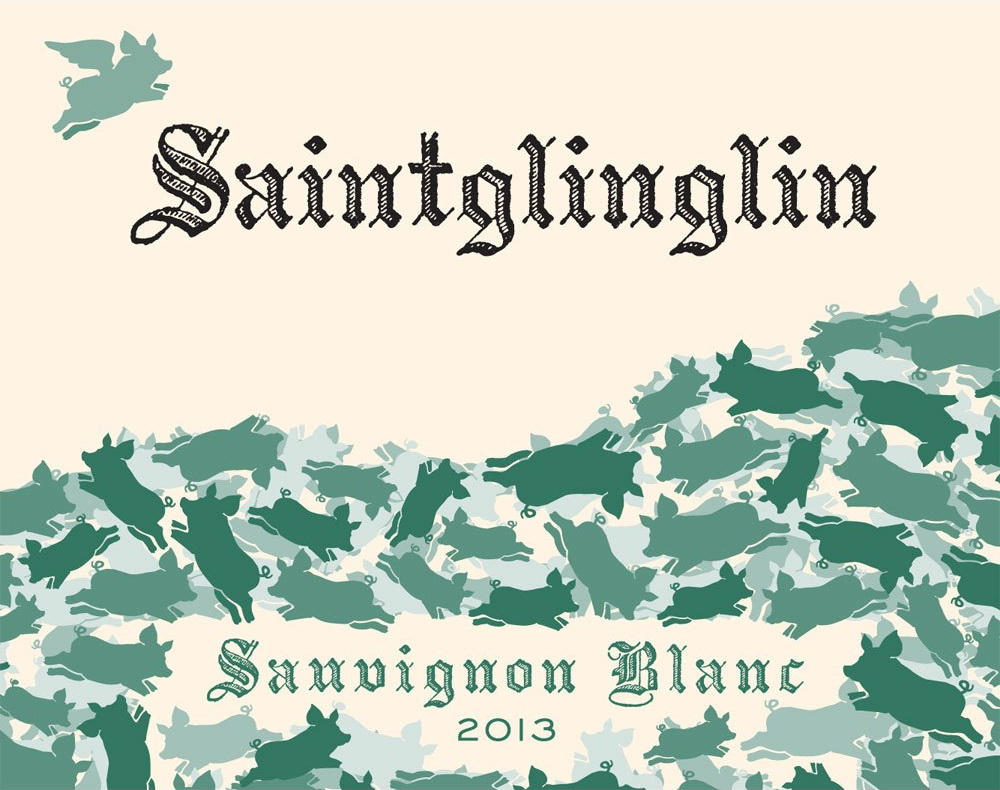
Importer of the brand Petit Chapeau – regional red and white wines – says – “in wine quality and a low price”.
Although neither one nor the other I plan to expand the line of vintage wines, these bold examples – albeit very modest amounts – show opportunities for vendors who want to balance a highly fragmented portfolio of castle wines. But if you go over the edge, it is necessary to start with products that meet consumer tastes.
The turn from producer to consumer
Emmanuel RUz and Gerard Sehun in his “Wine marketing” (Le marketing du vin) is aggressively campaigning for a new approach to the wine industry of France. Oriented manufacturer model “one wine for all” today is not viable. Instead, producers should ask themselves: “what are the consumers which wines?”
This principle has long been armed with the marketing of New world wines – those that could win at the expense of Bordeaux.
GM was forced to rethink its line of products to meet the demands of the consumers, going to foreign manufacturers. It was difficult and costly, but it was a matter of survival.
If Bordeaux wants to increase its volumes and market share, the region will have the attention to consumers on such promising markets as the United States. If you do not think about structural changes, significant infusion of funds in a standard promotion will not bring adequate returns.
Whatever the reaction Bordeaux on a new reality at home and abroad, any strategy, including maintaining the status quo is fraught with risk and uncertainty. But it is worth asking which of them is associated with greater potential benefit for the legendary wine region?