Decanting (decanting) is pouring wine into a carafe (FR. décanter), which can have two different objectives:
- Removing wine from the sediment
- Wine oxygen saturation (aeration)
The purpose of decanting will depend on the form used for this carafe (decanter).
High-quality red wine, and sometimes honey white, after a few years of aging accumulate sediment.
This is a good sign (especially for such grape varieties as Cabernet Sauvignon and Syrah – they can lay a very solid sludge volume), because it indicates that the wine is not filtered too hard and the flavor it has not been ruined.
Although the best wines from the Medoc necessarily give a precipitate, the amount of the best red Burgundy from Pinot Noir is usually less.
In cheap wines that flooded the market, the sediment is very rare, but in the middle price range you can meet the wine (from Chile or Australia), not the filtered. In this case the label says “unfiltered” or “non foltre” (not past the filter). If you think that wine can be a precipitate, it is necessary to put the bottle upright for a day before drinking. Then, holding the bottle up to the light (I used a candle), slowly and gently pour the wine into a decanter, stopping when the sediment approach the neck.
Enhanced contact with oxygen for fine aged wines it is not always necessary, and sometimes undesirable, sometimes they are better revealed gradually, in the right glass. Therefore, the decanter for the decantation may resemble vodka or water jug:
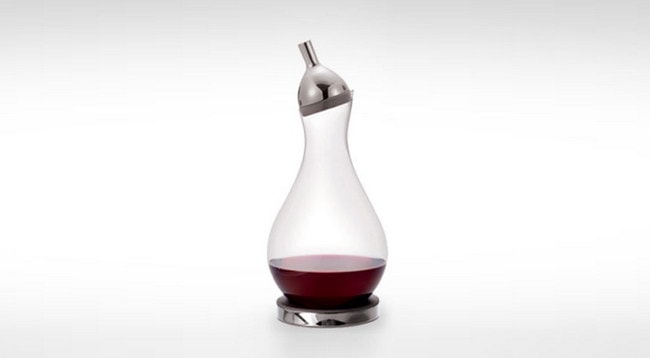
Decanter with funnel-strainer for removing wine from the sediment
Providing the wine a chance “to breathe” – that is, the introduction of wine into intensive contact with air in the process of pumping or just after unsealing the bottle – question is much more controversial.
However, it happens that the wine from a fresh bottle seems too “aggressive” – in this case, decanting will help a little to calm: gently smooth tannins and to remove the strong alcohol content. Helps aeration in the case of excess in wine of sulfur dioxide, which gives an unpleasant tone to the scent that goes away or significantly weakened after decanting. And this effect is quite noticeable.
It is clear that if you opened a bottle of wine, you’ve got to drink, but it is full contact with the air will be minimal.
For more intensive use of aeration decanter, in which the area of contact of wine with air maximum: these are the decanters in the form of a “skirt” that loves wine gloss:
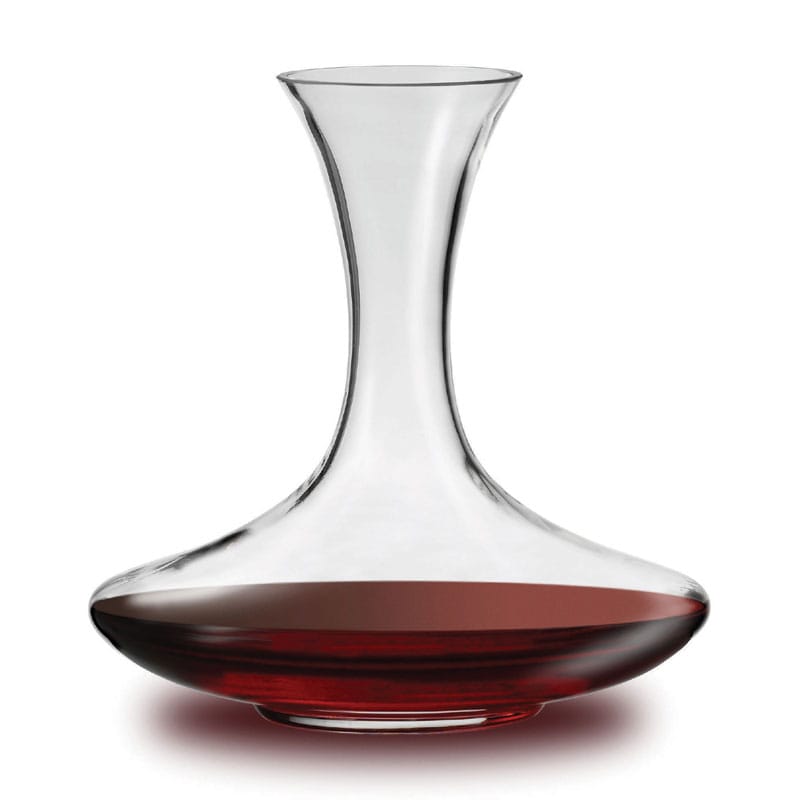
Decanter to aerate the wine
In any case, the decision to decantation in order to saturate the wine with oxygen is much more subjective than decanting to separate the sediment, the presence of which is always obvious, and getting into the glass is undesirable.