

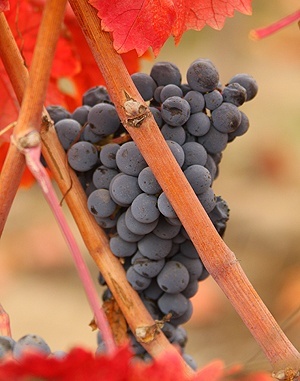
Carmenere – a dark-skinned grape variety originally from Bordeaux which is native to Chile.
The name is derived from the word Carmina ( FR. carmin)– one of the brightest shades of red, which turn the leaves of this vine before the autumn leaf fall.
Synonyms varieties: Grand Vidure, Biturica (Biturica).
As posessively variety, Carmenere requires a lot of sun and warm summer to achieve full ripeness. In suitable conditions it is able to give a beautiful wine with intense color and a nice plum and meat flavor, similar to Merlot and light pine-green notes of Cabernet Sauvignon.
This similarity is not surprising, as Carmenere is considered the “grandfather” of these Bordeaux varieties. Neither Merlot nor the Cabernet Sauvignon was not particularly popular in the region until the mid-eighteenth century, which raises the question about what did the Bordeaux wine up to this time? The answer will be partially Carmenere, mostly in the Medoc, where he has developed a solid and successful connection with the Cabernet franc and where he was in the lead in area planted.
In fact, rich and flavorful Carmenere was once very popular and likely played a greater role than Cabernet Sauvignon, in building the reputation of these famous names of Bordeaux, Chateau Lafite
This situation continued until the 1860s, when Europe from the American continent were recorded aphid phylloxera, infection which the vines are Carmenere very exposed. Because Carmenere is not very tolerant grafting as Merlot and Cabernet, this variety was largely abandoned as transplants of other varieties on American roots, which the phylloxera innate immunity.
Before all this sad history with phylloxera Chilean winemakers had taken out of Bordeaux the vines and the plant. But most of what they were mistaken for Merlot, which in those days was gaining popularity, was Carmenere, similar to him in appearance, but much more common variety with a gradually fading popularity. So a simple misunderstanding practically saved Carmenere from extinction.
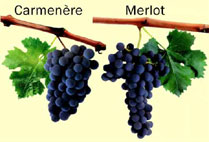
“Substitute” was not noticed until 1994, when French ampelography Jean Michel Boursicot, perplexed by the differences in the vines, as it were, Merlot, conducted DNA analysis and found out what had actually been planted by the Chilean vineyards.
It took some time to Carmenere proved right on “solo performances” without reputational support Merlot. Today it is a flagship variety for Chile.
Chile well capitalized his role as Savior Carmenere and cleverly used this theme in the marketing of their wines. Among the most prestigious wines based on this variety, claiming the status of a landmark, the following names:
- Purple Angel from Montes
- From Carmin de Peumo, Concha y Toro
- Kai from Vina Errazuriz
With the spread of the glory of the Chilean Carmenere, their vines were planted “on trial” in many wine regions of the world. This variety was included in the list of allowed for some Italian DOC categories, such as Friuli Latisana, where it is not just allowed, but declared “recommended” even for varietal wines. Although his landing in Italy is still very small, the important thing is that he basically got under the attention of winemakers.
Carmenere was reached and New Zealand. It was discovered in the vineyards of Matakana, where he was taken for a clone of Cabernet franc. It is curious that he sailed here from Italy, but extending into the New world incognito, was really like after his “revelations”.
Than Carmenere not to like?
His vines are able to rapidly spread foliage, covering the berries that, when badly cultivation leads to their immaturity and dark green tone in the finished wine.
To the complexity of his character is added exposure to the phenomenon of “colour” – the new fall of young berries by the wind, cold and rain. But the modern wine industry already knows the recipes from this scourge.
In their homeland in Bordeaux Carmenere is still grown in a small number of farms, including: O Bailly, brane-Cantenac, the Clerk of melon Chateau Le Puy. Grow local planting of this variety in response to the success of the Chilean Carmenere will show the next decade.
Based on Wine-Searcher