Barsac (Barsac) is a small village in Bordeaux (Graves subregion) approximately 65 km South-East from Bordeaux. Produced in the surrounding vineyards sweet white wines – some of the finest in the world, but are in the shadow of a famous neighbor of Sauternes.
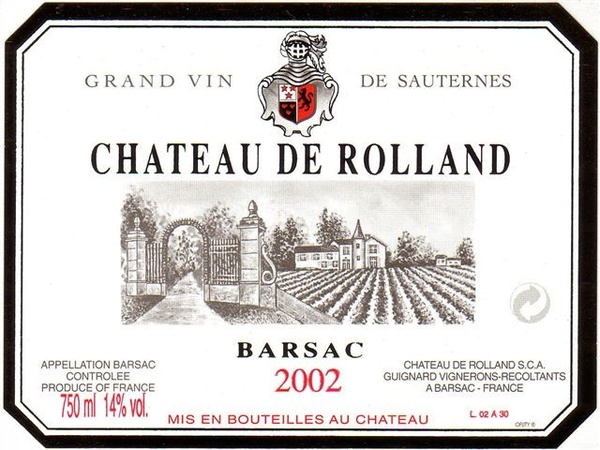
A typical wine Barsac in a young man has a bright Golden color, which with age changes to dark amber. The aroma of flowers with notes of stone fruit and a hint of honeysuckle, characteristic of botrytised wines. The best samples exhibit an excellent balance of sweetness and acidity, richness and freshness, power and elegance.
The winegrowers and producers in the Barsac is a very convenient option: they can produce wine under their own appellation Barsac AOC (AOP) or use the “parent” label Sauternes. Of the five villages that make up the wine region of Sauternes (Sauternes, Barsac, Bommes, Fargues and Preignac), this privilege is only for Barsac. The regulations of the appellations of Sauternes and Barsac are identical, the only difference in geographical boundaries.
The main variety in the production of wine is Barsac Semillon, which is about 8/10 of the vines in the local vineyards. Most of the remaining vines accounts for the Sauvignon Blanc and just a tiny – by Muscadelle and Sauvignon Gris.
Semillon wine provides a solid base with good structure and gives a bouquet of aromas of beeswax and apricot. Sauvignon Blanc complements its recognizable aromas of herbs and acidity sufficient to give the wine a fresh sweetness, not flat and cloying. This pair of varieties have become the preferred sweet wines in all of Bordeaux, not only because they form the basis of the dry white wines of the region. The fact that they are also susceptible to a favorable impact of capricious and dangerous mold known in the wine industry as “noble rot” – the Botrytis fungus, cinerea.
The uninitiated familiar with the topic Botrytis cinerea (or Botrytis) can surprise and discourage. This mildew develops in the misty atmosphere of the vineyards of Barsac that prevails here in the mornings in the autumn. In the “noble” rot, he turns to where the misty morning hours give way to a warm and dry afternoon, otherwise, instead of the noble grapes covered by Botrytis – and goodbye to the harvest. If favorable conditions persist for several weeks, the berries affected by mold dry up and shrivel, losing moisture, but not sugar and flavors. The concentration of the juice increases, and the result is a very sweet wine with a rich bouquet.
The location of the Barsac on the banks of the Garonne and its tributary the CIRON provides such conditions which are necessary for botrytised grapes. As the heating of the cold night air, when the morning from the waters of the river CIRON rises and the mists cover the vineyards of Barsac, where, while they will not vaporize afternoon sun.
The rules of the appellation Barsac allows for the production of sweet wines only at sugar content of wort of not less than 221 g/l (for comparison, the bar for local wines of 162 g/l). Because not everyone is a fair amount of sugar metabolized by the yeast into alcohol, the finished wine is obtained with a decent content of natural residual sugar.
Sweet wines of Sauternes only extremely expensive to manufacture. For three main reasons.
First, there is a risk of leaving ripe grapes on the vine: freezing, rain, gray mold, they all pose a threat to the crop.
The second is connected with high costs for manual labor by experienced grape pickers, who have to harvest in several stages: performing periodic passages for selection of berries, to the extent necessary mastered by the fungus Botrytis.
The third is that most wines of Barsac is aged in oak barrels for 18-36 months, and this is a serious investment of time and money.
And most importantly, there is no guarantee that Botrytis will generally appear and perform their work properly, given the very specific conditions that are required. There are years when the sweet wine of the Barsac do not produce.
There are small differences in the terroirs of AOC Barsac and Sauternes. Sauternes a little holista, from foggy effect there stronger and botrytised character of the wine is more pronounced. Barsac topographically smoother, and sandy-limestone soils give rise to wines with a more restrained, delicate bouquet.
Source: portal wine-searcher.com