

During the dominant innovations of one company digs deep into time in search of inspiration. Three years ago Lost Distillery has attracted attention to technological reconstruction of several Scotch whisky distilleries that closed for decades.
Recently, the company released another batch of three recreated scotches. I had the opportunity to taste them and discuss them by phone with the founder of the company Bryan woods.
Idea Lost Distillery interesting. According to woods, in Scotland over the last hundred years was closed about a hundred distilleries. And since each distillery produces the unique taste of the product, the country has lost a huge variety of fine Scotch.
“Direct really a shame, says woods. – In the same Japanese used to cherish their heritage. And in Scotland let all those distilleries closed forever. And it destroys the local community. They were not just employers, they were cultural centers.”
“We have no warehouses, where it would be preserved whiskey is past. No attic, no basement we do not find, and a dozen of these old bottles. We have no living specimens”.
On recreating these drinks at the Lost Distilleries full-time working historian whiskey, which pores over old books to set out 10 key elements of each. The most important of these elements are water, the size and shape of the stills, and was also used peat. And it allows to achieve significant accuracy. For example, we know that Ohagi (Auchnagie) used Heather, the peat, and therefore, it had floral notes.
The company produces stills and buys peat with floral notes. She plays the “Assembly” profile, buying whiskey from storage from other manufacturers.
“We buy somewhere near 40 different plants throughout Scotland, says woods. – All major and some small local”.
Age is not listed anywhere, because the reconstruction of the bouquet would be very difficult by means of one particular malt. Need young spirits and old whiskey.
I asked woods whether their whiskey to taste the same as those of a century ago. Would not this tape more rude?
“If you go back 150 years ago, then a whiskey then hit the market straight from the factory, without any aging – meets the woods. And what we’re doing now is playing what would this Scotch tonight, if the plant still worked, not what did 150 years ago.”
Here are three of their new release.
The Lost Distillery Lossit (closed in 1867; Ballygrant, Islay)
This whiskey is much less saturated color than the rest. The aroma is straight and clean, with bright iodide notes: slightly salty and alcoholic, the air becomes more peaty. This rough style of Scotch, but I liked it the taste: salty, peaty, slightly Maritime. He definitely has a distinctive style of Islay, and for me it became a favorite of the three. Benefits from the addition of a drop of water.
“The reason 150 years ago in the whiskey a peat – that it was available as fuel, explains woods. – If we take our Lossit, even though he is inspired by the distillery island of Islay, the level of peat in it somewhere in the 70-75 ppm [parts per million – parts per million. A measure of the concentration.], below the current indicators of smoky whiskey. This is because peat was used as fuel and not as an element of construction of the bouquet, as it is today.”
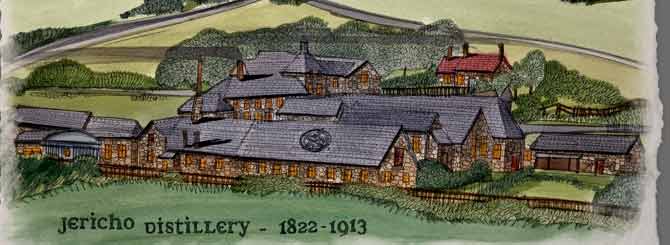
Lost Distillery Jericho (closed in 1913; Aberdeenshire)
This fruity whiskey with a touch of candied stone fruit and a very long finish. He doesn’t smoke, but I do feel a hint of toasted bread. At first it was hard for me to believe that Scotch whisky could be such a taste in 1913. But if Jericho has released their whiskey without aging or with a minimum delay, the fruitiness is quite likely. A good clean sample.
“On the Jericho we know from historical sources that he was 100% aged in sherry casks, says woods. Is explains notes of toast and a long finish.”
Lost Towlemore Distillery (closed in 1931; Dufftown, Speyside)
I liked the least of the trio. A very generous aroma of freshly baked oat bread, and the taste and the aftertaste is unexpectedly sweet. Complexity is not enough.
Looks like whiskey Towlemore was still available after the Second world war. I asked woods whether he met people who remember the taste of the whiskey. He said that when they three years ago released Stratheden, there were several witnesses, but for Towlemore these have not yet showed up. But give it time, whiskey is new to the market. Or too old if you want.