
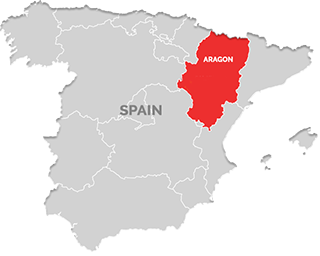
Aragon is one of the 17 Spanish Autonomous communities, located in the North of the country. To the East of the Catalonia Aragon is located to the West of Rioja, Castile and Leon, Navarre. Common regional DO (appellation) in Aragon no.
An important part of the wine landscape of Aragon is the valley of the river Ebro, one of the largest and most important water arteries of Spain. The divide also divides the wine regions of aragón: Somontano in the North and three small areas in the South.
The historic city of Zaragoza is the capital of the Autonomous community, which is home to almost half of its population. The other inhabitants of the region with no apparent concentrations scattered throughout its territory.
Today Aragon is a descendant of the powerful medieval Kingdom, which received its name, according to one version, from the river Aragon in its territory, the other from the Basque words aragoi, which means “high valley”.
If Aragon to describe in one word, it’s different. Outlined from both sides by mountain ridges, its landscape goes from snow-capped peaks in the North, to the scorched plains to the South, the green hills in the middle.
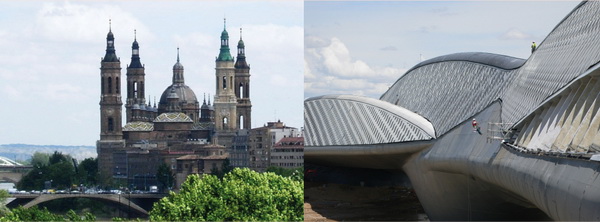
The fusion of old and new is typical and evident here in a number of aspects. A vivid example of Zaragoza, which adjoin the medieval relics like the temple complex of Nuestra Señora del Pilar and the calling modern like the Pavilion bridge.
Wine-Aragon – the same situation. It finds a place as the ancient natives like varieties moristel, and recent newcomers from international varieties like Cabernet Sauvignon. Investment in modern equipment and technologies were decisive in the revival of the wine market in the region and the emergence of a more light, fresh wines.
From the point of view of climate, Aragon – zone of extremes. Overall, it can be described as temperate continental, with a height above sea level as the determining parameter. The Pyrenees mountains and other hills in the Northern part is colder, as the corresponding region in the South. The height is ranging from 500 to 1000 m In the Central part of the region height is lowered to 200 m. Such a range of growing conditions of the grapes means a significant variation in the styles of the wines.
In the production of traditional wines of Aragon significant role today is played by large cooperatives. Usually they were sold balkom (as a budget wine), but now they are bottled on the spot, and often they are represented by red wines based on Garnacha. Among other notable red varieties – Carignan and Tempranillo.
The ambition and level of local wines has increased with the inclusion of the territory of Aragon in the area of the production of Cava, a rise of four territories in the region to the status of a appellation (DO) and the emergence of vineyards in the category of “Pago” (Vino de Pago).
Source: portal Wine-Searcher /Jan. 2019