

Doesn’t sound very exciting, you know. But it is here, perhaps, occurred the most significant breakthroughs of recent decades in the struggle for the quality of the wine.
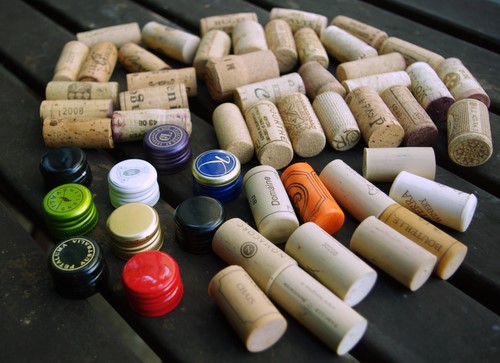
20 years ago, natural cork was virtually a monopoly in the means of sealing wine bottles. And she coped with the bad, to be honest. In particular, Australians were fed up with problems with purchased tubes: estimates varied, but in General, up to 10% of the wines, the farms were ruined because of “cork disease” or premature oxidation because of problems with her. The problem of finding alternatives was very serious.
First steel sampling tube of plastic.
Synthetic first generation was produced through molding and much inferior to modern designs. Despite the shortcomings (one of which was the difficulty with removing it from the bottle), the cork has achieved a modest, but success in the mid-1990s.
The other main contender to replace was the screw cap. It tried to introduce in Australia back in the 1970s, but the consumer does not understand, and the attempt failed.
Repeat step happened in 1999 when producer Orlando decided to close his top Riesling as the traditional cork and screw cap. As a result, the sale of screw bottles bypassed the traditional. And then in 2000 a few growers from the Clare Valley have teamed up again and released their Rieslings with screw cap, accompanied by it a lot of hype in the media.
After winemakers in New Zealand are too quick to screw your fresh Sauvignon newfangled lids.
So we are about science.
Then we all had the idea that the role of tube is to shut the bottle, so as not to penetrate the air and does not leak wine. What was lacking is the understanding of the role played by the tube to access the bottle of micro-doses of oxygen and a huge impact on the state and development of the wine in the bottle.
A pioneer of studies of this topic was the Australian Wine Research Institute (AWRI), which opened all our eyes to the wonders of wine chemistry in a closed bottle.
The study featured the same wine – unseasoned oak in the Semillon 1999, Clare Valley – closed 14 different types of tubes. All bottles passed the tests on taste and in vitro in equal time intervals. In short, the result is that synthetic tube used in this experiment, he missed too much oxygen, leading to premature aging and the peroxidation of wine.
Indicators one-piece natural cork were better on average, but the variation among the samples was significant, plus some ruined bottles of “cork disease”.
Technical tube (which is agglomerate – ie of pressed crumbs – but with solid linings at the edges approx.transl.) showed good results in terms of pass oxygen, with smoother results and a good ability to preserve the freshness of wine. But “cork disease” has affected them too, though to a lesser degree.
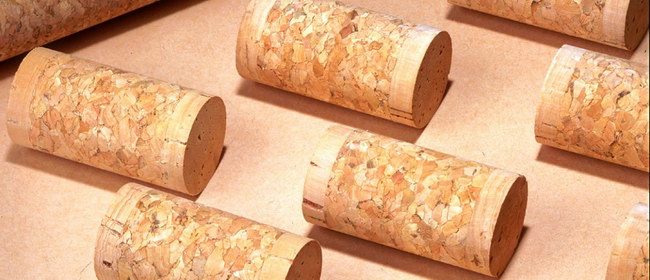
Screw was the leader, in terms of preserving the freshness of a young wine, but missed so little oxygen that the aroma of the wine had characteristic reduction of the shades of rubber and finely ground flint.
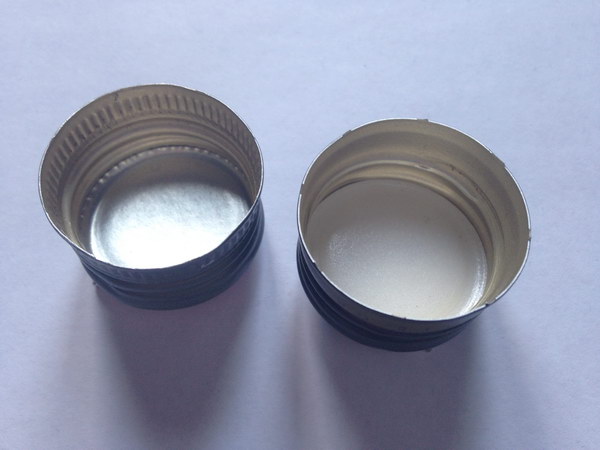
It should be noted that for screw caps the amount of air flow depends on the material used with them pads. The most common of the two types with very different properties.
In the experiment used the one with the metallic coating (on the left in Fig. below). Such closed almost all the wines of Australia and New Zealand. They miss very little oxygen.
The second type is the polymer strip Saranex (produced by Dow Chemical) have conceded less oxygen than synthetic cork, but a little more than organic whole.
The conclusion from this study is that winemaking is not limited to the stage of bottling. The volume beneath the tube of air affects the state of the private content and the result – taste and flavor that you pour into a glass.
Impossible to stop a life time of wine, placing it in a completely sealed vessel. The wine continues to evolve after bottling, and therefore it is essential to select the tube type that will best match the style of the wine and the estimated time of its consumption.
Today from approximately 18.3 billion annually of bottles produced about 5.7 billion close alternative kinds of traffic. Winemakers now pay attention to the issue of access of oxygen in the bottle, its impact on the chemistry of the wine when bottling and further storage. And manufacturers of natural cork are struggling to reduce the percentage of spoilage of the wine from the “cork disease”.