Chile is the envy of winemakers of the Old world low-cost production of the wine, weak local susceptibility of the vines to diseases and attacks of pests, and relatively dry and warm summer period. Winemakers in the New world, especially Australia, the envy of is the abundance and regularity of the water supply Chilean vines with melting snow from the peaks of the Andes.
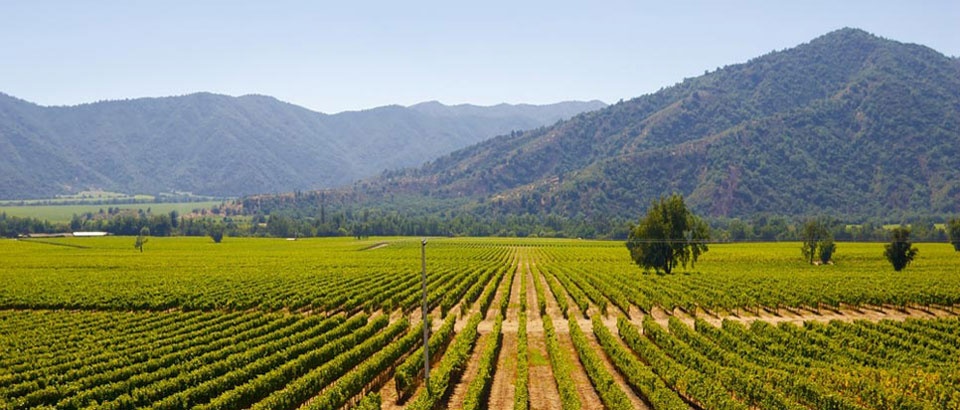
However, for the greater part of the 20th century, the winemakers are not particularly eager to take advantage of the fact that Chile is actually formed wine vacuum. What happened over the last couple of decades, can be called a revolution in the industry.
The wine industry in Chile
Golden years Chile occurred in the late 19th century, when the rest of the wine world groaned and bent under the onslaught of mildew and phylloxera, and isolated him from the vineyards of Chile could supply almost unlimited amounts of healthy, deeply colored wine from the well-known varieties of vinifera family of vines of which were brought here in the first half of the century. The most successful wine industry of the world was concentrated then in the hands of only ten Chilean families, many of which remain dominant local players to this day.
For the next hundred years in the vineyards and cellars of Chile, little has changed. But the return of democratic rule had caused a significant surge in business activity in the 1990s and gave rise to strong intentions to bring the Chilean wine industry on the world stage.
Large old barrels of rauli (raulí – Chilean beech, popular local wood species) were replaced by oak barriques from France and the United States.
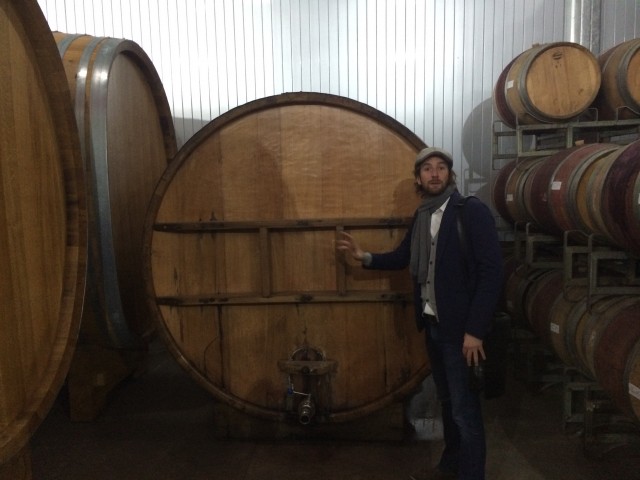
Barrels Chilean rauli beech
Implemented temperature control at the stages of fermentation and maturation of wine. Wretched technique of irrigation by simply flooding the vineyard in the hope that the necessary will be absorbed and the excess is removed, replaced with drip irrigation and installation of irrigation systems point.
Began to palletise dozens of new wine-growing areas: not only to the West, where the colder and more oceanic influences than in traditional areas, but much further South and North in Elqui (Elqui) and Limari (Limarí), where the ocean also helps moderate the temperature.
The country is still thriving table wine. Thousands of hectares planted with a variety Moscatel, a raw material for the local spirit Pisco (Pisco). Sour on the basis of Pisco are a real revelation for many tourists arriving here.
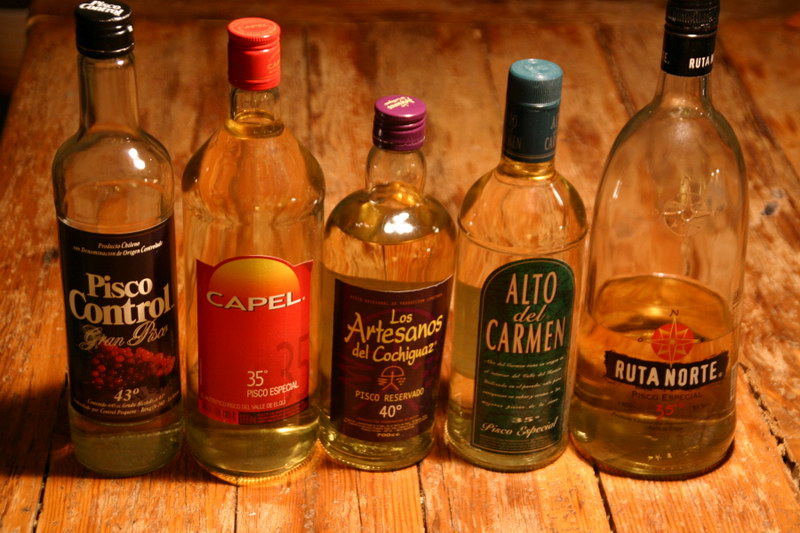
Bottle Chilean Pisco distillate
Until recently, wine in Chile was interested in a few. This is probably pretty upset a handful of the elite enthusiasts among the local growers and winemakers, but does not prevent the influx of foreigners, attracted by the growing reputation of Chile as a supplier of good and sometimes very good wines. Among the newcomers: the Rothschilds of Bordeaux, château Lafite (local. Los Vascos), Marnier Lapostol of Grand Marnier (local. Casa Lapostolle) and Miguel Torres (Miguel Torres) from Spain, first imported to Chile oak barrels.
Partly thanks to such international interest in Chile is now paid much more attention to matching grape varieties of the vineyard locations and the development of more cold areas under the influence of breezes from the Pacific ocean (West) or climb the Andes (to the East). Geography and mesoclimate of the Chilean territories are determined largely by the proximity of the mountains and ocean influence than latitude. Good wine is made and in the far North (Elqui), and far South (Malleco).
For Chile, for the greater part of the 20th century obstacle to development, in addition to lack of investment, was the gap between wine-growers and wine producers. Almost all the grapes grown by the farmers, have little understanding of the fault and almost no desire to understand it. In the 1970s-80s, domestic demand fell, nearly half of Chilean vineyards uprooted, and manufacturers began to look to foreign markets. By the mid-1990s most export-oriented wineries are actively engaged in new plantings or tried on occasion to acquire vineyards to be more self-sufficient in terms of availability of raw materials. Fruit quality has drastically improved.
A new level of control over the production significantly helped in the fight against excessive yields, resulting from irrigation irrepressible. In an effort to maximize the quality of the crop was introduced more complex systems of tapestries, will expand the use of vines suited to the location of the vineyard. In combination with investments in new equipment, these measures rapidly consolidated Chilean wine on strong position, particularly in Germany and the UK, especially in price-sensitive segments of the supermarkets.
Red varieties in Chilean wines
The most important variety in the production of red Chilean wine today is Cabernet Sauvignon, which accounts for over a third of all vines in the country.
Pais (aka kriola Chica in Argentina and mission in the USA), growing mainly without irrigation in the South, is the production of cheap wine in boxes for local consumption. But there are some interesting exceptions:
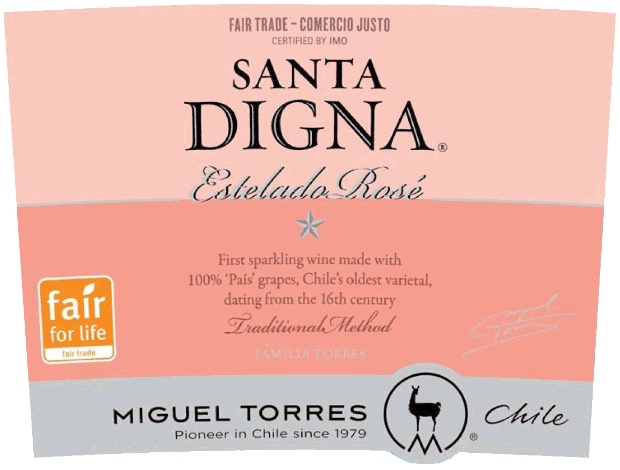
Curiosity: Chilean sparkling wine from 100% grade Pais
Merlot remains a good position, but weaker than before formal identification in 1994 of the old Bordeaux variety Carmenere. Many years in Chile did not distinguish these two varieties, and many vineyards were planted alternately. We now know as the flagship Carmenere is a red grape variety of Chile, and a serious wine, proudly show it on the label.
Decent wine in Chile today is made from varieties such as Shiraz (Syrah), Malbec, Carignan from old vines Maule (Maule), and, increasingly, various red blends.
Early Chilean wines suffered from an excess of immature green tannins and sharp tone, but control yields largely allowed to deal with this scourge and today leaving the country wines have lush fruit bouquet, not if he starved oak.
Some manufacturers focused on Pinot Noir, especially in the colder part of the Bio Bio in the South and Lleida in the North.
White varieties in Chilean wines
The correct identification of varieties was an important moment for white wines. What was previously sold as Sauvignon Blanc, turned out to variety savignone (Sauvignonasse), also known under the name of Tokay Friulano (Tocai Friulano) and Sauvignon Vert (Sauvignon Vert).
Now, thanks to intensive planting of this Sauvignon, especially in the colder valleys (Casablanca and Leyda), Chilean wines have earned a reputation as a good incarnation of this “squeaky”, the living varieties, and some bonus samples of Chilean Sauvignon deserve special attention.
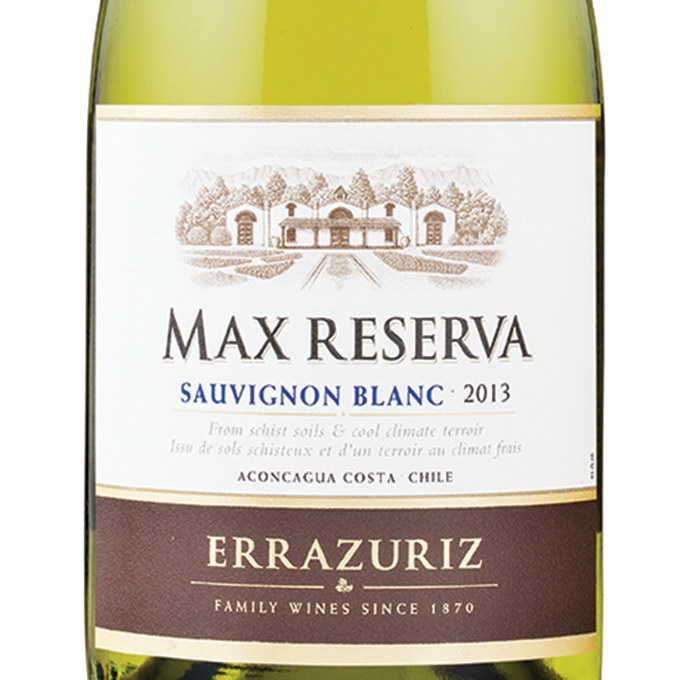
Chilean wine from Sauvignon Blanc
Other aromatic varieties such as Riesling, Viognier and gewürztraminer are also beginning to show good results in the colder parts of the country.
Semillon in Chile is very common (often grows mixed with Sauvignon), but because the attitude is dismissive. Although there are attempts to embody it in a sweet version and let stand in oak.
The wine regions of Chile
The Chileans are to be commended for the promotion of their young, but understood the appellations based on the names of the valleys. However, to make generalizations about the styles of each of them does not work, because even within one valley’s soils and climate can vary considerably, despite the fact that the country is a narrow strip that stretched along the coast.
It is especially difficult to characterize the “overall” style of the main valleys: Maipo, Rapel and Maule, partly due to the difference of conditions at the bottom of the valley and on the slopes above. Manufacturers are trying to gradually allocate a new, more specific subregions within the valley. To the North of Santiago is located in a wide Valley, Aconcagua (Aconcagua) – place of birth Errázuriz wines. New plantings are increasingly drawn to the sky or closer to the coast.
To the North and East of Santiago valley in which the last 10 years have been particularly good for Sauvignon Blanc, other aromatic white varieties and Pinot Noir, Casablanca, San Antonio, Limari, Leyda and very North and very narrow Elqui (Elqui), where they produce very good Shiraz. They are influenced by cool ocean breezes and fog. They found attractive, ambitious pioneers such as Amayna, Casa Marin and Matetic. Giants like Concha y Toro also have vineyards.
Valley Maipo (Maipo) is the most famous wine region of Chile, though not the largest. At least partly because it is closest to the Chilean capital, and hence the focus of well-being.
Some famous vineyards, such as Cousiño Macul, is located right at the Eastern border of Santiago. Here the wine turns more delicate and elegant than in the Central part in the vicinity of the Maipo Pirque (Pirque) and Buin (Buin), where the main winery giants of the industry: Concha y Toro (in Santa Cruz) and Santa Rita (Buin). However, both of these manufacturer use conventional for Chile the practice of buying grapes from all over the Central Valley. The possession of these companies are so impressive, that the example of Concha y Toro may declare itself as a major world grower of Cabernet Sauvignon.
The differences between the East and West of the Central valley is less obvious than that between the North and the South. Nights on the Eastern edge of much colder than on the valley floor, due to cold air from the Andes. In the morning it is very cold, so the color and acidity of the berries are obtained outstanding, with frosts pose a real threat.
West edge, in turn, cooled in the middle of the day constant breezes, the intensity of which varies depending on the local topography. The proximity of the vineyards to rivers also influences the degree of humidity and the temperature of the soil.
It is dominated by red. The best wines such as Almaviva, the Aurea Domus, the Casa Real (Santa Rita) and Viñedo Chadwick doing in Maipo Alto (Maipo Alto) – higher foothills of the Andes, which apparently gives a slightly minty and eucalyptus shade of red wines.
Red wines thrive in the valleys South of Maipo in Cachapoal (Cachapoal), giving birth to great Cabernet Sauvignon and Syrah (Shiraz), and particularly in the Apalta sub-regions (Apalta) and Colchagua (Colchagua) with their excellent wines from Merlot.
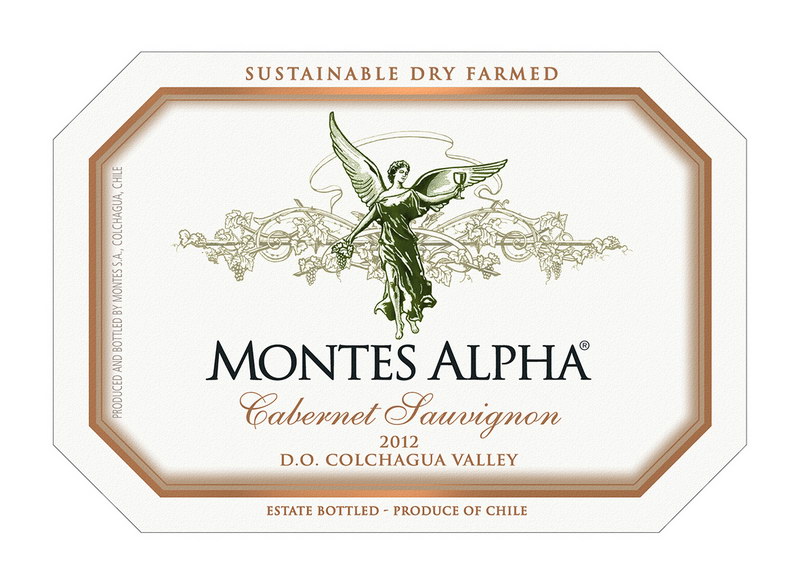
Chilean Cabernet Sauvignon from Colchagua
The blend of these two regions usually labelled as Rapel (Rapel) , but this practice is disappearing as soon as manufacturers increasingly focus on regional differences and peculiarities of a particular locality.
Further South – Curico (Curico), where warmer and more humid, and where Torres decided to build his winery in 1979. There are a lot of land for high yielding vines, but there are certain areas where the mesoclimate allows you to definitely produce excellent wine.
Maule (Maule) , the oldest wine region of Chile. After a period of relative neglect there is a revival, and in some areas with very old vines produced a rich red wine with aging potential of red blends based on Merlot and / or Cabernet Sauvignon.
The vineyards are in South-Central Chile are rapidly gaining weight. It labels with names such as Maule, ITAT, Bio Bio and Malleco. Small plots of ancient vines non-irrigated shrub represented mainly by the grades of Pais and Moscatel, complemented by Carignan in Maule and Senso in ITAT. In Maleko the pioneer was Viña Aquitania, which released a Chardonnay, Sol de Sol, but now a number of manufacturers invested in the development of the southern vineyards of the Central Valley.
His most successful Chilean wine producers try bottled as Reserva.
Most companies of the big four – Concha y Toro, Santa Rita, San Pedro and Santa Carolina – I own several wineries and many different vineyards. In this case, the usual practice is also purchasing grapes from numerous farmers.
In Chile there are more truly outstanding wines for example, a top of the line Altaïr, from Almaviva, Concha y Toro, Clos Apalta from Lapostolle, Errázuriz from Don Maximiano and Folly from Montes. We cannot ignore the growing number of interesting wines in the middle price segment.