Grand cru (Grand CRU) in a historically literal translation from French means “a harvest of excellent land”, where cru – past participle of the verb croître – to grow. Grand cru in English is called in a similar way: as great growth, i.e. the great harvest. Today, however, the importance of the concept of Grand cru in France depends on the region.

Burgundy. The côte D’or (Côte d’or)
Bourgogne wines the Grand CRU devoted the lion’s share of reviews and searches, despite the fact that this category is less than 2% of all wines of the region.
But Burgundy the first thing that comes to mind in connection with the term “Grand CRU”. And, perhaps, here to understand this classification is easier than anywhere else. Although the comprehension of the intricacies of the sommelier takes years.
Burgundy classification ranks the vineyards.
Today all the vineyards of Burgundy are part of the same hierarchy, on top of which the Grand CRU, below the CRUs, then village and easy regional Bourgogne (Bourgogne) to the basis.
Thus, in Burgundy the vineyard of 31 status of Grand CRU appellation and 33 of the same status. The fact that the vineyard Corton (Corton) provides the grapes for three overlapping appellations: Corton, Corton-Charlemagne (Corton-Charlemagne) and Charlemagne (Charlemagne). A Grand CRU Chablis – a different story altogether, see below.
The size of the Burgundian Grand CRU vineyards – from 0.84 hectares (2.1 acres of the famous La Romanée – monopoly of Domaine du Comte Liger-Belair) to 97.5 ha (241 acres – vineyard Corton). The size of the majority lies in the range 5-17 ha, but this is not the main quality parameter.
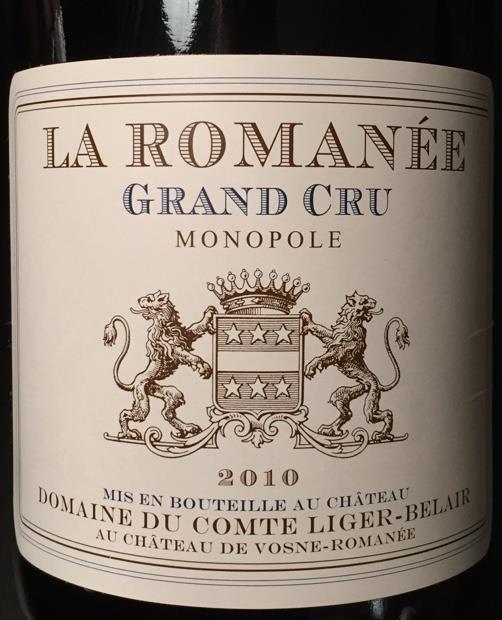
La Romanée in Burgundy is the smallest appellation in the world, with an area of vineyard less than one hectare.
With the exception of Chablis, the rest of Burgundy each Grand CRU is a separate appellation. For this reason, the name of the vineyard is usually represented by the most prominent inscription on the bottle. But unfortunately, consumers have no sure way to determine the label within the boundaries of a village (held) it is located.
The roots of the Burgundy classification date back to the times of the Cistercian monks, separated from the Benedictine order in 1098, to lead a more pious and ascetic life, devoting themselves to the service manual and agriculture, not burdened with possessiveness. To them, the Benedictines cultivated the vineyards for centuries, but boundaries were established more for the purposes of land ownership, while due to the Cistercian practice of demarcation the best sites from the point of view of the quality of the crop.
In 1855, more famous classification of Bordeaux wines, Dr. Jules LaValle (Lavalle Jules) published his “Topography of the Golden slope of Burgundy” (Plan Topographique of Burgundy”s Côte d’or) – a detailed plan of all the vineyards from Dijon to Santenay.
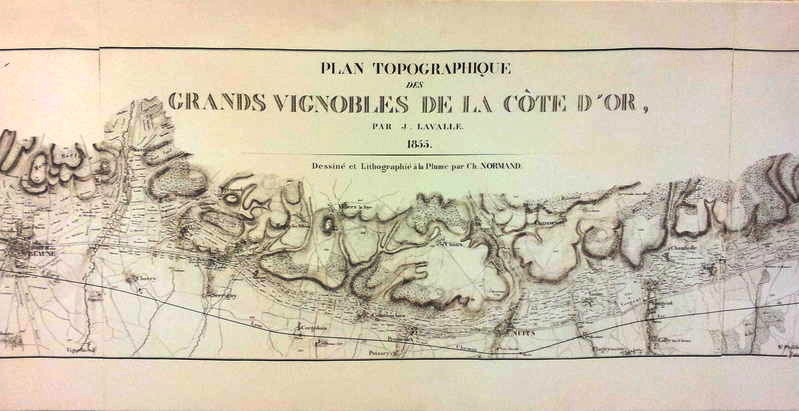
Illustration from “topography” of Laval
But though the work of Laval and formed the basis of 400 appellations, introduced in 1936, in his work, he classified the best areas as a Tête de Cuvée (Tete de Cuvee), distributing the rest in the categories of First, Second and Third Cuvee (Première, Deuxième, Troisième Cuvée). Today the concept of Têtes de cuvée us more known for the wines of champagne, where it means the most tender (first) and pressing fraction.
The work of Laval, and the classification of Bordeaux wines in 1855 was intended as a snapshot of the current balance of forces in the region and as a basis for constructing future classifications, but was for many years set in stone.
However, the system of Burgundy appellations were issued only in 1936. By the time the 1800s with a clear separation of growers and sells the finished wine merchants. In the 19th century the wines of Burgundy were classified based on average prices of wine from different parts of the region (defined more broadly than it is now), without regard to individual manufacturers. Discussion the relative importance of terroir and the brand began to unfold in the early 20th century. Classification of 1936 revealed a growing concern of advanced growers that their products are losing heavily in the mix with someone else’s harvest.
Only six of the vineyards of all the Burgundian Grand CRU are exclusive. In the Wake of the French Revolution and the introduction of the Code Napoleon, and the rest were divided among numerous owners. For example, Clos de Vougeot (Clos de Vougeot), a former Cistercian now about 80 owners. Many real estate investors vineyards enter into management contracts or lease their land known Dominum, but the majority of Burgundy wines under the appellations Grand Cru produced by more than one household.
In Burgundy, as elsewhere, not all Grand CRU wines are obtained at the same level. This is due to differences in winemaking techniques, and that even within several acres of private land vineyard can have different drainage characteristics, light, soil composition, age and quality of the vines – all this is reflected in the characteristics of the harvest and the finished wine.
Chablis
Apart from the rest of Burgundy is Chablis where we have introduced the single appellation Grand GRU – Chablis Grand Cru, bringing together seven separate vineyards, called the Clima (climat), which are specified on the label next to Grand Cru.

Chablis Grand CRU. Under the indication of the appellation – the name of the vineyard (climate control): Prez
This appellation covers a single array of vines of Chardonnay with a total area of 100 hectares (247 acres), located on the South-Western slope of the hill near the town of Chablis. Decorated in 1938 and is producing no more than 2% of all wines of Chablis.
Bordeaux
In Bordeaux the concept of Grand CRU can be applied in different ways, denoting a separate household or Chateau whose vineyards are located solidly around the main building, or – more often – divided into several spaced apart sections.
The Bordeaux classification is a classification of estates (Chateau).
Only two of the French region base the classification on the ranking of the farms. The second region of Provence.
Saint-Emilion
The key word here – classé. Without this word, the inscription Saint-Émilion Grand Cru on the label means the wine belonging to the lowest rung of the system of Grand CRU Saint-Emilion.

The Basic Grand Cru Saint-Emilion
In this category there is no separate sub-zones, some special production requirements (primarily in terms of lower yields, higher alcohol levels and mandatory tasting fee for each vintage). Ie in fact it is much closer to the concept superior in Bordeaux (Bordeaux Supérieur) than to the other Grand CRU of France. Hundreds of wines in Saint-Emilion are an indication of Grand Cru. This confuses the uninitiated.
Another thing – the wines labeled Grand Cru Classe. They are represented by two subcategories:
- Premier Grand Cru Classe with the subclasses A (4 farms – the top classification) and B (14 farms)
- Just Grand Cru Classe (64 farms)
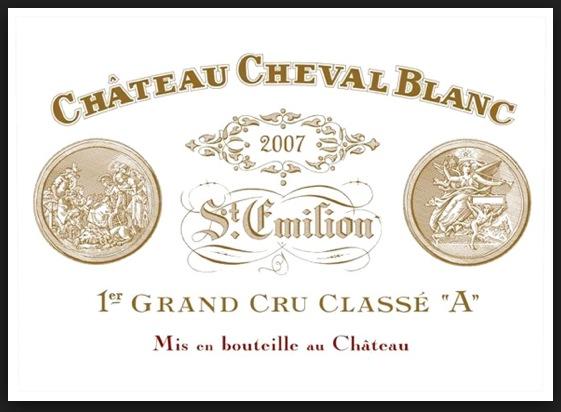
The Top Grand Cru Saint-Emilion
The last revision of the classification was in 2012 and was based on the level of the Commission of fine wines, the reputation of the farms on the market, the quality of the terroirs and the level of production. The next revision may occur no earlier than 2022.
Medoc
In 1855, the best wines of Bordeaux Medoc sub-region, plus one from the subregion of Graves (Chateau Haut-Brion) were ranked on a five-level system of “Grand CRU classé” (Les Grands Crus Classés): from the first growths (Premiers Grands Crus) up to the fifth Grand CRU (Cinquième Grands Crus). The first then included only four of the Chateau, which only in 1973 it was added one more – Mouton Rothschild (Mouton Rothschild).
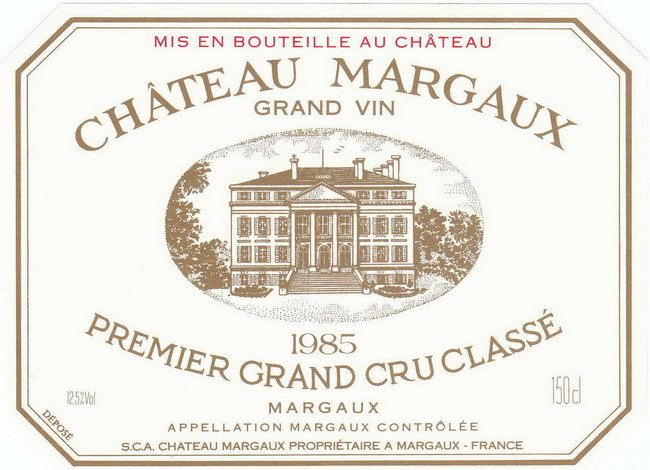
The first Grand CRU Classe, Margo
Today, the word Grand are often omitted labeling classified farm from this list as the first CRU, second CRU and so on (eng. First Growth and then to Fifth Growth), and all the wines in this classification the General term “CRU classé” (FR. Crus Classés , eng. Classed Growths).
This system continues to exist almost firmly, regularly provoking controversy. Since 1855 many farms from among the CRU classé were bought and sold sites in the vineyards, without changing its place in the classification. At the same time, Chateau Gloria (Château Gloria), established and developing from 1942 on plots that are purchased from farms CRU classé, was not included in their list, despite the fact that international standards cannot be considered a newcomer, and his wine recognized by critics as corresponding to the level of a Cru Classé.
The classification of the 160-year-old can hardly reflect the current situation in the region. Chateau Lynch Bages (Lynch-Bages) – “only” the 5th Grand CRU – has become a byword as an example of apparent inconsistencies. Another example is Chateau Lanessan (Lanessan) – neighbor Gruaud-Larose (Gruaud-Larose), but right at the border of Saint-Julien. This farm had the reputation (and still has) to be eligible for inclusion in the classification, but in 1855 the owner believed it was the emergence of bureaucratic stupidity and not applied.
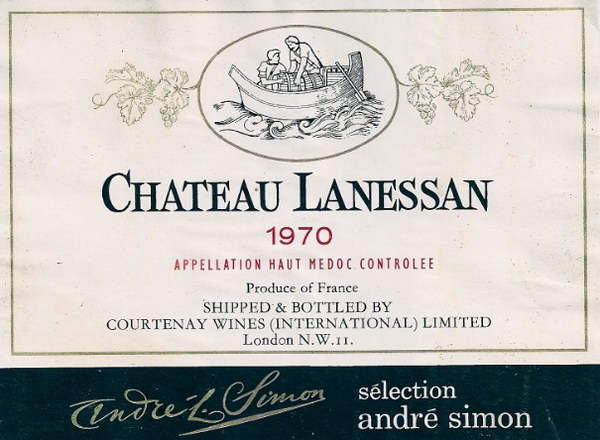
With the exception of the precedent Mouton Rothschild, classification of 1855 has undergone changes only with the disappearance of some practices (for example, Château Dubignon of the 3 Grand CRU).
All this leads to the fact that the various critics, sommeliers, and wine exchange Liv-Ex make their own ratings of Bordeaux Chateau.
Graves and Sauternes
The subregion Graves (Graves) remained generally aloof from the discussions on the Bordeaux Grand CRU. In 1959 established his one-level classification for red and white wines, in which 16 households formed a single category of “CRU classé” (Crus Classés). All these farms now include part of the appellation Pessac-Leognan (Pessac-Léognan).
The top sweet wines of Sauternes (Sauternes) in 1855, was classified as the first and second CRU (Premier SGI, Deuxième Cru) with a special selection of Chateau d’yquem (Chateau D’yquem) as permie superior CRU (Premier Cru Supérieur).
Champagne
If klassificeret Burgundy vineyards, and Bordeaux farm, in champagne, entire villages are classified by assigning them the status of Premier Cru and Grand Cru.
In champagne klassificeret entire villages
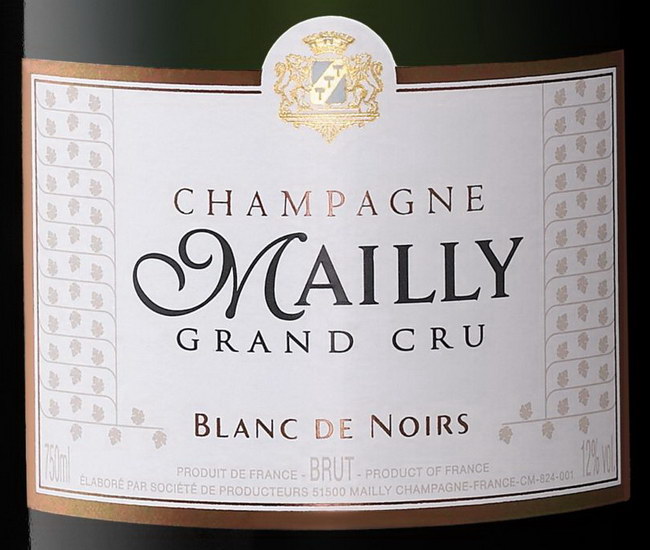
Champagne from the vineyard of the village of Grand Cru class (Maya)
Ranking the vineyards in champagne, as in Burgundy, has a long and colorful history. Traditionally, contribution to the determination of the best sites in the region are attributed to the Benedictine monk House Perignon (1638-1715), along with its innovative practice of blending wines (mostly quiet) to achieve the smooth quality of the final product.
Local hierarchical system, called Eshel de CRU (Échelle des Crus), literally “ladder of crops,” was introduced in 1911 as a mechanism of fixed prices for products of the wine-growers, champagne houses shipped – in response to a series of peasant revolts of the previous few years.
Champagne villages are Grand CRU (Grand Cru) are those that received the maximum 100% coefficient for calculating prices for the crop from a fixed maximum set by the Committee of winegrowers and winemakers. For villages CRU (Premier Cru) ratio amounted to 90-99% of the fixed maximum prices. For the rest, the price ranged from 80-89% of the stated maximum.
The status of Grand CRU original got 12 villages. 5 more were added in 1985. Today, the area under vines of all 17 Grand Cru villages is not more than 9% of the total area of the vineyards of champagne.
Alsace
Alsatian wine with the words Grand Cru must originate from one of 51 single vineyard with its own name. They are scattered all over the territory of Alsace terroirs and different, but at altitudes of 200-300 meters above sea level. They range in size from 3 ha to 80 ha.
Each vineyard of Alsace corresponds to a separate appellation (as of 2012).
Initially (in 1973) to the relevant level of Grand CRU was recognized as the only vineyard Schlossberg. Category was legislated in 1983, with the addition of another 24 vineyards. In 1992 they added another 25. In 2007, the vineyard Kaefferkopf has become the latest addition to this list.
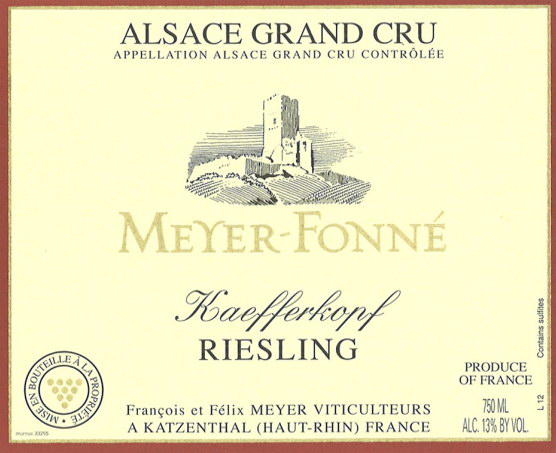
Until recently, many producers were skeptical about this system. Largely because he thought her quality requirements are not strict enough, plus some vineyards were considered too large and heterogeneous nature of soils and the exposition of the vines. Hugel still marks his top wines own brand. On one side there and Leon Beyer. But overall, the production of wine Grand Cru encounters more enthusiasm among winemakers in the new generation.
As in Burgundy, there is a widespread practice of joint ownership of vineyard of different manufacturers. However, sometimes such plots (shares) get their own name and treated as a monopoly. The most famous example – put Clos Sainte Hune is within the boundaries of the Rosacker Grand Cru vineyard, owned by Trimbach.
Uncharacteristic for French classified wines is Alsace practice guidelines grape varieties on the label. It applies at the local Grand CRU wines. Valid grades for this category are Riesling, Gewurztraminer, Muscat and Pinot Gris. The exception is the Zotzenberg vineyard, specializing in the variety Sylvaner is not allowed in any other Grand CRU of Alsace. At the same time, Zotzenberg Grand Cru not to do from the Muscat, although it also grows here.
If in Burgundy, only two of the appellation of all the Grand CRU can produce both white and red wines (Corton and Musigny), the only two Alsace Grand CRU resolved the issue multicontour blends (based on Riesling in Altenberg de Bergheim and on the basis of Gewurztraminer Kaefferkopf). The rest are limited to any two of the four above-mentioned varieties.
2015 INAO (French agricultural regulator) is considering the introduction in Alsace category of the CRUs. The consequent changes in the list of Grand CRU is not assumed.
PostScript: a question of yield
We left beyond the scope of this article, the issue of mapping the allowed levels of productivity in a variety of French Grand CRU within regional hierarchies. Obviously, the champagne stands out as the norm yield in champagne is determined by the whole region for each vintage. Consideration of such an important aspect from the point of view of management of quality wine requires writing a separate volume of the material that we will release as soon as get together with the spirit.
Source: portal wine-searcher.com Feb 2018