Sancerre (FR. Sancerre) is rightly famous for its wines from Sauvignon Blanc, but it’s time to pay attention to local red. They are little but they steadily earn a reputation for their quality and elegance of Burgundy.
Sancerre in numbers:
Appellation: 1936 – white (Sauvignon Blanc), 1959 – red and pink (Pinot Noir)
Producers: 308 wineries, 21 merchant-producer 1 co-op
Production: (2013) 169,73 Chapter 81% white, 11% red, 8% pink
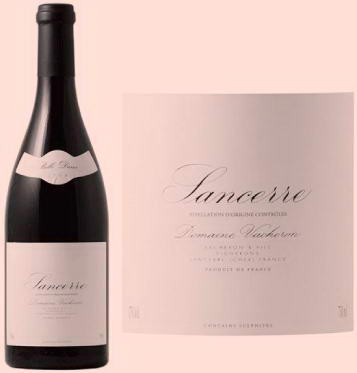
“God lives in the East”, – reverently whispers Jean-Laurent Vacheron (Jean-Laurent Vacheron), passing a glass of red wine to their farms. Mecca for the Vacheron is Burgundy. He crossed it far and wide, learning from the experience of the best professionals and being a devoted admirer of the praise here varieties – Pinot Noir.
In Sancerre, whose name is as closely associated with Sauvignon Blanc as Chablis with Chardonnay, a passion for Pinot Noir may seem unusual. But as soon as the “red revolution” is gaining momentum, fans of this variety in the Central part of the Loire is becoming more.
It seems that any region that can produce it, it is trying to do, trying to satisfy the insatiable demand for French Pinot Noir. But progress in the Loire are not the answer to the American road movie “sideways” in 2004.
In fact, until the 1860s, when the phylloxera epidemic mowing local vineyards, Sancerre for nearly seven centuries was famous for its red wines. They were served to the Royal table on both sides of the English channel.
After phylloxera, the vineyards of Sancerre were planted predominantly with Sauvignon Blanc. Expert “Decanter” wine of the Loire Jim allocates two bad reasons: that the first vaccinations Pinot Noir on the American roots were not so successful, like Sauvignon Blanc, and a change in legislation, due to which producers of Sancerre were no longer able to put Pinot Noir in champagne.
So the Sancerre was famous for its white wines. In 1936 was awarded the appellation of his Sauvignon, and 23 years later – the red and rose wines from Pinot Noir.
Today 22% of the vineyards are Pinot Noir (a proportion that has not changed since the times of phylloxera). At the same time, despite the fact that 57% of the wines of Sancerre are exported, less than 3% of those wines are red.
Pinot from this region has never been popular (although I could, probably) like Cabernet franc from Bourgueil (Bourgueil), Chinon (Chinon) and Saumur-Champigny (Saumur-Champigny). And though many of them lightly, with high natural acidity (light wines that are good to drink chilled), more and more producers in the Sancerre do a serious, full-bodied red that can compete with Burgundy and top CRU.
And it’s not so surprising. “We are closer to the côte d’or than many areas of the Loire, and we have the same soil,” says Jean-Laurent Vacheron, who with his cousin Dominic represent the 4th generation at the helm of this renowned farm in the Central part of Sancerre. In 2004 they were certified as biodynamic.
Here 11.5 hectares with Pinot Noir is given the same attention and care as 38 hectares with Sauvignon Blanc. The Oriental style was also reflected in the vineyard and in the cellar. “We use a Burgundian approach,” explains Jean-Laurent, having worked in Burgundy and in California. “We make compost, collect all manually, veneficium areas separately, sorted everything very carefully…”
“Maximum yield we have a 40glha. will Do the above and the dilution effect will be immediately noticeable. This was a problem still Pinot Noir of Sancerre: large production volumes, but lightweight, liquid wine.”
Makes itself felt and a large difference in day and night temperatures, compared to Burgundy. Because of this fault more crisp tones of raspberry and cranberry than cherry, and spicy-peppery complexity that is different from the earthy tones of Burgundy.
Soil and styles
The unique soil of Sancerre, of course, one of the key points.
About 40% of vineyards are divided into white calcareous-clay soils of the Western part of the region, many on steep slopes near the Buis and Chavignol, called “Terre Blanche” (terres blanches), i.e. “white land”, which belong to the best vineyards, like Sauvignon Blanc and Pinot Noir, along with the Eastern hills around Sancerre, with flinty areas (about 20% of the appellation), has made a hallmark of “gun” tone and all the “minerality” as well as the acidity of the local wines.
In the rest of the vineyards – a gravel or limestone pebbles.
Try Belle Dame – the top Cuvee from Domaine Vacheron is a 45-year-old vines, to understand what is the taste of red Burgundy wine from the Loire.
Whole clusters, without destemming insist 10 days, undergo a cold fermentation and the passive extraction. “The challenge is to avoid drying tannins typical of grapes grown on flint. Therefore, our wines are matured in large old barrels vertical,” explains Vacheron.
“I like a more structured Pinot in the style of Bon Mar, but we try not to change, and an elegant, aromatic style of Volnay, a supporter of which was my grandfather. I think we can find the middle,” with a smile he says.
The Domaine Vincent Pinard in Buis brothers Florent and Clem Binary cultivate 4.5 hectares of Pinot Noir in his 17-getaroom the estate using biodynamic approach. Their vines are grown on “Terre Blanche” and give less lightweight wine than Vacheron, but also don’t lack fresh appeal. Two local red Cuvee – Charlouise and Vendanges Entière (Vendange Entier) – with the same 50-year-old vines, giving 38глha. In Vendanges Entiere does not apply destemming. Both are some of the best red wines in the region.
Bad Jim notes the mid-1990s as a turning point in the “red revolution” of Sancerre, when a young generation of winemakers decided to make a serious Pinot.
Among them Vacheron, Pinard, Pascal and Nicolas Reverdy. When released its Mellot Cuvee Génération XIX, it was impossible not to pay attention; to this day, this wine remains one of the defining standards.
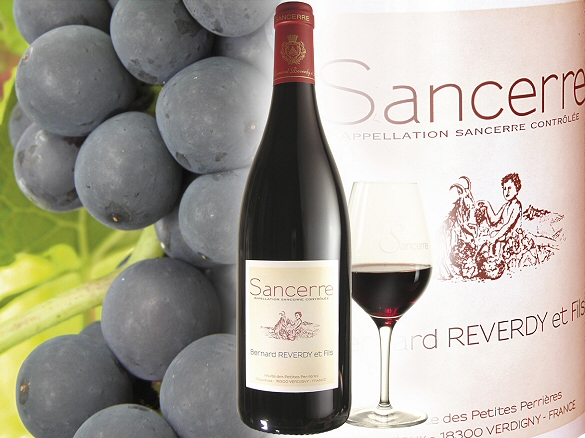
Red Sancerre Reverdy et Fils
By 2002, the output of wine fell from 60глha to 40gl / ha, and hand-picking and careful sorting in the vineyard and the winery became the norm. Large barrels replaced small barriques and fresh fruit gamma appeared from behind the shroud of oak. These simple and obvious ideas in red wines has finally paid a serious attention.
The next generation
The Domaine Lucien Crochet a focus on red wines did before the assignment of the appellation white wines of Sancerre in 1936. This is unusual, because most farms and family began to pour the wine in the estates only 20 years later. Today their estate in Buis is proud of its state of the art winery, and his son Lucien – Gilles is one of the most talented winemakers working with red wines in this region. In his charge of 9 hectares of Pinot Noir in 38-getaroom organic farming.
Croix du Roy (Croix du Roy) is a mix with a few sites, 60% of which is aged for a year in barrels, then blendermedia and is dovyderzhka in the tank before bottling.
Prestige Cuvée is produced only in the best years, with the oldest vines (50 years old), aged in oak barrels (40% new) for 20 months before release.
In Verdine, the Domaine André Dezat continues his brilliant founders. Of the 40 hectare farm, only 7 are reserved for Pinot Noir, and only 5 of them go to the production of red wine. However, the farm claim that they paid special attention.
“Of course we want to make the best Pinot in Sancerre, says Firman, husbandman of agriculture. – I believe that our Pinot is already very good. They have a Burgundian style. But we’re still young. When the experience will be better and we will move on to organics, they will be even better. We don’t want to radically change what has been done by our fathers and grandfather, we are working on fine tuning. Many small changes can give a noticeable result.”
And the classic cuvée from vines over 30 years old, and prestigious, with grapes from 60 year old vines, produced from the drift of the whole berry without the ridges, with the addition of pressed grapes, if you want to saturate the color. The classic cuvée is aged in 2-5 year old barrels. Prestige – 100% in new oak.
Trying out a new generation of wines of 2013 – dense, with hints of licorice and blackcurrant pastilles – I think that one of those small innovations should be the suppression of tones of new oak in a delicate palette of fruit. But whatever it was, 2006й Pinot last generation – amazingly clean motif cherry casseroles – demonstrates the potential of this wine for aging.
Given that changes are still ongoing, BAA believes that it is difficult to judge the ability of new Pinot from Sancerre for aging. Although these wines their high natural acidity. “I’ve tasted wine in 1996, which was quite in good shape, so I can definitely say that 10, 15, even 20 years for a good year… time will tell.”
Sancerre has avoided trouble with the weather, happened with the other regions of France, so that the most recent vintages are quite decent. 2014й bad advises to grab at the first opportunity. And 2010, 1009, 2008 and 2006, if you manage to find them.
A lot of changes have occurred over the last 20 years red wines of Sancerre. The best of them deserve more attention as they continue to improve.
Maybe God lives in the East, according to Jean-Laurent Vacheron, but it is clearly heeded the prayers of some of the winemakers of the Central Loire.