Welcome to the fabulous world of ice wine – one of the sweetest mistakes of nature. It’s amazing how anyone can intentionally make this wine. In fact, this is one of the most difficult and time-consuming works in the history of winemaking. Just imagine yourself in the winter frost on a steep slope vineyard in Germany, collecting the frozen berries…
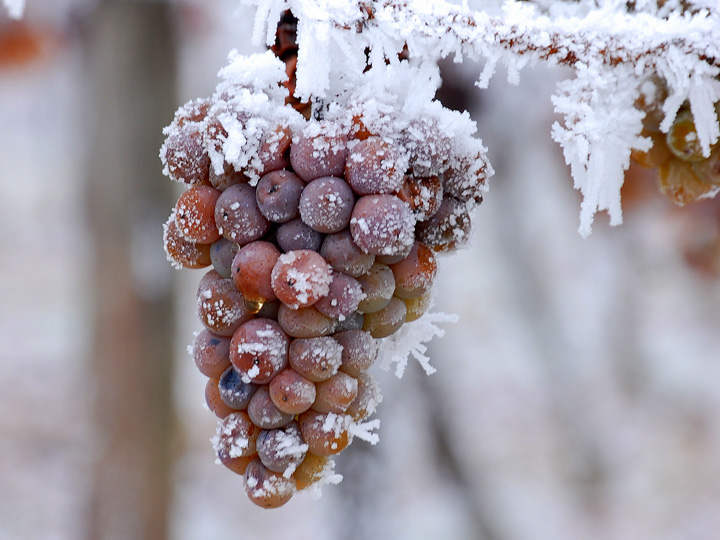
Without a doubt, “eiswein” (ice wine) – the greatest treasure of the wine world.
It is noteworthy that the wine and just what turn up his nose novice wine connoisseurs. Suffice it to say that it is twice as sweet as Coca-Cola. But once you try the real ice wine, it is impossible to talk about it without removing the hat.
A brief history of
It is believed that in German Franconia, especially in cold 1794, winemakers were forced to make wine from those berries, which barely managed to collect. The wine this year’s harvest was extremely high in sugar and had a luxurious bouquet. And after some time this practice became widespread in German winemaking. By the mid-1800s to the Rheingau region was already known as a manufacturer of wine, which the Germans call eiswein.
How to make ice wine
The secret of eiswein production in the processing of frozen berries at a temperature of approximately -7°. The grapes delivered to the winery in frozen form, where the berries are placed in a crusher and then into a wine press. A generation of presses was killed in an attempt to extract the concentrated juice-syrup cold and hard as marble grapes.
Because of the extremely high sweets juice (32-46 ° Brix) wort requires 3-6 months for a very slow and careful fermentation, which resulted in the birth of “ice” wine with an alcohol of about 10% and a residual sugar content 160-220 g / l
Grapes
The grape varieties that perform well in cold climates, are more suited for ice wine.
White: gewürztraminer, Riesling, grüner Veltliner, Chenin Blanc, Pinot Blanc.
Red: Cabernet franc, Merlot
Ice wine from Cabernet franc – is a rarity. His wonderful orange-ruby color, but to find it without much difficulty, except that in Ontario (Canada).
A real “ice wine”
Real ice wine requires a cool climate, where grapes are able to freeze on the vine. Fortunately, in Germany, Austria, Canada and the United States dessert wine cannot be called “my homeland” (icewine, eiswein), if the grapes freeze some special manipulations. There is a wine can be labeled as “iced wine” (i.e., “frozen”) or simply as a dessert.
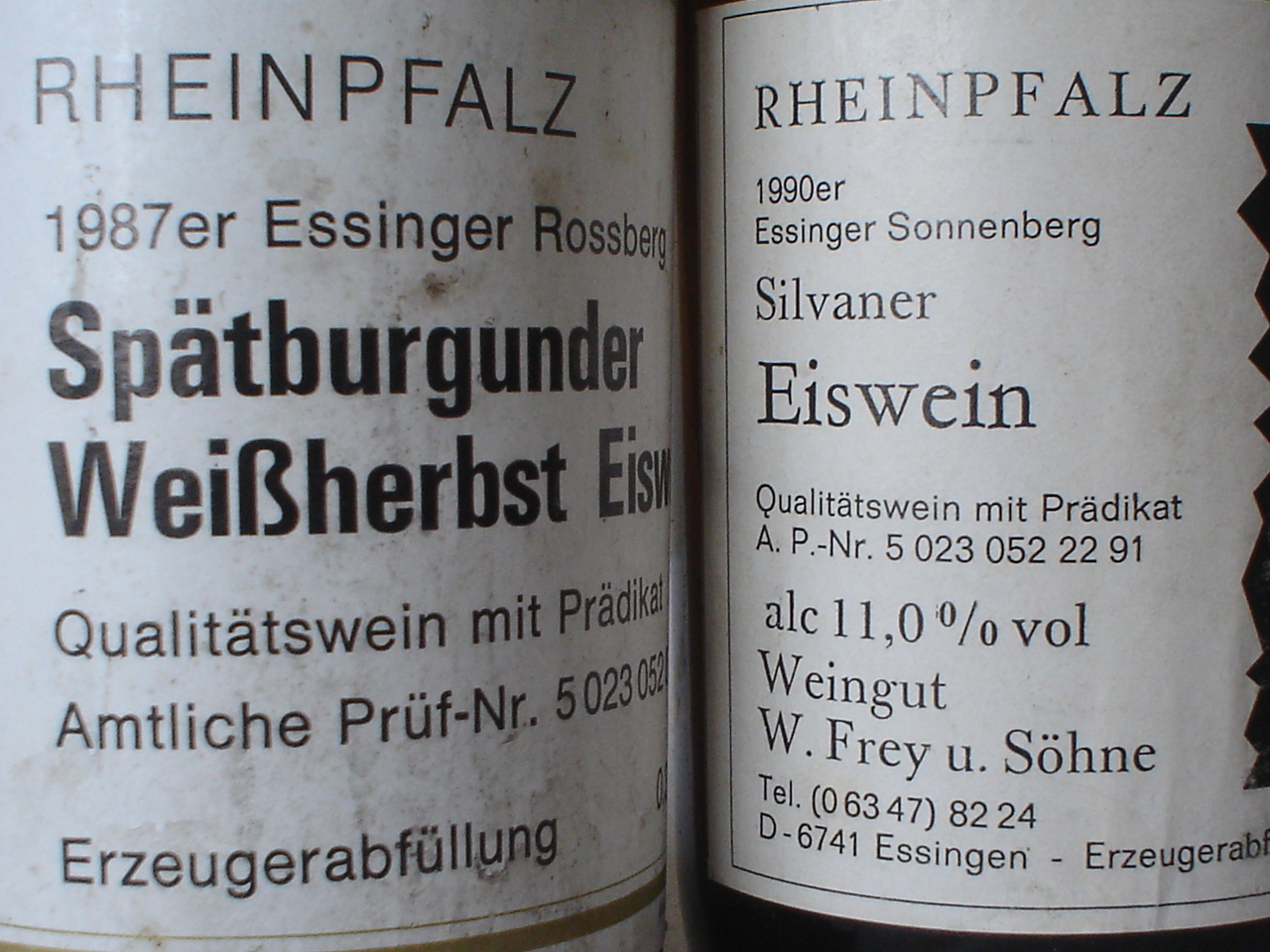
Unfortunately, in Russia and Georgia on the wines of industrially frozen berries are allowed to write anything. So if you are looking for a true ice wine, carefully read the label and the back label.
Gastronomy
Because ice wine is a dessert wine (and in the top of the scale of sweetness) with a fruity bouquet, it is appropriate to combine with a subtle but bold enough desserts to comply with balance of taste. If you prefer something more refined, then you may like the combination of soft cheeses.
Examples of successful pairs to iswalnum dessert: cheesecake, vanilla pudding, ice cream (try the coconut), Panna cotta with fresh fruit, white chocolate mousse.
The price tag
The cost of production is the main reason why ice wine is sold in bottles of reduced capacity (0,375 l, 0,5 occasionally), and the price it is consistently high. To produce 1 liter of ice wine goes 4-5 times more grapes than normal dry. Austrian on the Russian shelves start at around 3500r.booth 0.375 l, canadian approximately from 4500r. However, now the mention of ruble prices is a thankless task)
Excerpt
High acidity and sugar levels guarantee these wines potential in 30-50 years. But there’s one small detail. Depending on the yeast culture, ice wine can gain too much volatile acidity during fermentation that accelerates the development process of wine.
Anyway, don’t forget that with aging, the bouquet of any wine changes, as well as its color. The wine becomes sweeter to the taste (reducing acidity) and aroma appear tertiary aromas (aromas of aging), in this case molasses, maple and hazelnuts.