

Fans of champagne argue about the date of disgorging (of degremona). Normal people of these disputes do not understand. Perhaps because they do not know what the disgorging, and what there is to argue. Wine geeks will now ask for patience as I give help to neophytes.
Briefly: degorgeage disgorging (or dégorgement degirmen) – is the removal of yeast sediment from the bottle in the final stages of production of sparkling wines by the champagne method.
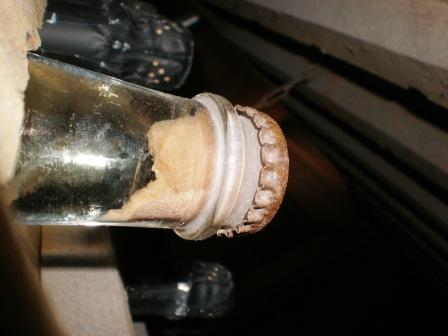
In the production of sparkling wine by champagne method of fermentation happens twice. First in the production of the base wine. Second, resulting in the formation of bubbles takes place in the bottle. At this time, they clog the interim tube and placed in the cellar to let the calm flow. If you leave the bottle alone for a long time, the wine will be able to develop interesting flavors.
When the yeast are done, before the winemaker gets tricky task to get rid of the silty yeast sediment without losing the bubbles.
For this bottle, slowly at first and gradually turned upside down (this process has a name – remuage) to collect all the sediment in the neck, which is then immersed in a glycol for freezing. The sediment inside the bottle turns to ice cap, bottles are uncorked, and a piece of ice with the frozen sediment shoots out of the bottle. It topped lost when this amount of wine (about 2%) and it is sealed with a permanent stopper.
The above-described process of removing frozen sediment from champagne ready and is called disgorging.
“Well, that’s that, you say, what is the controversy then?” Yes, in General… you can forget about it immediately after reading – this will not prevent you to enjoy the champagne. But fans it is very important to know the details that much I can tell about the taste and quality of a particular sample.
Here’s the thing.
When champagne undergoes its first stage of aging in the bottle before disgorging, the yeast responsible for secondary fermentation, after fermentation, die. Begins the process of autolysis post – mortem decomposition of yeast cells, forming a turbid precipitate in the bottle. This stage is the same “aging on lees”, which is mentioned in many descriptions of champagne.
If this process continues long enough – from 20 months to 10 years or more, then the result is the coveted and complex aromatics, good champagne, with a characteristic grain notes and a delicate bouquet.
Remnants of spent yeast, moreover, absorb the oxygen, preserving the freshness of taste and aroma of champagne.
However, after disgorging the other type of exposure. Now in the absence of dead yeast (no autolysis) and a new portion of oxygen (made during the removal of the frozen sediment), often with micro-doses of sugar added for flavour (see dosage) – the second stage of aging in the bottle.
If it lasts more than two years – that is 15, and then all of 20 – is a more complex bouquet with hints of nuts, biscuits, sometimes smoky.
The duration of this stage depends on us – from consumers, as the champagne goes on sale soon after disgorging. At this stage, without the protective action of yeast cells – the process of maturation is accelerated.
So the maturation process of champagne in the bottle are continuous and never end.
Important moments in time, determining the result of aging, are:
- The first stage of maturation (aging on lees) – how long?
- Disgorging – when?
- The second stage of maturation (aging without sediment) – how long?
For example, the first stage can last 5 years and the second 9. Or the first could be 2 years, and less than one second. And it is obvious that these drinks will significantly different.
The problem for the consumer is that the wine is rare to find any information about how long aging on the lees, and was produced when disgorging.
For 90% of champagnes produced by large houses in a constant and recognizable style, it may not be a problem. Most buyers of this champagne are not inclined to keep it, and aging before disgorging the popular brands is 2-3 years.
But the real lover of champagne, especially expensive bottle, deserves the right to know more. It should be borne in mind that champagne disgorging produce par tranche – i.e. parties. Two bottles of the same brand can have the same vintage, say 2002, but one of degorgement in 2007 and the second in 2012, and they taste will be noticeably different.
Most of the major manufacturers are reluctant to indicate the date of disgorgement on the label. Perhaps they fear that the buyer will scare away long-standing date – for fear that the flavors “not the same”. I’ve heard the theory that the date on the back label or Collette can confuse a buyer who will take her for an indication of vintage.
Some houses reveal this information ritrovamenti ways according to codes on the labels and links to their sites, even like wine geeks.
To the credit of the house, champagne Bruno Paillard (Bruno Paillard) has long been a pioneer in this matter and put the date of disgorgement on the back label. So do and Philippon (Champagne Philipponnat). Charles Heidsieck (Champagne Charles Heidsieck) again started doing this after a break of several years.
Top vine-growers (the ones that are indicated on the labels of champagne with the letters RM) also mark this important information on their wines.
See Champagne Egly-Ouriet (egly Ouriet) in our illustration, though with a mistake in the word “removed by disgorgement,” but indicated his date.
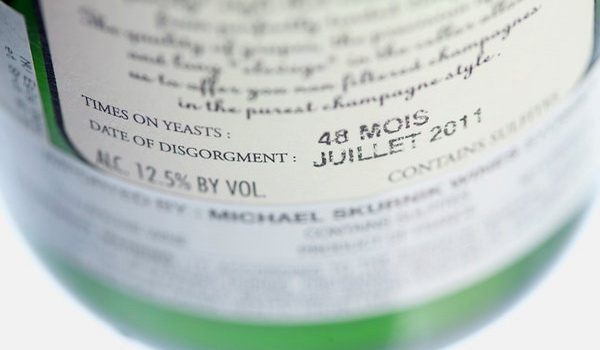
Most wine critics say about the need to do this: Peter Liem, Jancis Robinson – check. Pierre Rovani refused to do reviews of samples of champagne, for which the date is not specified degremona.
But let’s face it: there are lexical time. “Disgorging” is an ugly word. Especially does not fit with this drink, like champagne. It causes some nefarious okoloogilise Association. In English, the word is removed by disgorgement is a legal term for “the return of illegally obtained property.”
And truth be told, the date of removal of sediment is not the whole story. First of all, we are interested in how long the wine is aged on it lees and not much time has passed since his removal.
Here’s what I propose: let’s put this ridiculous “degorgement” – this term is not necessary. Let’s just write on the label something like: