This article is about the manufacturer. Cm. also an overview of sparkling wines by countries
Sparkling wine – a wine saturated with carbon dioxide that makes them fizzy.
Carbon dioxide is formed in the grape mash in the fermentation process naturally. The way in which carbon dioxide is pumped into the wine, as in soda, exists, but the number of such wines is a small (exports are not competitive, so we have almost no foreign wines in this category), and level that place them on the shelves “roundabout”, but not in this review.
Thus, the formation of carbon dioxide in the fermentation process – a natural and inevitable process. In the production of quiet (not sparkling) wines, the CO2 is a byproduct which escapes into the atmosphere. If the goal is the production of sparkling wines, the process of accumulation and retention of carbon dioxide is taken under control and acquires nuances, depending on the type of raw materials and the level of sparkling wine sought by the winemaker.
The presence of large amounts of carbon dioxide in the wine significantly affect its flavor and aroma perception, and therefore the choice of grapes and the place of growth, and method of wine production, which is envisioned to become sparkling, will differ from those that would have chosen the winemaker in the production of ordinary wines.
In the basis of modern production of quality sparkling wines is three stages:
All the main methods of sparkling wine production:
- “Antiquated” method (ancestral) – one fermentation is completed in closed bottles, collects a CO2
- Labor-intensive champagne methodin which the sparkling is achieved during re-fermentation of the base wine in individual bottles, with further aging wine on the lees and a special process of extraction.
- Simplified method reservoir (Sharma Martinotti) : re-fermentation in a single large sealed reservoir from which the finished sparkling wine, preserving pressure is filtered and bottled.
- Transfer method: “compromise” option, in which the wine ferments and accumulates CO2 in separate bottles and after additional aging on the lees, under pressure is discharged into the tank, where it is filtered and re-bottled.
Now everything in order.
Antiquated (rural)
Synonyms and variations: méthode rurale (“rural method”), méthode ancestrale (ancestral, “the method of the ancestors”, region Lima), méthode dioise (in the region Di of the Rhone valley), méthode gaillacoise (in the commune of Giac).
This is the simplest method – with the sole fermentation taking place in bottle. Since it all started. Ie in fact, the method of ancestral more traditional than “traditional champagne” method.
What is the essence.
Since the fermentation is always accompanied by release of carbon dioxide, the most simplest thing you can do to get a sparkling drink – close capacity to complete fermentation and not leave it of CO2 until serving. That’s the method.
Digestion begins in the usual way in barrels or stainless steel vats, then stops with cooling and bottled, in which the process is resumed in a confined space, collecting inside produce carbon dioxide.
The nuances of the method of “ancestors”
First: the pressure that is formed in a closed bottle during the secondary fermentation, may seem insufficient to inspire a lover of the usual sparkling (in the case of methode ancestrale commune of Limoux). Although during those “ancestors” the problem often was in reverse (see history of champagne)
The second point – the appearance.
Methode ancestrale in Lima (region Languedoc) is so traditional that it does not filter: spent yeast remains in the bottle – the wine is obtained with a noticeable sediment, cloudy.
The producers of the commune Gaillac (methode gaillacoise) and in the vicinity of the city of Di (methode dioise) Rhone Valley prefer to filter out sediment. In methode dioise the wine is filtered by the transfer method, i.e., it is not quite “the method of our ancestors”.
The third caveat of “rural” method – taste that happens in the end.
Since this production of sparkling wines using natural yeast (not derived in a laboratory culture, as in champagne), the result is not so stable, and the taste may be different… rural identity 🙂
However, the same methode dioise (Rhone Valley) allows mixing of different batches of wort by the cellar master before fermentation in bottles, to obtain the desired taste (as in champagne).
Anyway, these wines have their fans. Besides, familiarity with the wine made in the “old-fashioned” method is quite informative and useful for understanding the efforts made in the manufacture of more complex sparkling wines “champagne” method.
Sparkling wines produced in our time by this method in France: Blanquette methode ancestrale (Limoux, region Languedoc), Clairette de Die Tradition (“Cleret de Di tradison” (Rhone Valley), sparkling wine commune Gaillac: Gaillac methode gaillacoise, Gaillac methode ancestrale, a sparkling Cerdon Bugey (Bugey Cerdon, Savoie). Italy: Prosecco Colfondo, Campagne Frank Cornelissen.
Overall, these wines are distinguished by a low content of alcohol (6-9%) and often the presence of residual sweetness (i.e. it often semidry and semisweet wines).
Principal varieties: Muzak (Mauzac Blanc) , Muscat Blanc
The champagne method
Synonyms: the traditional method, classic method.
After primary fermentation the base wines quiet ( different crops and varieties) are mixed, they added yeast and sugar, after which they are bottled for re-fermentation and aging on the lees . Then, using a special series of manipulations, the sediment is collected in the bottle and is removed (see disgorging). In sparkling wine, in bottles, is added a mixture of cane sugar that determines the final degree of sweetness of the wine, then the wine is sent on aging or sold.
The pressure in bottle: 5-6 bar
Details about this method with all the terms here .
The history of the “champagne method” set forth herein .
In addition to the champagne, this method is used in the production of sparkling wines such as crémant (France), Franciacorta (Italy), Oltrepò Pavese Metodo Classico (Italy), Trento (Italy), Alta Langa (Italy), cava (Spain) sparkling premium German Winzersekt as well as English sparkling wines.
Sharma Method Martinotti
Synonyms: Sharma method (Charmat), the Italian method, tank method, pressure tank
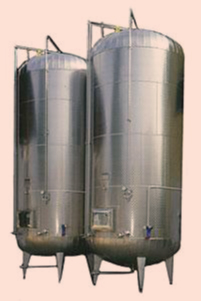
After primary fermentation, the quiet, the base wine is placed in large steel tanks, where conditions of controlled pressure and temperature, the secondary fermentation due to the added yeast and sugar. Then, maintaining pressure, the wine is filtered from the sediment and bottled.
The pressure in bottle: 2,5-3,5 bar
The use of large tanks allows to accelerate and simplify the process of secondary fermentation. However, this method does not provide long aging on the lees, which is a necessary condition for obtaining a complex sparkling wine with developed aromatics.
The history of the method
In 1895, Federico Martinotti (Federico Martinotti), oenologist from the Italian province of Asti designed “autoclave” – a large VAT of cooling system and maintain the pressure, which made the Frenchman Momeni (Maumene) substitution of secondary fermentation of sparkling wine in bottle fermentation in large containers to simplify the process. Installing collected by Momeni in 1852, were not suitable for use in production.
With the invention of the autoclave, Martinotti in Italy began the introduction of the tank method of sparkling wine production in small volumes.
In 1907 the Frenchman eugène Sharma (Eugene Charmat) brought the design of the autoclave, Martinotti applicable to industrial sample, which used a steel VAT, enameled inside.
Hence, all the above names of this method.
By the method of Sharma Martinotti Italian wine Prosecco is produced, most of the other Italian sparkling wines, most German Sekt sparkling wines most sparkling wines of the New world.
A modified method of Sharma is used in the production of sparkling Asti