Sicilia (Sicily) – the southernmost wine region of Italy and the largest island in the Mediterranean sea.
More than 2500 years Sicily remained a major center of winemaking in the Mediterranean, although the reputation and style of the local wines has changed very significantly. Once Sicily was the famous sweet wines from Muscat (such as Pantelleria), and later fortified Marsala wine. Now the most famous representatives of this island became dry wine basic level, available in a wide regional category for Terre Siciliane IGT.
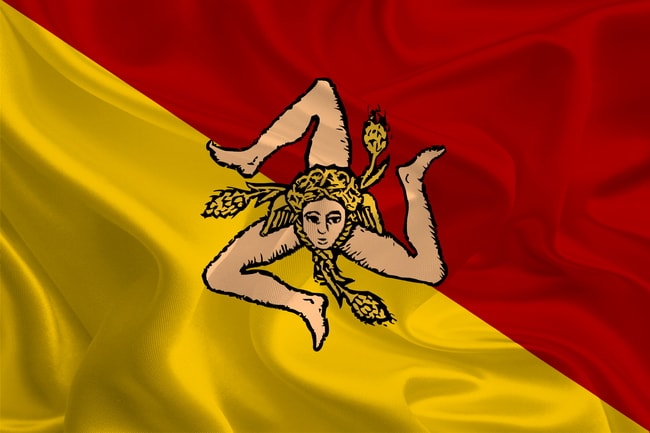
At the widest part of Sicily, extends for 280 km from East to West and approximately one third of this length from North to South. The almost triangular shape of the island provided him with a second name – Trinacria (i.e. a triangle), used in the Middle ages, which is reflected in the coat of arms of Sicily, which depicts a triskelion – an ancient ornamental motif of three figures coming from the center (on the flag of Sicily is a three bent legs).
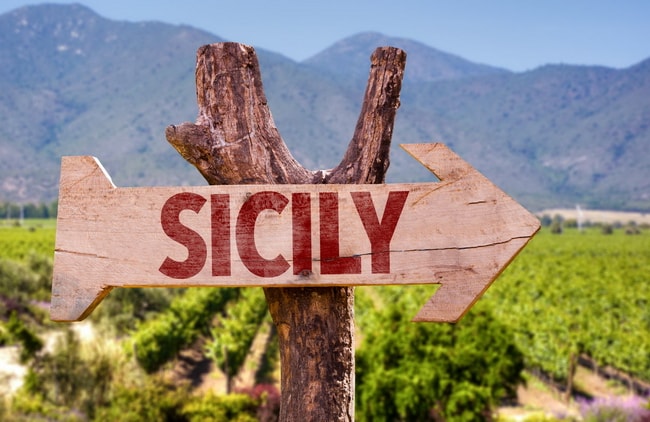
A classic Mediterranean climate – lots of sunshine and a stable average rainfall – ideal conditions for viticulture and winemaking. Dry warm environment means less risk of rot and mildew, especially in well-flushed coastal areas. A huge plus for this – no need for active use of chemicals to protect the vines and the possibility of stable production of organic wines.
In addition to grapes and wine, Sicilian export is based on cereals, olives and citrus fruits for which the region’s economy was based for centuries.
Ironically, close to the ideal conditions for the cultivation of vines in Sicily played a key role in the decline of local wine at the end of the 20th century. Plenty of sun and low risks of infection provoked the Sicilian winegrowers to increase the productivity of vineyards, especially in the context of public subsidy of such practices. Thousands of hectares of shrub planting vines actively shifted to the pergola and Guyot system.
The rapid growth in yields per hectare inevitably led to the production of unbalanced wines with dull flavors. The drop in quality led to a drop in consumer interest. Soon the market was overflowing with cheap base of Sicilian wine. Fortunately, this lesson seems to have been learned, and today Sicily is one of the most promising Italian wine regions.
The Sicilian soil, and the mountains which they form is an interesting subject to study winemaking on the island. Stratovolcano Etna dominates the landscape of Eastern Sicily. It was he responsible for the dark, mineral-rich soil, where the famous vineyards of the Etna DOC appellation. Today the vines are planted above its slope, to get the maximum benefit from cooler air and richer soils.
80 km to the South contribute the Hyblaean mountains (munti’s guest area; Ibblei), whose more gentle slopes and the adjoining coastal plains form the landscape of the appellations Siracusa, Noto, Eloro and Vittoria, stretching in the form of a month from the East to the West.
About one fifth of the Islands in the West of Sicily is Marsala DOC appellation. Within the borders of this territory is also home to the appellations Alcamo, Contessa Entellina, Delia Nivolelli, Erice, Menfi, Monreale, Salaparuta, Santa Margherita di Belice and Sciacca.
We should also mention the small appellation of Sambuca di Sicilia DOC, whose wines have nothing in common with the well-known anise liqueur Sambuca.
The main grape varieties
Key grape varieties in Sicilian wine production is represented by a combination of “homemade” varieties historically cultivated on the island and next to the international trend.
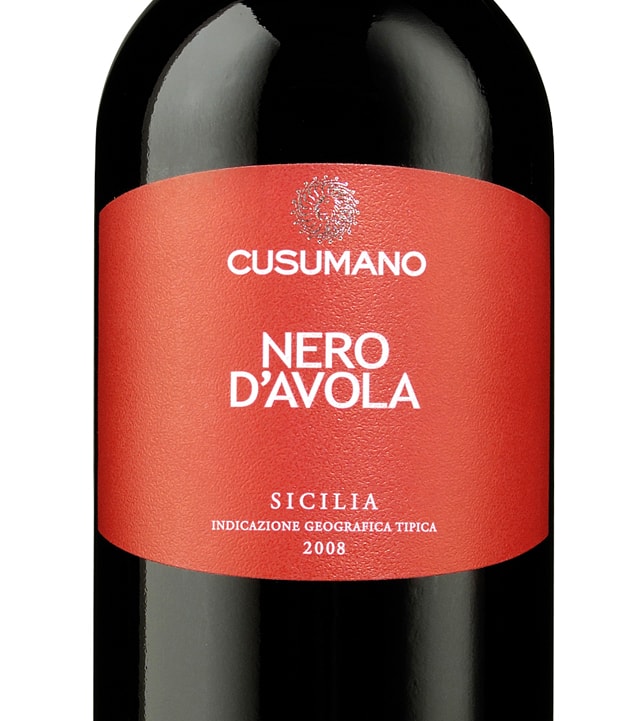
Of the most important native Nero d’avola and kataratto, occupying 16% and 32% of the area of the island of vineyards (as of 2008).
An impressive amount of wine from kataratto allows you to send it “help” to the Northern regions where it is included in the composition of blends to compensate for the lack of body and over-acidity local berries. A large part of what remains, is the production of the Marsala in combination with the white varieties Grillo and inzolia.
Marsala is comparable to the value in the Sicilian winemaking has a lesser known sweet wine – Moscato di Pantelleria, which is based on Muscat of Alexandria.
Among other important varieties: grecanico, and, Grenache, Perricone, Nocera, and frappato.
Frappato is a key grade in the only Sicilian wine level DOCG – Cerasuolo di Vittoria (Cerasuolo di Vittoria). Related nerello mascalese and nerello capucci is not significant in terms of volume but important in its role in the wines of the environs of mount Etna.
Syrah (Shiraz) came here from the South of France, where the terroir-based also are hot summers and stony-sandy soils. Brutal red variety of the Rhone Valley looks very promising in terms of Sicilian baked, clearly surpassing Chardonnay, not able to provide a good balance.
Trebbiano, the ubiquitous high-yielding white variety, common throughout Italy, and on Sicily, but the special role he’s not playing.
The topography of the island has influenced not only how to create a Sicilian wine, but also to the development of local Commerce and formed a trade customs. In the late middle ages Palermo was one of the most densely populated cities in Europe, with the appropriate appetites in the consumption of wine. Despite the large volumes of wine production in the East of Sicily, in Palermo, he was transported with the other end of the island, not less than from Campania and Lazio, so the mountainous terrain surrounds the port city.
Given the intensity of contacts Palermo on the West coast of Central Italy and the proximity of Messina to the southern edge of the Peninsula (between them just a couple of miles of the Strait of Messina), not surprising that the two Sicilian cities experienced a greater impact the main Italy than from each other. And if in Palermo wine brought from mainland Italy from Messina the Sicilian was carrying wine for export to Africa and the Eastern Mediterranean.
The present level of development of transport and communications have significantly reduced the impact of geographic factors on social and economic life in Sicily. But from the point of view of winemaking, he continues to define the landscape of the region, providing local wines excellent opportunities for bright positioning in a number of the world’s wine market.