For the world, Bordeaux is the very embodiment of the wine. Here is located the famous in our country Chateau Margaux.
- History of Bordeaux wine
- The wine Bordeaux (Bordeaux AOC)
- The wine Bordeaux supérieur (Bordeaux Superieur AOC)
Today the wine remains disappear from the streets of the city in the port is no longer aligned in symmetrical rows of barriques and large business warehouses moved to the industrial areas of the suburb. Almost disappeared and small bars, cellars where you can go in the morning to drink a glass of wine literatora. Other times, other manners.
The history of winemaking in Bordeaux
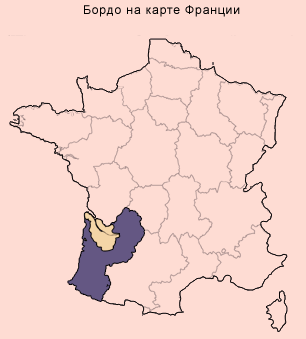
It is worth saying that this is not the first paradox in the long history of Bordeaux wine. Recall that here the wine was known even before the appearance of the vineyards, when in the first half of I century BC (before the arrival of the Roman legions in Aquitaine) merchants from the Campaign began to sell the wine to local residents. In a sense, it is thanks to the guilt of the people of Aquitaine became acquainted with the Roman civilization.
Vineyards appeared here in the first century BC But it seems that they had spread only in the twelfth century: after the wedding Elenore of Aquitaine and the future king of England Henry Plantagenet had created a favourable situation for the export of “clarets” (red wines of Bordeaux) in Britain. The supply of young wines was by sea before the onset of the Christmas holidays. Has not yet been found ways to store wine, so wine, lived for a year, valued less than their properties were partially changed.
At the end of the XVII century the “clarets” new competitors – new drinks (tea, coffee, chocolate) and wine of the Iberian Peninsula with a more generous taste. Besides the war waged by Louis XIV, led to the imposition of economic sanctions against French wines. However, the highest English society retains affection for “the clarets”. So, at the beginning of the XVIII century a few London merchants tried to create a new, more fine wines, new French Clarets, who they bought young and then aged. In order to increase their income merchants began to bottle.
Corked and sealed with wax bottles guaranteed a good origin of wines. Discreetly connecting the terroir of château-great wines, which meant the advent of quality control. From this point, the price of wine is dependent on its quality, properties and how it was valued.
This situation has prompted growers to carefully select terroirs, limit productivity and maintain the wine in barrels. At the same time they have begun to use sulfur dioxide to wine is best stored and aged, and also had the lightening technology pasting and perelivnoj.
At the end of the XVIII century, established the hierarchy of the Bordeaux CRU. In the nineteenth century, despite the revolution and the Imperial wars, which the English market was temporarily closed, the prestige of Bordeaux wines continued to grow, and in 1855 was created the famous classification of the CRU of the médoc of 1855, which operates until today, despite the criticism about her.
This is favorable for French wines, the company changed difficult times. The vineyard was affected by disease (phylloxera and mildew), its imprint on the wine industry has imposed economic crises and world wars. The era of prosperity of Bordeaux wines is back in the period from 1960 to the late 80-ies of the sensitive Quality of the wines has improved, to the same all over the world began to show interest in great wines. Hierarchy of terroirs and CRUs has regained its true value, but it was more beneficial for red than for white wines. Later, in the early 90-ies on the structure of the vineyard is affected by the economic crisis.
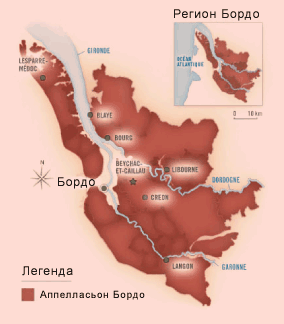
The Bordeaux vineyards are located around the three main rivers: the Garonne, the Dordogne and their common estuary of the Gironde.
These rivers create the conditions favorable for growing grapes, an excellent location in the hills and the temperature. In addition, they play an important economic role, providing a wine delivery to the final consumer.
The Bordeaux region has a relatively mild climate (average annual temperature is 7.5 °C minimum 17°C Maximum), from the ocean, the vineyard is protected pine forest. Winter frosts are very rare here (1956,1958,1985 gg.). But temperatures below -2°C during the emergence of young buds (April-may) can lead to their death. If the period of flowering in June is cold and wet weather, there is a risk of the formation of barren flowers, which means that the berries will be inferior.
In both cases, possible partial loss of the crop. To obtain a quality crop of warm and dry weather from July to October and especially during the last four weeks before harvest (overall, 2008 hours of sunshine per year).
The climate in Bordeaux is quite humid (900 mm of rain per year), especially in the spring when the weather is not always good. However, the fall here is gorgeous. Many vintages were saved in extremis thanks to the fact, that it was an unusually warm autumn. The great wines of Bordeaux would not be without this good fortune.
Throughout the year, for the vineyard is carefully tended. In Bordeaux in 1885, the University scientists invented “Bordeaux liquid” (a mixture of copper sulfate and lime) to combat mildew. It is known worldwide and is still used, but today growers have a lot more “environmentally friendly” substances.
Varieties in Bordeaux (Bordeaux AOC)
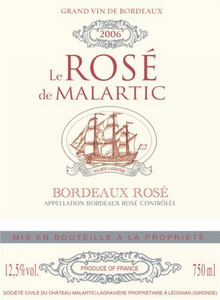
Wine in Bordeaux has always been made from several varieties with complementary characteristics.
Red Bordeaux
Red wines are produced mainly from Merlot and Cabernet (90% of landings of red wines): Cabernet Sauvignon and Cabernet franc.
The presence of Cabernet gives the wine tannic structure, but it takes several years of exposure, to the quality of the class has reached the optimum level. Besides Cabernet Sauvignon is a late variety that resists Botrytis, but sometimes has problems with his maturation.
Merlot gives the wine a flexibility and ensures faster development of wine. This is an earlier variety, it ripens well, but is sensitive to frost and prone to Botrytis and education netherbloom. It has long been the combination of these two varieties, the share of which varies depending on the soil and types of wine, gives the best results.
White Bordeaux
White wines are produced mainly from Semillon (52% of the plantings of white varieties). In some places it is supplemented with a variety Colombard (11%), but more common to use a Sauvignon Blanc, and this trend is increasing. Also used Muscadelle (15%), having a special very delicate flavors. Variety Ugni Blanc is used less.
A good year
Bordeaux winemakers can’t complain about the lack of great vintages. Enough to mention 2010, 2009, 2000, 1995, 1990, 1982, 1975, 1961, 1959 years for red wines, also 1989, 1988, 1985, 1983,1981, 1979, 1978, 1976, 1970, 1966 he does Not forget the most famous vintages of earlier years– 1955, 1949, 1947, 1945, 1929 and 1928
In recent years there has been an increase in the number of high-quality vintages, and, accordingly, reducing the number of mediocre. Perhaps this was influenced by favorable climatic conditions, but mostly this is due to the efforts of growers that use scientific advances to improve the growing conditions and vinification. Growers of Bordeaux have exceptional terroirs, and they skillfully emphasize their strengths, using the most sophisticated technologies, currently.
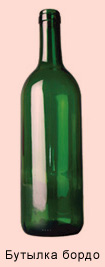
In most of the Grand CRU bottling has long been produced on farms. However, other farms have introduced this practice only 10-15 years ago. As for the other wines of the regional appellations, it has traditionally only winemaker the grapes were grown and vinified it; then the arena went merchant.
The situation is gradually changing, and today, wine in most AOS ripen, grow old and stored directly from the manufacturer. The progress of modern oenology allows in most cases to carry out the vinification in such a way that the result is already ready to drink wine, so wine-growers themselves want to do bottling, to enhance their value.
Cooperative cellars have played a role in this process, creating associations engaged in the bottling and sale of wines. Merchants continued to play an important role in the level of sales, particularly exports of wines due to its already long-established relations. Not excluded, however, that in the future the sale of wines under the brands merchants will once again develop with large retail chains.
The market of Bordeaux wines, whose production volume is very significant, of course, influenced by economic conditions and is dependent on the amount and quality of the crop. In the recent past, the role of the regulator of the market played the Interprofessional Council for Bordeaux wines, which oversaw the creation of a stabilization reserves, reserves of high-quality wines and have taken the financial impact.
Viticultural unions from their part, protect different AOS, defining quality criteria. They performed under the control INАО tasting of all wines produced per year, and if the wine is not of sufficient quality, they can deprive him of the status of the appellation.
Wine Association (“Jurad” in the region of Saint-Emilion, “Commanderia Bontant” in the regions of Medoc and Graves, “Connetable” in the region Guyen, etc.) regularly organize events with a folk orientation to increase the popularity of Bordeaux wines. Their actions koordiniruyutsya the Great Council of Bordeaux wines.
All this advertising, commercial and industrial activity suggests that the Bordeaux wines of today are an economic product subject to strict control. The products of this region (in 2002 its volume was equal to 5 743 291 GL, representing more than a quarter of the production of AOC wines in France) is calculated in billions of euros, with 1,265 billion is export.
The wine is of great importance for the region, as it is believed that every sixth inhabitant of the Gironde Department directly or indirectly related to viticulture and winemaking. But the wine, be it red, dry white or literate, this Gascon region represents not only an economic product. It is also, and most importantly, is part of the culture, since for each label hides sometimes locks fabulous architecture, sometimes a simple peasant house, but in any case, it is the vineyards and wine cellars, where people work, use their skills, tradition and memory.
According to the materials of the guide Hachette