
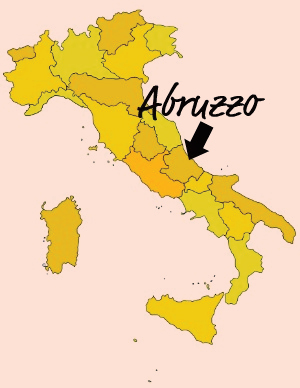
Abruzzo (Abruzzo) – a wine region on the Eastern (Adriatic) coast of Italy, located in the middle of the “boot”. Adjacent to the regions of Marche to the North, Lazio to the West/South-West and Molise to the South-East.
In Abruzzo there is one appellation DOCG – Montepulciano d’abruzzo Colline Teramane and the number of DOC appellations:
- Montepulciano d’abruzzo
- Cerasuolo Montepulciano d’abruzzo
- Trebbiano d’abruzzo
- Controguerra
- Terre Tollesi (Tullum)
- Villamagna
The star varietal of the region is the red Montepulciano and white Trebbiano. In the second and third plans a couple of international varieties such as Chardonnay, Cabernet Sauvignon and Merlot and Italian Sangiovese (Sangiovese), Passerini (Passerina), Pecorino (Pecorino) and CocaCola (Cococciola).
The usual practice of aging for Abruzzo – oak barrels, while Montepulciano Cerasuolo is aged in stainless steel.
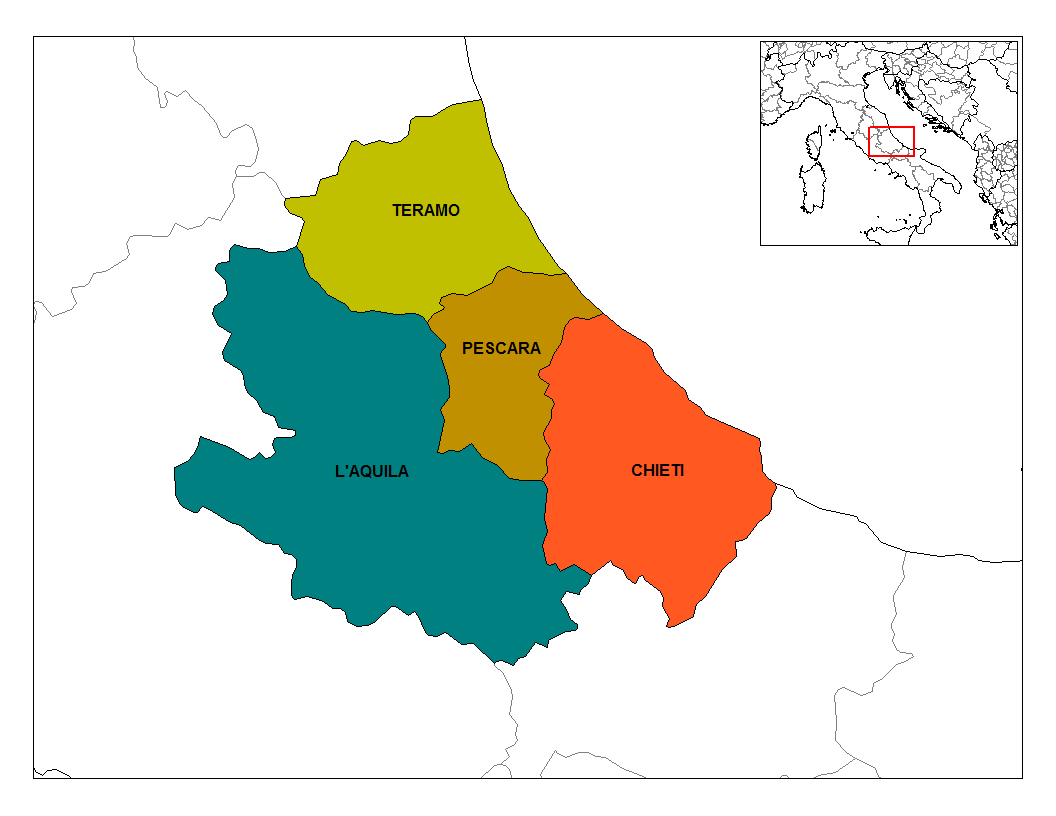
The main part of vineyards are located in hilly areas, 75% of which are in the province of Chieti (Chieti), and the other in Pescara (Pescara), Teramo (Teramo) and L’aquila (L’aquila).
Winemaking traditions in Abruzzo date back to the 6th century BC, when the Etruscans brought the wine culture. In those days the vineyards of Abruzzo were concentrated mainly around the Peligna valley province of L’aquila. However, there is evidence that winemaking was already here in the 4th century BC, when cultivated similar to the Muscat grape Apianae. It is also believed that during his epic crossing of the Alps Hannibal’s army was supplied with wine from the province of Teramo in Abruzzo, historically known as Pretuzi.
Unfortunately, then the wine faded for many centuries together with the local population. But the last 40-50 years have become a Renaissance thanks to the efforts of wine-making cooperatives, concentrated in the province of Chieti (Chieti).
Historically poor region of Abruzzo today in the eyes of the blooms and gaining economic ground. The main buyers of the wines of Abruzzo are Germany, USA and Canada, and recently catching up to them and the United Kingdom, Sweden, Denmark and Norway.
With the revival of viticulture, the region has filled and Balk, which has long prevailed in total volume of production of wine. Today, however, the visible image of Abruzzo, and as a consequence – the shift of focus to the production of quality wines and the growing number of “boutique” wineries. One of the pioneers of this movement was Gianni Masciarelli, a new generation of oenologists, wine experts and entrepreneurs who are the driving force of those quality improvements that transform the wine landscape of the region.
The area of vineyards of Abruzzo is not less than 36 thousand hectares, and annual production of more than 3.5 million liters of wine. And yet, it is only the fifth place in the top five of the Italian leaders, where the first 4 belong to Sicily, Puglia, Veneto and Emilia-Romagna.
Looks Abruzzo is geographically remarkable. Exhilarating mountain landscape, with its long line of sea coast and the lush green slopes with many forests and national parks. Abruzzo is ideally situated between the Adriatic sea from the East and the Apennines mountains of the Majella to the West, including Gran Sasso, one of the highest peaks in Italy with a height of more 2895м.
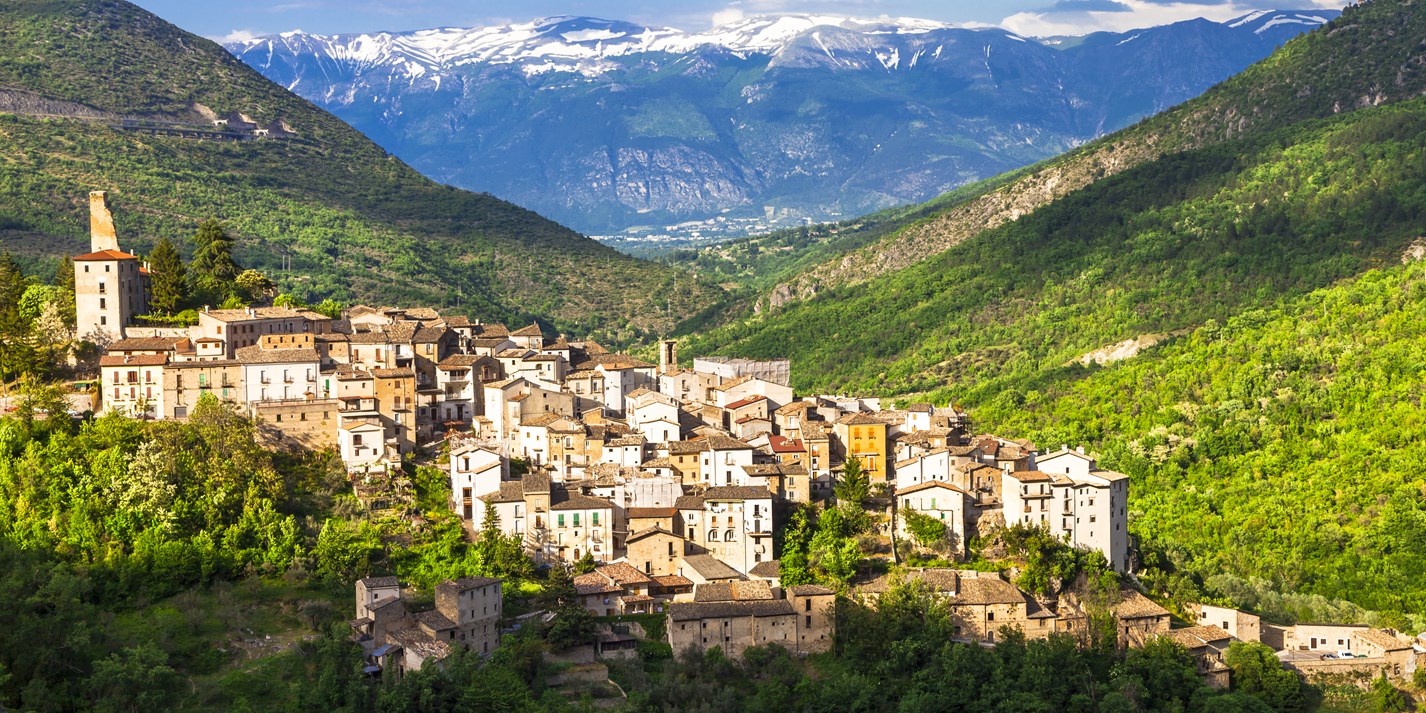
It is not surprising that Abruzzo provides a great space for the talented winemaker. The vines bloom on the magnificent terroirs, basking in the sun baths at the same time, in different conditions: warm and dry at the coast and a more continental climate inland of the Peninsula (where it is hot in summer and cold in winter). Besides, the high altitudes provide a noticeable variation in daily temperatures. In combination with the cold mountain air flow, this creates extremely favorable mesoclimate for the vines located on the mountain terraces. It is considered to be the most successful on the low vineyards of Teramo (referred to as Colline Teramane on the labels).
Typical Abruzzo phenomenon – the use of the pergola (pergola – like gazebo structure, in which twisted vines). So organized about 80% of all vineyards. New, modern vineyards are usually planted in rows.