White naturally semi-sweet and sweet wines vins moelleux, liquoreux vins
These wines are usually referred to as dessert, because they often drink as a dessert. In France there are three types of elite naturally sweet white wines.
The first are the so-called vendange tardive – vendanges tardives (in eng. late harvest), which literally translates as “late harvest”, or “late harvest”, although it doesn’t necessarily mean late harvest grapes. Most important is the high sugar content of the berries.
For sweet wines, the production of which used the so-called mutage (the interruption of the fermentation by adding alcohol) use the designation vin doux naturel (see, for example, Banyuls)
In a very hot year, you can get the required amount of sugar and to normal collection time. The rest – business technology. From late harvest grapes can be obtained as semi-dry wine with very high alcohol content and naturally semi-sweet or sweet, if you interrupt fermentation with sulphur dioxide. In this case, the fault is a lot of natural sugar (residual sugar) with less than a high alcohol content.
The second type of natural premium sweet wine called van de Pai –vin de paille (eng. straw wine), which literally means “straw wine”. It is made from dried, or raisined, grapes. This is one of the oldest types of wines. Bunches of grapes are laid on straw mats or hung from the ceiling in a special room with good air circulation and leave it for two or three months.
As a result the berries lose much of the contained water, thereby increasing blood sugar levels, which can reach 400 or more grams per liter of wort. Van de Pai is often aged in oak barrels for up to two to three years.
Third, the richest, most complex and most valuable type of naturally sweet white wine produced from botrytised grapes, i.e. grapes affected by microscopic fungus botrytis cinerea, that develops on grapes in the fall under certain climatic conditions. This phenomenon is scientifically called motricitatii, and in everyday language – pourriture noble (“noble rot”, or “noble rot”). In Alsace and sometimes in other wine regions of France on the label of these wines write: Selection de Grains Nobles (selected noble berries).
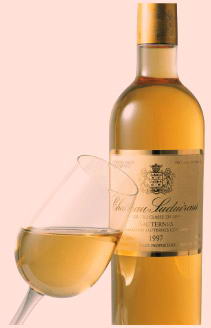
The most famous example of wines from botrytised grapes – Bordeaux Sauternes. In addition to Bordeaux and Alsace, these wines in large enough quantities do in the Loire Valley (see the quart de Chaumes) and parts of the southwest.
From other countries-producers need to mention Germany and Austria (the category of the so-called trockenbeerenauslese and ice wine), and Hungary (Tokaj). It should be noted that weather conditions in most of these areas do not allow the berries to the desired condition every year.
Not to be confused with above mentioned three type of elite wines with a simple and cheap natural semi-sweet wine, which is produced by interrupting alcoholic fermentation of grape must normal. As an example of the latter can be called a Bordeaux moelleux. To recognize this type of wine is not difficult: its price will be modest, as specified on the label alcohol content is low (about 11%). Tasting will also tell you that it is a very simple and easy fault do not differ in richness and complexity and do not have any significant aging potential in the bottle.