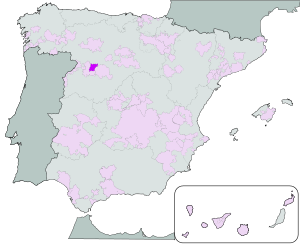
Toro (Toro) – wine region in Castilla-león in Northwest Spain. It borders with the region of Rueda. Known for its powerful dry red wines from Tempranillo.
It got its name from the ancient city of Toro on the Douro river (which cuts off the Northern part of the region), 65 km from the border with Portugal.
The word “Toro” in Spanish – “bull”. And although I do not understand the connection with the city’s name, this word is very suitable strong and hard the red wines of the region.
Wine from Toro has been known and honored in the 13th century, when king Alfonso IX of León spoke about him and about his Kingdom: “TEPCO un Toro que me da vino y un León que me lo bebe”, – “I Have a Toro [bull], which gives wine and Leon [Leo] who drink them”.
Tempranillo, which in each Spanish region aim to appoint a local name, referred to herein as “Tinta de Toro” (Tinta de Toro), and it is here the dominant variety.
The Garnacha is also grown but in small quantities. Mainly for the production of rosé wines Rosado Toro.
White too little. Modest amounts of Malvasia and Verdejo Blanco – for the production of wine Toro Blanco (white maintenance).
The climate is definitely continental Thoreau as his neighbors in the Castilian plateau, in the regions of Rueda, Cigales and Ribera del Duero. This means that the hot, dry summer gives way to the cold harsh winter.
Although to the North and to the West of Toro extend waters of the Atlantic ocean, he from them, and neither hot nor cold, because he is separated from them by the Cantabrian Cordillera. Temperature range here from -11° to +36° C, with annual rainfall of just 350mm. Under these conditions, the grapes helps to survive the Duero river, which shakes the local vineyards.
Height is an important factor in the terroir of Toro. The region lies in the heart of Castile-león, on the vast high plateau between ridges of the Cantabrian Cordillera and the Central mountain system of Spain. Most Toro vineyards located at an altitude from 600 m to 850 m above the sea level, which somehow contributes to a small decrease of temperature.
The heat of the day, low rainfall and abundant sunlight – all this gives birth to powerful and hard wines. If you do not keep up with the harvest, Tempranillo in Toro is able to ripen to such a sugar content that it will be possible to make wine with an alcohol of 16°. The rules DO set a limit fortress in 15° of., but in practice, winemakers try to keep it within the limits of 13.5° to the wine you could drink without wincing.
In Toro there is a common practice in Spain, dividing wines into categories according to the duration of aging: Crianza, Riserva and Gran Riserva.
Obvious potential as Toro wine region attracts winemakers from other regions, including already proved themselves masters: Pintia (from the owners of VEGA Sicilia), Bodegas Mauro (Bodegas Mauro) and Eliseo Campo (Campo Eliseo, the joint brainchild of Michel Rolland and Francois Lurton), Teso La Monja (the Eguren family).
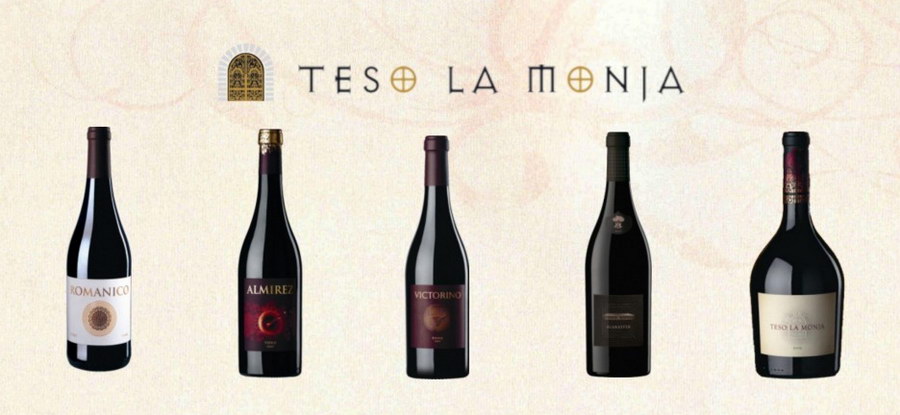
Such a great interest in the region contributed to the rapid formation of a modern regional style of winemaking and the emergence of a new Spanish superstar Teso La Monja (La Monja Teso), headed in 2016, the rating of the most expensive wines of Spain.