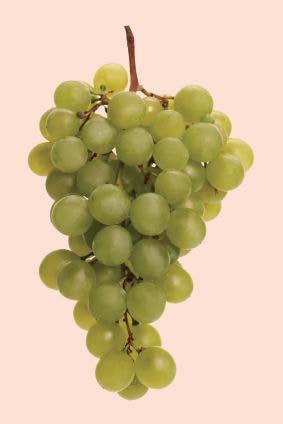
Sauvignon Blanc (Sauvignon Blanc), or just “Sauvignon” – white technical (wine) grapes. Included among the “international varieties”.
The country of origin of Sauvignon – France.
The historical homeland of the Sauvignon is considered to Bordeaux. However, its his believe in the Loire Valley where it is due to the terroir more than proved himself as an independent sort (a vivid example – the wine Pouilly fumé and Sancerre), in contrast to Bordeaux, where the best results in the production of white wines made with a blend of Sauvignon and Semillon (for example, white wines of the appellation Graves and the famous sweet Sauternes).
In the United States Sauvignon is known under the name fyume Blanc (Fumé Blanc), which is the American marketing name Sauvignon – a reference to a recognized wines of Pouilly-Fumé.
The French have the word Fumé (literally “smoky) , as applied to wine, you may find several interpretations: from the appearance of grapes (covered at the time of maturity of the bloom, a whitish haze) to the characteristics of the terroir: the mists of the Loire Valley, “dense like smoke” and soil that contains a lot of silica, and the inclusion of limestone, which, according to local winemakers, makes their wines from Sauvignon hue rifle gunpowder – hence Fumé .
However, for American Sauvignon the theme of “smoke” in the glass is disclosed by the vinification with the participation of toasted barrels.
Wine from Sauvignon
It is better to drink young. It is aged rare and outstanding results with age not demonstrated (with the exception of the sweet Sauternes wine, which, however, the Sauvignon is less than half of the blend). Aging in oak barrels for it also not typical, though practiced by some, including eminent winemakers – as an experiment in search of new faces the class (France). Or in favor of the special taste of local consumers (US).
Aromas of white Sauvignon
“Classic” are the flavors of wines from Sauvignon grown in a cool climate, without aging in oak barrels.
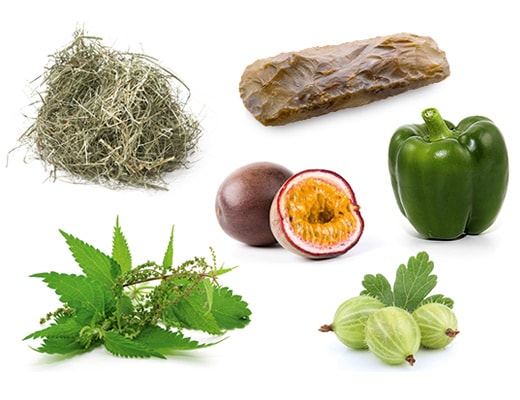
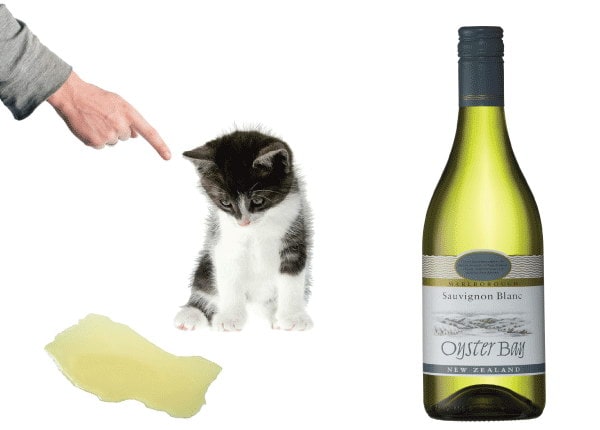
A textbook can be considered a description of Sauvignon from the Loire Valley: very fresh, with aromas of flint, herbs (nettle, black currant leaves), bell pepper, gooseberry, green apples and… what is usually pronounced in French – pipi de chat.
The latter notes – very bright and characteristic of Sauvignon, which it love lovers of variety.
Do not be confused that it is translated as “cat’s Pipi” (exactly what you think).
The same substance that gives the Sauvignon its specific tone
(3-mercapto-3-methylbutan-1-ol) is contained in the black currant buds, but what a difference!
In warmer regions the bouquet of Sauvignon green grass replaced by scents of hay and notes of gooseberry and Apple aromas are complemented by exotic fruits.
New Zealand Sauvignon has a distinct herbal odor reminiscent of foliage of tomatoes, wonderfully combined with aromas of tropical fruit and thus the characteristic “kosack” tone. The finish is noticeable and characteristic of white new Zealand wine bitterness.
The geography of Sauvignon Blanc
The status of “international” varieties tells us that the wine from the Sauvignon, in addition to the historical homeland, is common in many wine regions of the world. Sauvignon actively developed in the New world: Chile, Argentina, Australia, South Africa, USA. But, as is usually the case – with varying degrees of success.
In Italy good results this variety produces in the North – in the regions of Alto Adige and Friuli.
Certainly striking and no doubt a good story can be considered the wine is Sauvignon Blanc from New Zealand, for which he became one of the flagship varieties.
In Australia Sauvignon is often blended with varieties Semillon (as in Bordeaux).
In the United States, the main region where wine is made from Sauvignon, is a CA. There its bright aromatics, many believe is too aggressive and often extinguish it vinification or aging in oak. On the labels, regardless of the stylistic content often point the name “Fume Blanc”, which in 1968 was used by the manufacturer from NAPA, Robert Mondavi (Robert Mondavi), for market launch of barrel-aged wine from Sauvignon, not used at that time popular in America. To this day in America under this name is sold more bottles than, in fact, with the words “Sauvignon”.