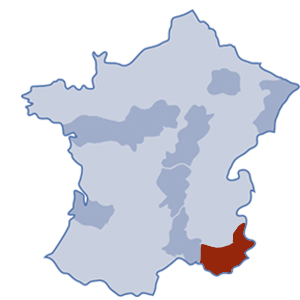
Provence (Provence) – a wine region on the edge of the South-East of France, famous for the quality and quantity of their rosé wines and a warm, temperate climate.
Modernization that swept most of the southern French wine areas in Provence until much turned. But something is changing. In particular, the grapes underwent a major revision in the last couple of decades.
Grapes
The traditional for the region varieties Carignan, Barbara (Sardinia known as Barbarossa) and kalidor come more commercially successful: Grenache, Syrah and even Cabernet Sauvignon.
The concept of “improving varieties” (cépages améliorateurs) is gaining in Provence already no less popular than in neighbouring Languedoc-Roussillon. But if Barbara (Barbaroux) and kalidor (Calitor) gradually left the stage (in the period 2000-2015), the traditionally successful here Mourvedre, Tibur (Tibouren) and Vermentino (known in Provence as Rolle, Rolle) remained in favor, demonstrating its potential in the local red, rosé and white wines, respectively.
Terroir
The vineyards of Provence cover the territory of the South-Eastern coast of France for about 200 km from East to West. None of the vineyard of Provence, is not removed from the Mediterranean sea, more than 56 km away, In such a clearly Mediterranean climate, the vines are bathed in sunshine 3000 hours per year, with an average annual temperature of 14.5 degrees. Long dry summers provides perfect conditions during harvest almost every year, giving local winemakers need to worry about rot and many of the “weather” diseases.
Wind is a kind of climate accent of the South of France (for example, cold Mistral blowing Ron) – there is also a significant factor. They further reduce the risk of fungal diseases, however, increase the risk of mechanical damage to the berries and even the vines. Perfect summer conditions in some way “kompensiruet” strong storms rolling over the region in spring and autumn, bringing in a short time the greater part of annual rainfall.
Given the size of Provence, number of appellations here can be considered small.
The appellations
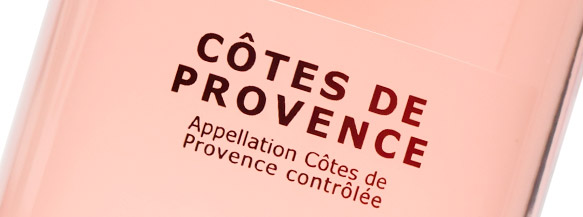
The largest of them – Cotes de Provence (Cotes de Provence), as of 2005, amounting to over 20,000 hectares, most of which is concentrated in the Eastern half of the region (which they share with Which Varua Coteaux Varois). Inclusions vineyards of the côtes de Provence is in the West, in the vicinity of the capital of the region of Marseille.
Western Provence is a little more colorful. It is dominated by the second largest regional appellation Coteaux d’aix-EN-Provence (Coteaux d’aix-en-Provence), lying about 4000 hectares near AIX-EN-Provence, a neighborhood which is sheltered and tiny appellation of Palette (Palette).
Immediately to the North lie the appellations of Ventoux (Ventoux, formerly Cotes du Ventoux), Luberon (Luberon), which is administratively olive, but in terms of a wine’s borders are part of the Rhone Valley.
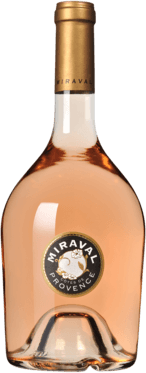
Rose Cotes de Provence rose (Cotes de Provence rose) – the archetypal wine of Provence. But really interesting for connoisseurs of the wine produced in other appellations around the edges of the region.
On the Eastern edge of Provence, North of nice, there are small and very bold appellation Bellet (Bellet), which produces wine with a distinctive rich aroma.
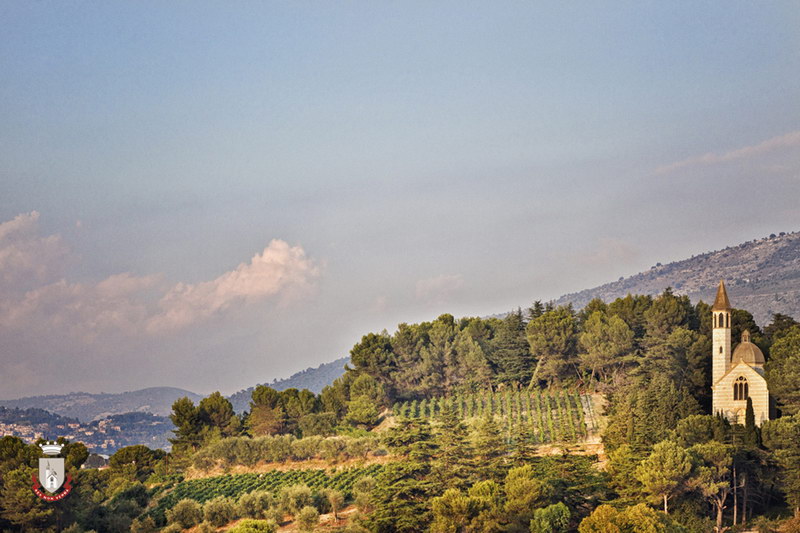
Chateau de Bellet in Provence
Les Baux-de-Provence (Les Baux-de-Provence) to the West, the place of production of organic red and rosé wines.
And two of the most famous wine name of the region is located right on the coast, between the cities of Marseille and Toulon. Here make rich red wines of Bandol (Bandol) and 19 km from them – full-bodied white wines of Cassis (Cassis) with a rich bouquet of fragrant herbs (not to be confused with the blackcurrant liqueur).
But these little appellations, plus the sub-appellations of the côte de Provence – Frejus (Frejus), Saint-Victoire (Sainte-Victoire) and La Londe (La Londe) together produce only about 15% of the annual volume of Provence wines. In the region are still running the show live, fresh rosé wines that Provence owes its international reputation.
Source: portal WineSearcher /2014