

Over the last 30 years of Pinot Noir in New Zealand has steadily become better and today has become a major player on the world stage. In this article, the Master of Wine Bob Campbell selects the style of the five main wine regions in New Zealand and economy with wines that are worth paying attention to.
Rapid and sustained growth in the quality of Pinot Noir was most impressive achievements over the last 40 years of my involvement in the wine industry of New Zealand. 30 years ago, the Pinot Noir here was a curiosity – a strange set of experimental wines, for the most part is not very intelligible, green and acidic.
Today is the second in the number of landings grade in the country, which has become a global brand and has found its place in the wine lists of many famous restaurants in Europe, America and Asia.
First, winemakers have taken over the landmark Burgundy, and then to achieve greater harmony fruity and alcoholic maturity. Over time, they have found their regional and even subregional style. The growth in the number of vineyards with Pinot Noir, there is more understanding of what combination of soil and local conditions are most favorable for this volatile class.
Winemakers began to organize workshops for Pinot Noir to taste the wine each other and to compare production methods. These annual meetings might have made a greater contribution to the growth of quality wines from Pinot Noir in New Zealand than any individual factor.
Today, regional characteristics become an accepted fact, despite the eroding effects of different production practices and characteristics of the vintage. For an experienced sommelier will be a good test to try to determine the identity of the wine to one of the five main regions.
After the success of 2008, the weather was favorable for vineyards with Pinot Noir in the major regions:
- Wairarapa/Martinborough (Wairarapa/ Martinborough)
- Nelson (Nelson)
- Marlborough (Marlborough)
- The Waipara (Waipara)
- Central Otago (Central Otago)
2010 and 2013 – while the best vintages of all time.
2009 and 2012 is worth mentioning separately for the region of Central Otago.
Among the latest trends is the increasing use of whole grapes to give the wines more tannin, survivability, and the resulting complexity, though sometimes at the cost of accelerated ripening.
Pinot in New Zealand is now the same confidence as the winemakers who craft it.
The big five wine regions
Martinborough (Martinborough) was the capital of new Zealand Pinot Noir for many years, until the seductive fruitiness of the wines of Central Otago, the most southern wine region on the planet – took his crown.
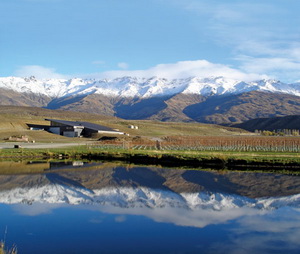
New Zealand’s Central Otago is the southernmost wine region on the planet
The waipara and Nelson showed that he is capable of outstanding results, but still not enough to compete with the leadership of Central Otago.
Marlborough started later than the others due to the landing of the first vines Pinot Noir on soils, giving too lightweight and simple wine. The transition to heavier, clay-rich soil, sometimes on the slopes of the hills, he proved that in Marlborough you can make a very good wine.
Trial planting on soils with limestone inclusions in the cooler climate of the valley Waitaki (Waitaki Valley) and North Canterbury (bell hill and Pyramid valley) gave a very promising wine.
Marlborough (2,367 ha)
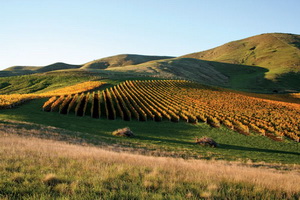
In the first years of production Pinot Noir at Marlborough wine was pretty boring.
At first thought that business in excessive yields. But it is now clear that the first vineyards were simply planted on very light soils with free drainage, which it is impossible to get an interesting wine.
Located in the hills of vineyards Fromm – the farm Clayvin with a tight fit and the scientific management of the vines showed how interesting Pinot Noir can do in Marlborough. A clay-rich southern slopes of the valley Vairano – one of the best sites in the region.
Among the favorite manufacturers I got here: Fromm, Villa Maria, Dog Point, Cloudy Bay, Greywacke, Wither Hills, Giesen vineyard, Auntsfield and Seresin.
Their wines exhibit well-developed aromatics, with a palette of red fruit, in particular ripe cherries – with consistent tannins that provide the potential for aging.
These wines are often underrated and, in my opinion, are some of the best New Zealand Pinot Noir by the factor of pricequality.
Central Otago (1,366 ha)
Viticulture here dates back from the time of the Gold rush of the 1860s. But the modern industry really began to develop only in the 1990s. Since then, local Pinot Noir has made great progress in quantity and in quality.
Central Otago is the only region in New Zealand with the influence of continental climate. It is a zone of extremes: cold winter and short hot summer.
Wine production in Central Ontago described as “wine on the edge of the abyss”.
The region suffers from severe differences between the vintages. But freezing here – constant risk factor, and the temperature not so much you need to deviate from the average of the lows to significantly complicate the lives of winemakers in areas such as Gibbston and Wanaka.
Warmer sub-regions:
Bannockburn Bannockburn. Producers: Felton Road, Mt Difficulty, Akarua, Doctor’s Flat, Terra Sancta and Carrick)
Bendigo Bendigo. Manufacturers: Quartz Reef, Mud House, Misha”s Vineyard)
Cromwell Cromwell Basin. Manufacturers: Burn Cottage, Pisa Range, Amisfield, Lowburn Ferry, Rockburn, Wooing Tree.
Here make wines that are considered “classic” wines Central Otago: with strong notes of sweet plum and ripe black cherry, fresh herbs, spices and often with a pronounced mineral character.
Alexandra Alexandra. Manufacturers: Grasshopper Rock, Judge Rock, Two Paddocks.
The subregion has the highest summer temperatures. Doing here a dense wine with hints of mineral.
Wairarapa and Martinborough (478 ha)
Dry River (“Dry River”) was the first of the current manufacturers, landed vines in Martinborough, founded the winery in 1979. Gravel soil of the former river channel was ideal for the production of dense, rich and often complex wine with notes of dark plum and sometimes with subtle spicy hints.
In the subregion of Wairarapa are usually lighter softer Pinot Noir with cherry and plum tones.
To local top manufacturers include: Ata Rangi, Dry River, Kusuda, Martinborough Vineyards and Shubert.
The waipara (267 ha)
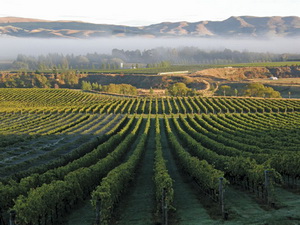
The waipara (Waipara) is an hour’s drive from Christchurch (Christchurch) of the Canterbury centre.
The chain of hills with rich limestone slopes protect it from the breezes of the coast, creating a more dry climate during the ripening of the grapes.
The waipara in General can be divided into two zones: lowland, consisting of easily drained gravel and alluvial deposits; and hilly, with heavier clay-limestone soils.
Wineries from the hills to produce more concentrated wine with rich “texture”, a bouquet of dark fruit and sometimes with a chalky / mineral notes.
Pinot Noir from the plains are usually lighter and softer, with tones that lean towards a palette of red fruits.
Top producers include the Waipara Black Estate, Glasnevin, Greystone, Mountford, Muddy Water, Omihi Hills and Pegasus Bay
Nelson (185 ha)
Nelson, and Waipara, also can be divided into two different subregion, producing different style of Pinot.
Loose, easily drained soil plains Waimea (Waimea) represent alevitische, sandy or stony clay soils on a gravel base.
This is a relatively large area, which produces range of styles of Pinot Noir, characterized in General as expressed in a soft tone of red fruits. It is usually available wines, often with lively acidity.
My favourite producers are here: Brightwater, Greenhough and Waimea.
In the hills Moutere (Moutere Hills) the surface of the soil is sandy with clay and gravel subsoil deposits and fragmented limestone. The best vineyards are situated on the Northern slopes. Wines from here are richer and more concentrated than of the plains.