- Master-class sommelier tasting
Just drink (water) is a physiological necessity, drinking wine is fun, and it can be more or less strong depending on the wine, conditions of sampling, sensitivity of the taster.
There are several types of wine, each of which has its own goals:
tasting technical, analytical, comparative, triangular, etc. that are taken from the professionals.
One of the forms of sampling, confounding many neophytes, is executable in many restaurants ritual wine check for defects in the course of which the waiter pours a little into a glass of your chosen wine to be tasted. This allows you to ensure that, first, it has the right temperature, and, secondly, it has no obvious flaws, most often associated with cork. To give up on wine just because you do not like it, you are not entitled to.
For wine connoisseurs the purpose of the tasting is to take the essence of wine, and so be able about it then to talk and to develop the acuteness of the olfactory and taste sensations.
A wine tasting ought not spend God knows where and some how. The room should be pleasant, well-lit (the light should be either natural, or not distorting colors, the so-called “day”) if possible light in color. It should not be extraneous odors, such as perfume, the smell of smoke (tobacco or fireplace), the smell of food or fragrant flowers, etc. the Temperature should be medium (18 to 20 °C).
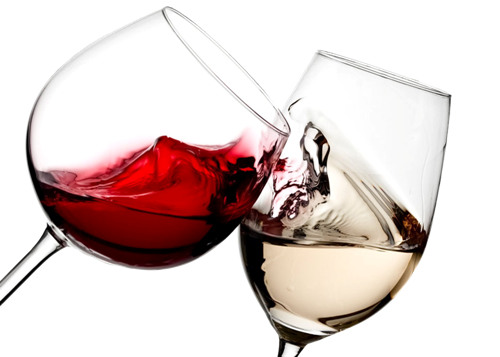
Important to choose the right glass. It needs to be colorless and thin to dress the wine was clearly visible. Its form must be in the form of a Tulip, that is not open, as it often happens, but rather, slightly closed. The body of the glass is separated from its base leg. This form allows you to avoid warming the wine with your hand (the glass holding it by the stem) and facilitates rotational motion of the glass that are necessary in order to accelerate the saturation of the wine with oxygen (and oxidation) in order to show its bouquet.
The shape of the glass so affects the olfactory (smelling) and gustatory perception of the wine that the French Association for standardization (AFNOR) and international standardization bodies (ISO) has adopted, after studies standards for glass and taster guarantees the consumer of maximum performance. This type of glass is called “glass INAO” and apply it not just the professionals. It can be purchased in some specialty stores. For some time the French, German and Austrian glassmakers offer a choice of consumer a wide choice of glasses.
Tasting use sight, smell, taste and touch. Of course. we are not talking about the sense of touch fingers, and mouth, which are also sensitive to mechanical influences such as temperature, texture, dissolved gas, etc.
Appearance
The first contact with the wine consumer sets, observing its appearance. One look at the clothes of wine (we are talking about the totality of visual impressions), which largely depend on varieties used, gives a lot of information. The appearance of the wine gives rise to the initial evaluation. Whatever its colour, the wine should be clear, its colour is uniform. Turbidity is a symptom of disease, this wine should be abandoned. Allowed the presence of small insoluble crystals of tartaric acid, the so-called “graves” – sediment that occurs in some wines from hypothermia, though. this doesn’t affect their quality. In order to test the clarity of wine, put the glass on one line between the eye and the light source, and the transparency of the red wines tested on a white background (a tablecloth or sheet of paper), which should slightly tilt the glass.
The disk (surface of the wine in the glass) takes the form of an ellipse and monitoring gives information about the age and storage conditions of wine. After that, appreciate the nuances of its color. Young wines should be transparent, but this is not always a prerequisite for quality wines of old.
Examples of the vocabulary used in describing visual analysis of wine.
Details: purple, garnet, ruby, violet, cherry, peony.
Intensity: light, stable, rich, deep, intense.
Glare: matte, dull, sad, shining, glittering.
Clarity and transparency: opaque, cloudy, foggy, clear, perfect.
By visual evaluation of wine should pay attention to his reflections or, as they say, sparkle. The wine, which has reflections, nice and lively, dull, the wine is likely sad… the Analysis of the appearance of the wine is completed with the evaluation of color saturation. It should not be confused with the t shades and tones.
Visual analysis on the glass walls can also be “legs” or “tears” – streaks of wine formed on the walls of the glass when the wine in it twist in order to better smell it. The legs indicate the saturation level of the wine alcohol: the cognac is always the legs, and local wines – rare.
Nose
Olfactory (olfactory) assessment is the second stage of wine tasting. Certain smells immediately rejected, such as volatile acid (souring, vinegar) smell the bark of the cork oak (flavour tube), but in most cases, the bouquet complex scents that exudes a glass – produces more and new experiences.
The aromatic components appear depending on their volatility. It’s kind of evaporation of the wine, so the temperature is so important. If the wine is too cold, the flavors are not if too warm, the evaporation goes too fast, by combining the oxidation, the destruction of volatile flavors and identifying unnatural heavy aromatic elements.
Thus, as they say “nose” the wine, it’s an endless stream of changing flavours; they appear one by one, in accordance with the temperature and oxidation rate of wine air.
Examples of vocabulary used in the description of the olfactory analysis of wine
Flower: violet, lime, Jasmine, elderflower, acacia, iris. peony.
Fruit (fruit): raspberry, black currant, sweet cherry, cherry, red currant.
apricot, Apple, banana, prunes.
Plant: herbaceous, fern. moss, undergrowth, damp earth and chalk. various fungi. Spices: all sorts, from pepper to ginger, not counting the cloves and nutmeg.
Balsamic: resin, pine, turpentine.
Animals: meat, stale meat, venison, wild animal, musk, fur.
Enviromatics: burnt, roasted, fried bread, tobacco, dried straw and various shades of torrefaction (coffee etc.)
Therefore, the rotation of the glass when tasting is so important. First made to breathe in the smells of stationary glass, then it rotates, the air produces its effect, and manifest different flavors.
The quality of the wine is directly related to the intensity and complexity of its bouquet. Small wines usually little or no bouquet, they are simple and repetitive and easy to describe in one word. Great wines, in contrast, have broad, deep and complex bouquet.
A dictionary describing the bouquet is virtually unlimited, because this description can be based only on analogies. Repeatedly proposed various system of classification of smells, but for simplicity, it is necessary to remember such generalizing character of the bouquet analogy as floral, fruity (fruit), vegetable (herbal), spices, balsamic, animal, woody (cask), empiremarine (pertaining to fire) and chemical.
Mouth
After the wine has successfully passed two assessments – the appearance and olfactory (smelling), it should last in your mouth.
A small amount of wine taken into the mouth, but not swallowed. Sucked a small puff of air to the wine spread throughout the oral cavity. Or just “chew”. In the mouth the wine is heated, and exudes a new aromatic compounds that are trapped by the nasal passages. It is known that the taste buds of the tongue can distinguish only four basic tastes – bitter, sour, sweet and salty. That is why a person suffering from runny nose, not able to taste the wine (or dish).
If too much acid, the wine is aggressive, if not – it is flat.
If too much sweetness – the wine is heavy, thick, if not – it’s lean, expressionless.
In addition to the above four basic tastes, the mouth is able to analyze the wine’s temperature, the thickness (viscosity), the presence or absence of carbon dioxide and astringent sensations (sensory impressions related to the lack of wettability of the tongue with saliva and contraction of the mucous membranes of the mouth under the influence of the tannins – that “knits” mouth).
In the mouth it is manifest balance, harmony, or Vice versa, a bad design fault (which means that it should not be buy).
Examples of vocabulary used in the description of the “mouth” (taste analysis) of wine.
Critical evaluation: a shapeless, flaccid, flat, thin, watery, limited, transparent,
poor, heavy, massive, rough, thick, unbalanced.
Laudable assessment: a structured, full-bodied, frame (sturdily built), balanced, positive, full, elegant, delicate, grainy (embossed), rich.
White and rosé wines characterized by good balance of acid and sweetness. For red wines is based on the balance of acid, sweetness and tannins (“binding” compounds).
Good wine is at the point of equilibrium of the above three components. Means that accompanies it and the aromatic richness; great wine is different from just a good strict and powerful structure (albeit softened) and aromatic scope and complexity.
The finish
After taste analysis of wine swallow. At this point the wine drinker turns his attention to determine how long the aromatic sensations – “finish”. The longitude is usually expressed in “caudelac” – a term that, despite its resonance, means simply… one second. The longer the aftertaste, the more you appreciate wine. Only one of his longitude is a parameter by which to build up the hierarchical ladder of wines – from small to greatest.
Measuring in seconds the duration of the aftertaste is both simple and complicated thing, as the only measure longitude flavors, but not basic elements of the structure of the wine (acidity, bitterness, sugar, and alcohol). Tasting these parameters should not be confused.