
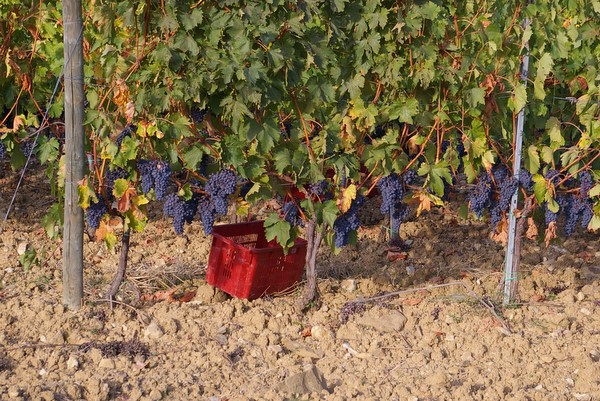
It all starts with the berries on the vine: it is important that they were sufficiently Mature. Of unripe or overripe grapes will turn out bad wine. The harvest of the grapes determines the potential of the wine: you can make bad wine from good grapes, but never make good wine from bad grapes.
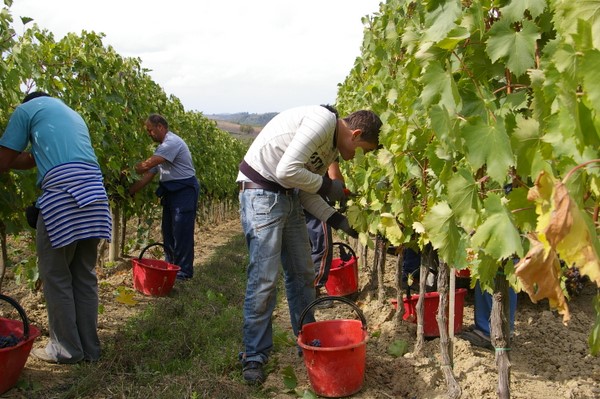
The collection teams are sent to the vineyard. This is an exciting time of the year. All winegrowers hope for good weather in the harvest period. Bad weather can ruin everything.
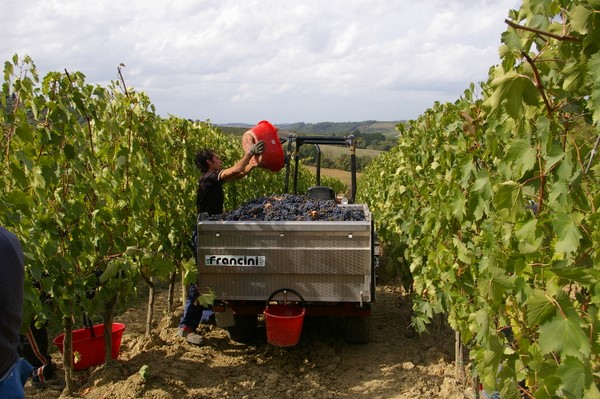
Hand-picked berries are loaded in half-ton body.
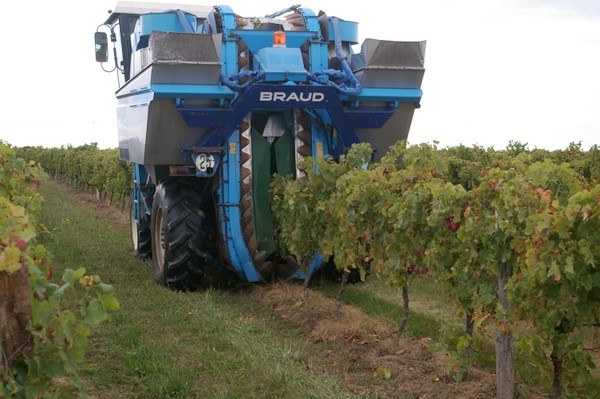
However, increasingly harvested by machinery. It’s cheaper. In addition, in hot regions, to maintain quality of the harvest it is better to collect at night, and it is much easier to do using technology.
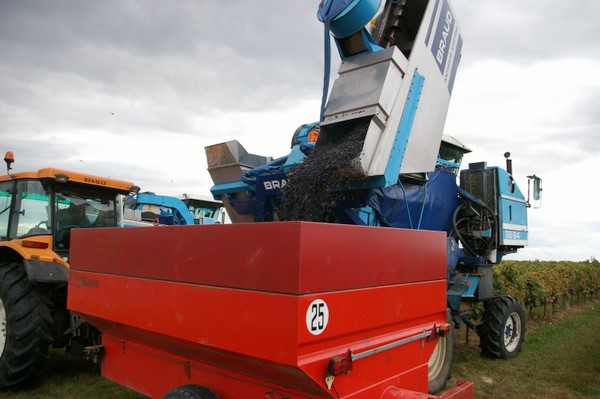
Sweeper picks the berries from the vines and sends them to the manifold for transport to the winery. The image – picking grapes in Bordeaux.
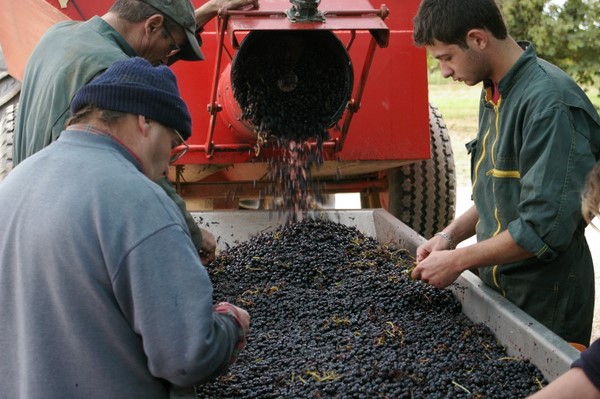
Collected the car the berries are sorted out for rejection of the unfit.
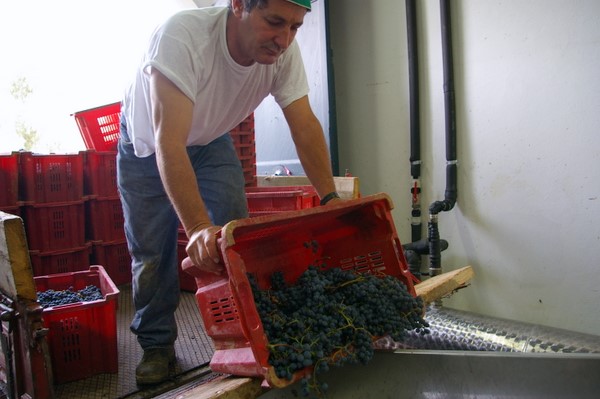
The berries, harvested by hand, arrive at the winery, whole bunches.
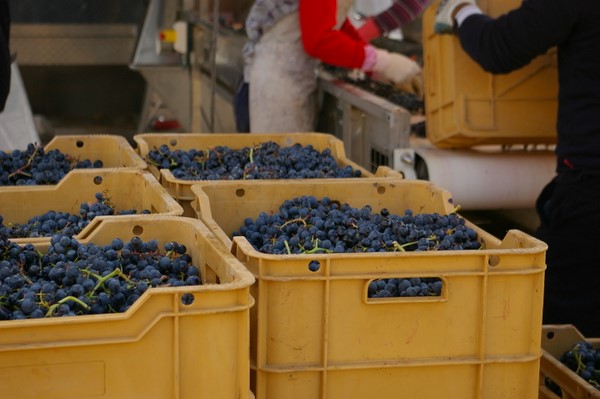
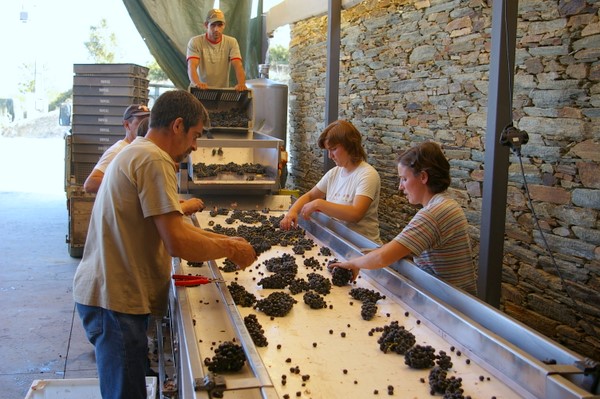
They also sort out the quality. All rotten and limp berries, together with leaves and stalks should be removed.
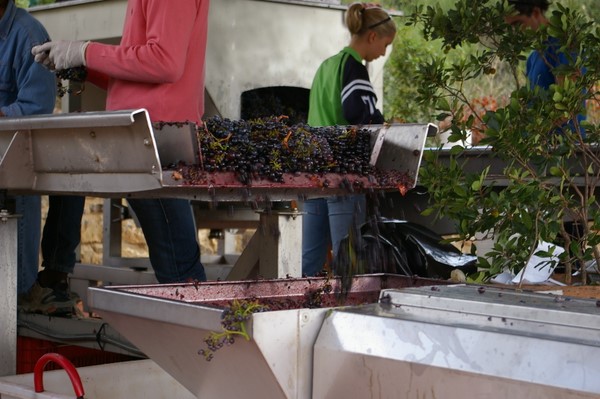
Sorted grapes fed into the machine for separation of the ridges. After it can be fractured: slightly or completely.
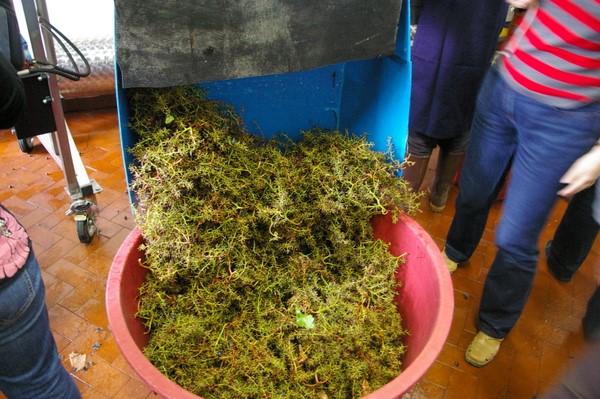
What is left after full separation of the berries.
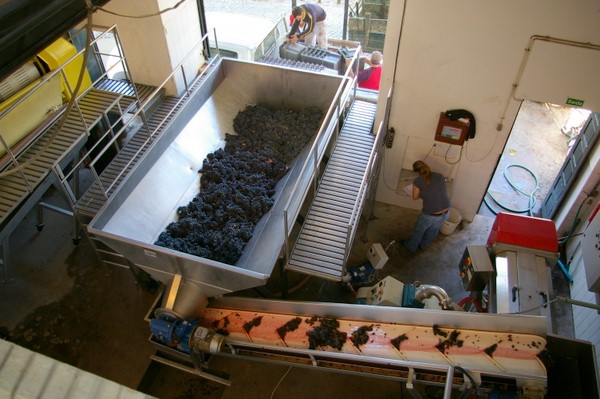
The reception area at a small winery. Scroogey grapes here the pipeline enters the tank and from there to the fermentation tank.
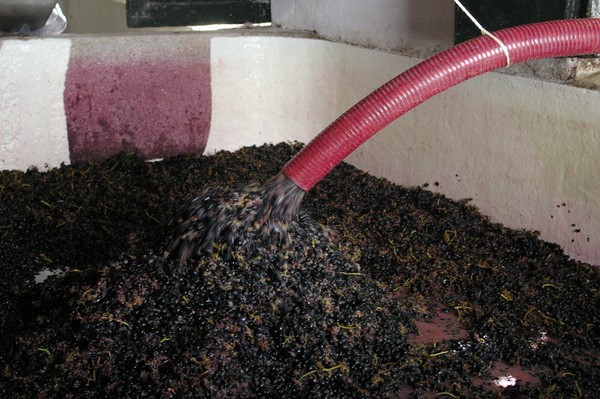
This is the difference in the production of white and red wines. Red roam with the peel, and white berries are first squeezed, separating the juice from the skins before fermentation.
In the photo – a small stone fermentation Lagar in the Portuguese Douro region. After filling, the berries will be thoroughly trampled by the feet, to saturate the juice, coloring and aromatic substances from the skins of the grapes.
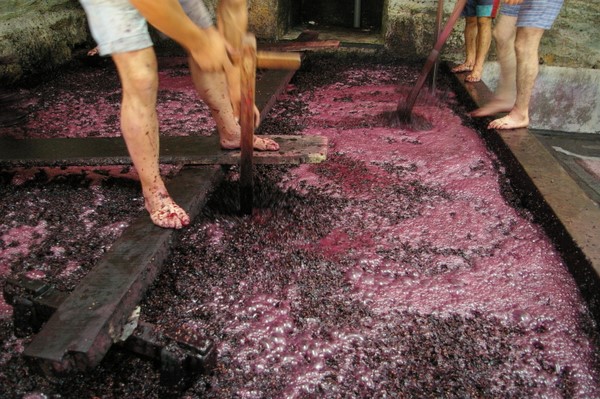
But it is rare for the present day example of traditional winemaking, characteristic of the Portuguese Douro. Squashed by the feet of the grapes begins to ferment naturally. These people hands stirred the wort many times a day to ensure good extraction and to prevent the development of bacteria on the surface of the skin of the berries, which inevitably POPs up, forming a cap.
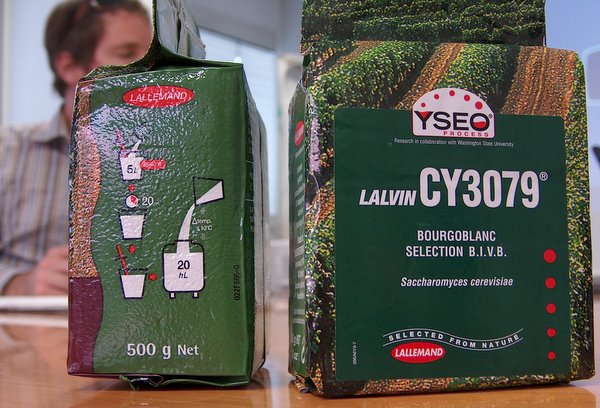
In modern wineries, it has become routine adding dry, specially cultured yeast that allow much better control of the fermentation process. However, much still remains wineries, where the wort ferments from the wild yeasts that live on the vineyard or in the winery.
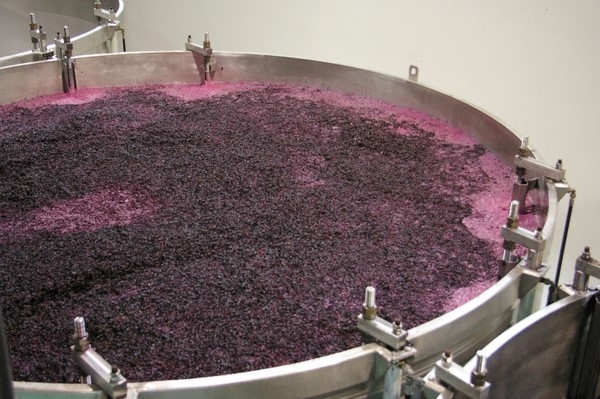
The berries in this photo roam in stainless steel vats. During fermentation carbon dioxide is released, so it is normal that Chan remains open so that carbon dioxide could escape into the atmosphere. But it happens that fermentation tank is closed, then carbon dioxide is blown out from the ventilation.
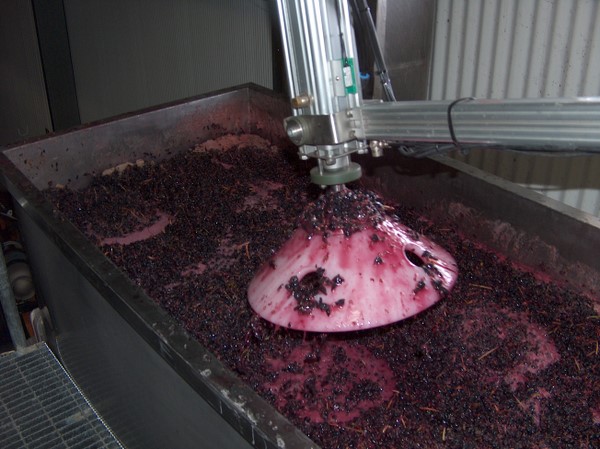
Here in the small Chan cap of pulp protoplanets the wort robotic plunger. Some wineries do it manually, with the help of special poles. The process of periodic peretaplivanii hats pulp is called pizhazh (FR. pigeage).
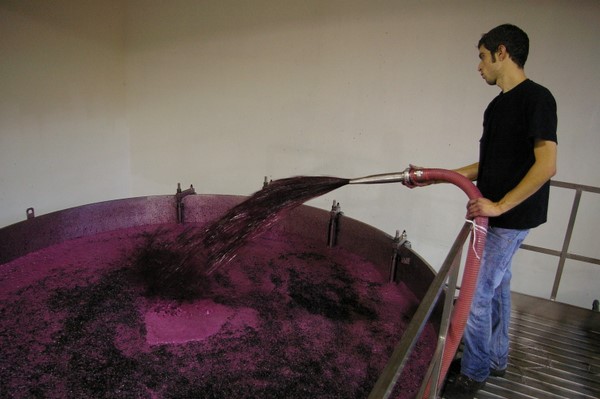
Alternative to peretaplivanii caps is her watering the wort, picking up from the bottom of the VAT.
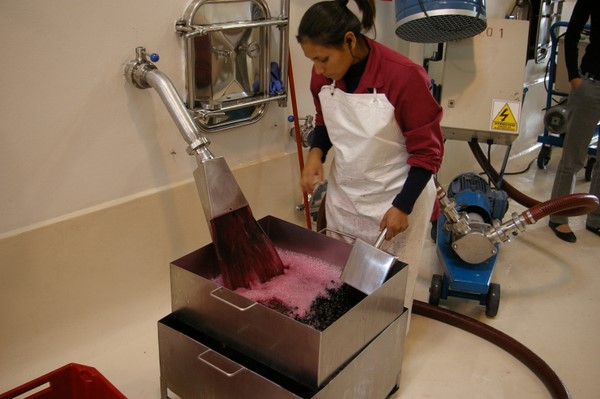
Here you see wandering red the wort is drained from the VAT and poured back. The point is to enrich it with oxygen to help the yeast to develop. At other stages of wine production are trying the opposite – to protect it from oxygen, but at this stage it is needed.
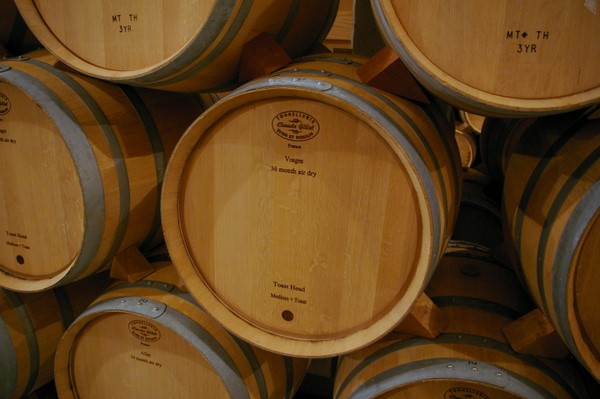
When the fermentation is finished, most red wine is poured into oak barrels to complete their maturation. Shapes and sizes of barrels – a great many. In the photo – one of the most common: 225-250 liter. Traditional French barrel 225л called barrique (FR. barrique), common in Bordeaux.
The origin of the wood, and the fact that the use of new or used barrels are very important factors for the formation of the style and character of the wine. In the descriptions of wines you may come across the phrase “aging in new barriques”: this means that the wine will be pronounced oak tone in the bouquet. The aging in barrels, used, it is not always saving on barrels for some wines a pronounced oak tone undesirable.
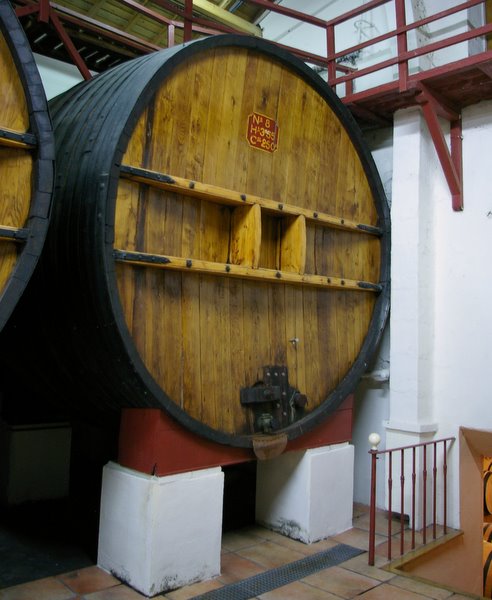
Here is an example of the barrel is much larger, in which she tells the guilt of at least “oak” character. For some wines, this option is much more appropriate small barrels.
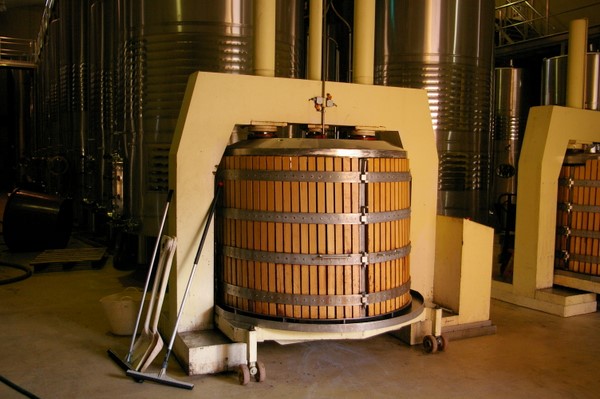
This is a basket press: once fermentation has finished, when the wine is drained from the pulp, it is pressed to extract the remnants of the wine.
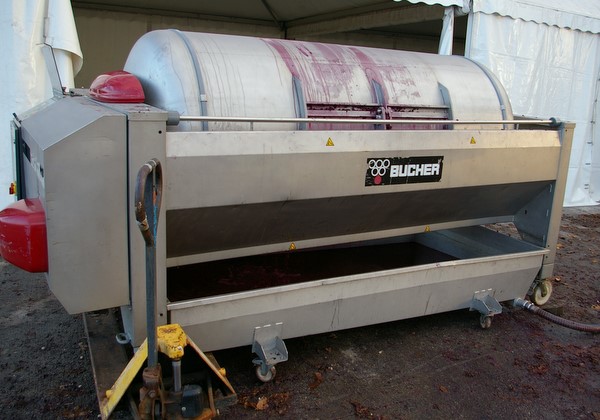
And this is pneumapress. It is used in the production of some red and almost all white wines. Inside – large chamber, which fills with air and slowly rising pressure gently presses the contents of the container.
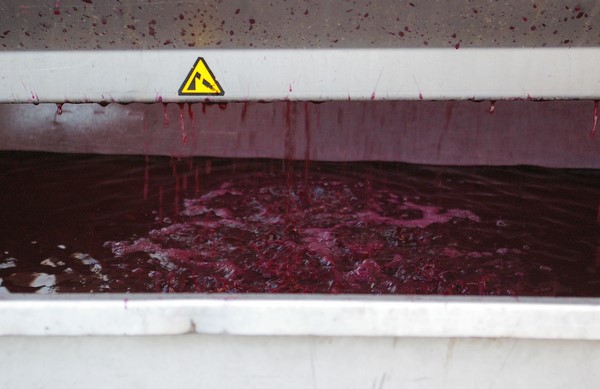
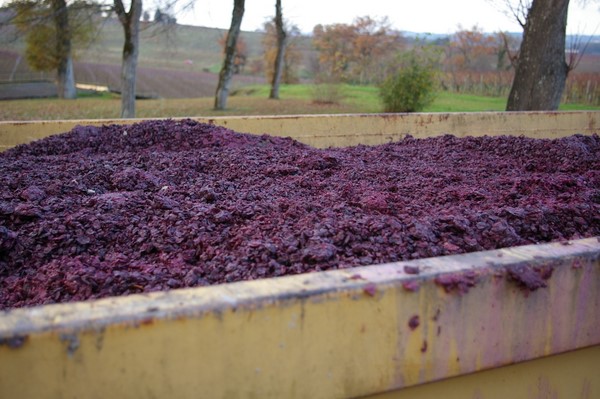
And this is what remains after all the manipulations: the meal that can be put on the production of compost.
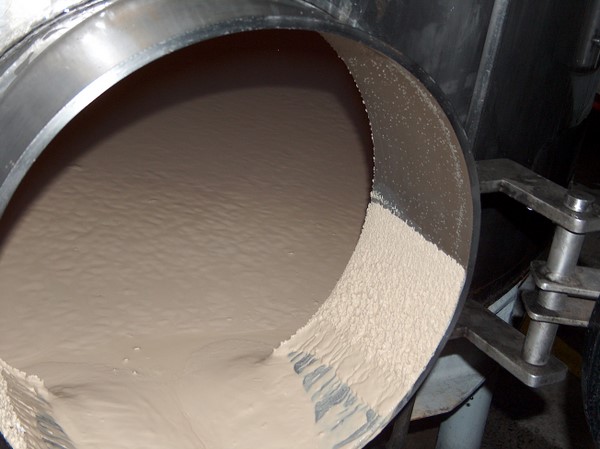
The contents of the VAT, which roamed the white wine: the sediment of dead yeast. Sometimes wine to make it oabgo bouquet additionally keep this on the lees for some time, this is called aging sur lie (FR. sur lie).
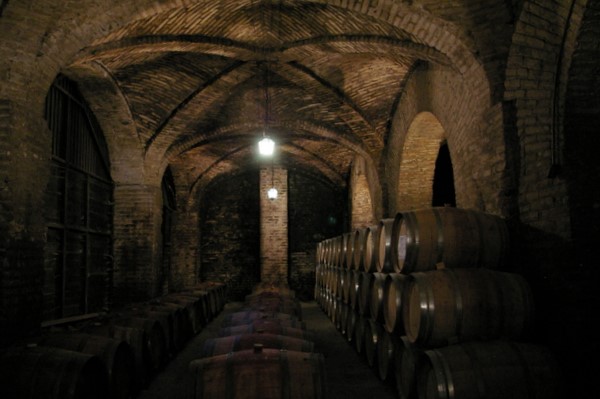
A cellar with barrels still retain their traditional appearance. A cold environment under their arches are ideal for maturation of young wines, which usually lasts from three months to three years.
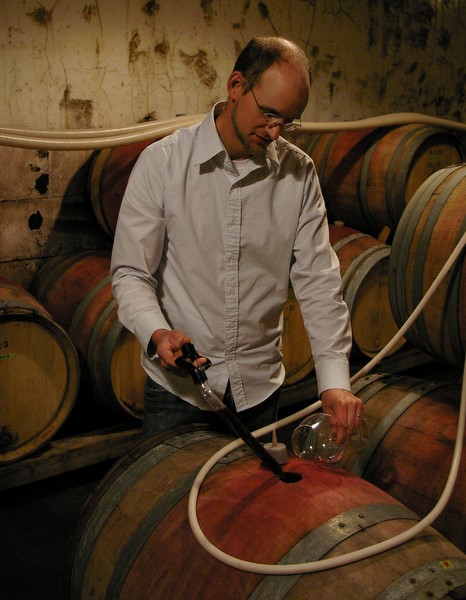
Winemaker takes a sample from the barrels with red wine regular intervals and produces the topping to compensate for the loss of the wine evaporates during aging.
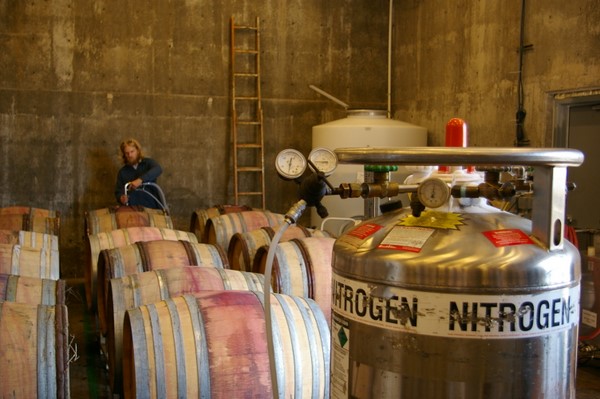
Sometimes there is a need for overflow of wine from one barrel to another or from the barrel into a VAT made of stainless steel. In this photo, use nitrogen to move the wine without undesirable contact with oxygen. Nitrogen is also used in the storage of open bottles of wine sold by the glass in restaurants and cafes.
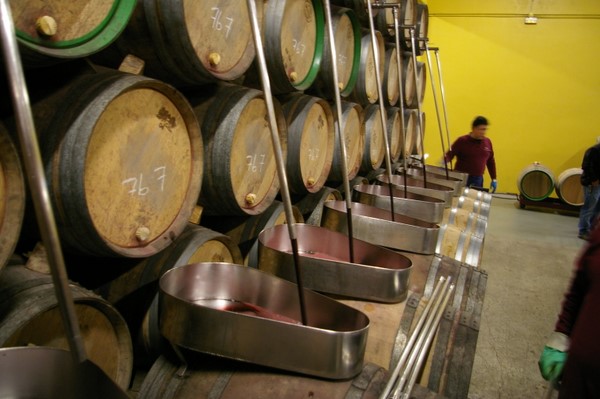
And here is the opposite: overflow is carried out with the deliberate contact of wine with air to accelerate the ripening process.
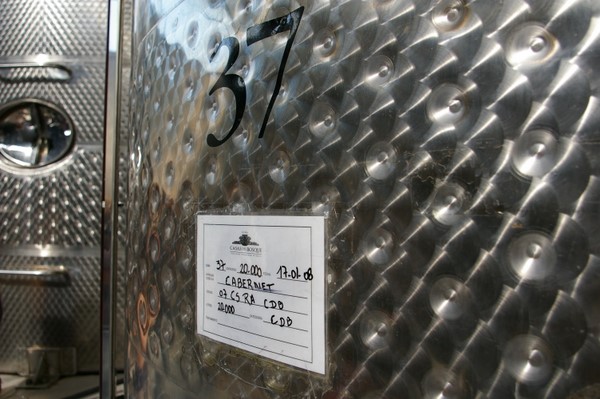
Some wine in the process of its birth and life do not know contact with oak: they are kept in stainless steel to preserve their fresh fruit character.
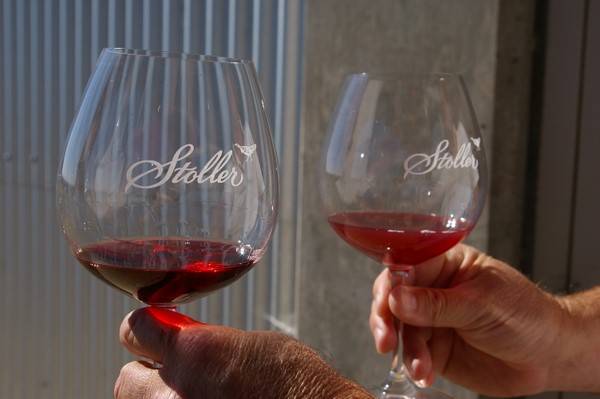
And finally, the wine is ready and can be bottled. Often it is before it is filtered to he was clean and transparent, and to prevent microbial spoilage. The photo on the right wine to filtration, left after.