

Carmignano (Carmignano) – little-known production area (DOCG) of dry red wine in the famous Tuscany region in Central Italy.
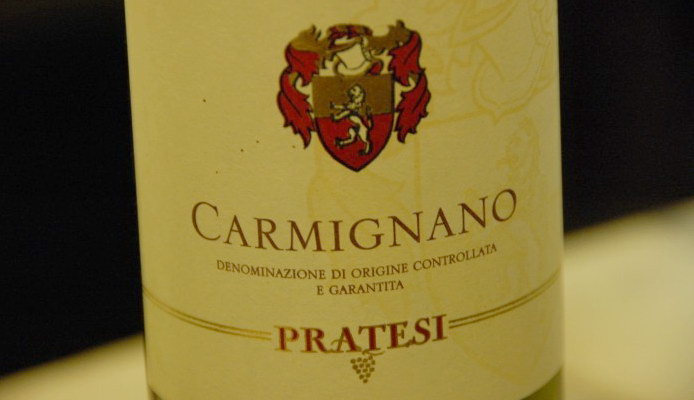
The history of local winemaking can be traced back to the 14th century. According to the document of the year 1369, the wine of Carmignano was four times more expensive than any wine at that time.
In the early 1700s the Grand Duke Cosimo III de ‘ Medici founded in Carmignano grape nursery, where among other varieties, was internationally recognized Cabernet Sauvignon imported from France. The Duke also issued a decree setting the standards of winemaking and wine trade.
The village of Carmignano, which gave the name to the appellation, located 20 km West of Florence, on the slopes of the hills, is also home to the area of Chianti Montalbano.
Carmignano is one of the oldest regulated areas of wine production in Italy, formed long before the advent of the national system of denominational in the late 1960s. But despite this, she was included in the Chianti area – at that time more prestigious and was first sold as Chianti Montalbano.
As a result of persistent efforts of several local winemakers, in 1975, she got her own, separate category DOC, and in 1990 these efforts were rewarded twice, with the increasing status of this zone to DOCG.
Dry red wine Carmignano is produced based on a standard modern Tuscan blend of Sangiovese (at least 50%), Canaiolo (up to 20%), Cabernet Sauvignon and Cabernet franc (10-20% each).
The style of these wines is similar to the kindred of the wine Chianti, which is now also allowed to use Cabernet Sauvignon.
The Carmignano wine is produced from grapes from vines on site or in the vicinity of the villages of Poggio and Caiano and Carmignano. The local terroir is ideal for high-quality wine, especially Sangiovese, thanks to well-drained soils, rich in limestone, and the contrast of hot days and cool nights.
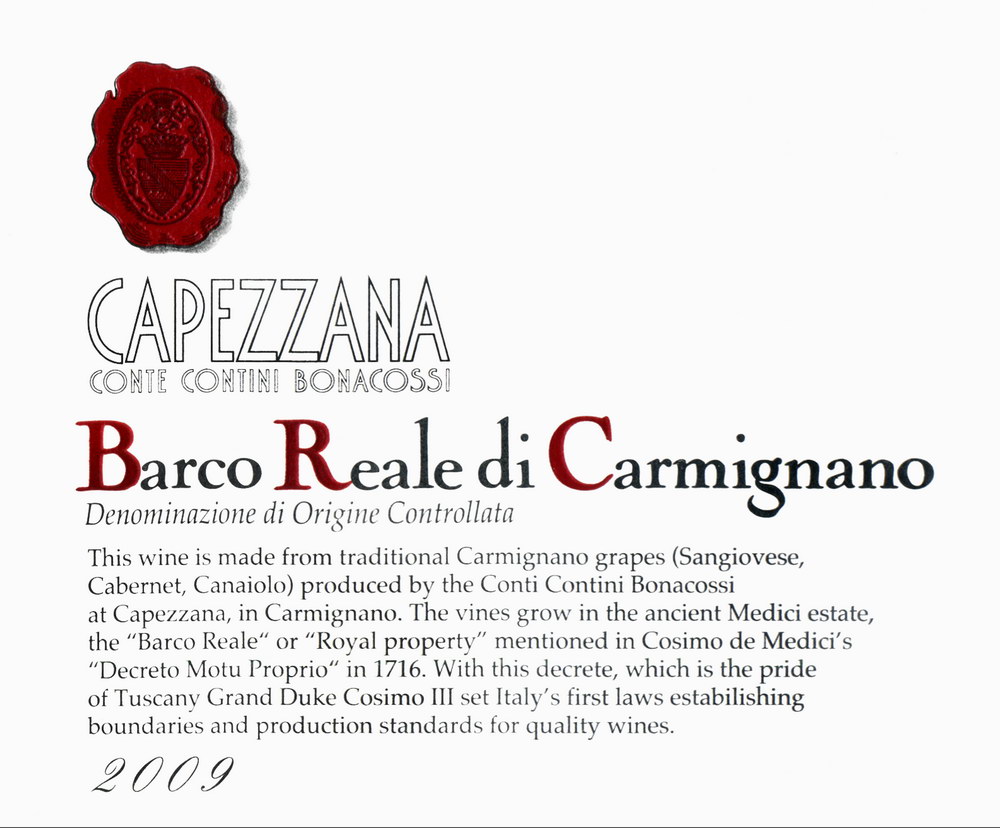
In the Carmignano borders the allocated sub-area are Barco Reale di Carmignano, for the production of wine in a younger style, compared with the harsh red wine of the common denomination. As well as a separate dessert subcategories of Vin Santo di Carmignano, including the pink version of the Occhio di Pernice.