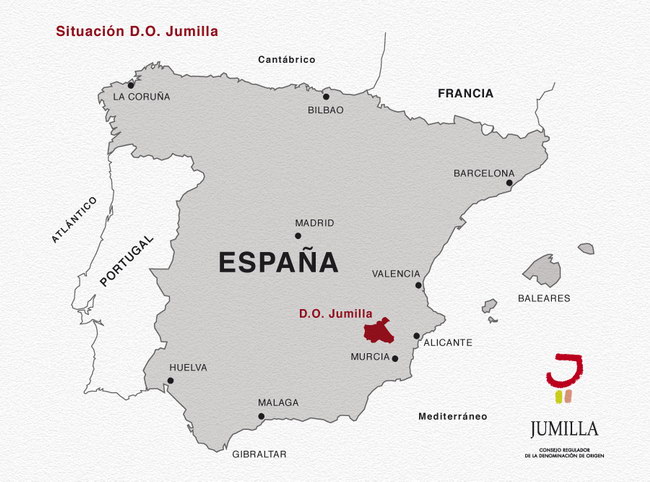
Jumilla (Jumilla) is denomination (DO) in the region of Murcia in Southeast Spain.
Small wine area of Jumilla, sandwiched between Yecla (Yecla) in the North and Bolas (Bullas) in the South, is considered the most important in Barcelona, both in quantity and quality of the wines. Plus, she’s the oldest in the region founded in 1966.
Jumilla landscape is characterized by broad valleys and plains, dissected by mountain ranges (serrania Spanish) running through Murcia, between the sea and the Inner Spanish Plateau (Meseta Central).
The most accurate description of this area will be “dry, hot and harsh.” But despite such inappropriate, it would seem, the climate, the vines cultivated here since the times of ancient Rome when the region was already famous for its rich full-bodied red wines.
Jumilla’s wine industry received a powerful boost when neighboring France was struck by the devastating phylloxera, creating a huge unmet demand for wine. However, avoiding losses in the main flow, Jumilla was under attack aphids in 1989. But it gave the opportunity for the region to modernize and refocus on the production of lighter, more elegant wines.
The climate in Jumilla is arid continental, with more in common with the Castilla-La-Mancha that to the West than to the Mediterranean, although the Eastern fringes of the region, it can be called transitional. 40°C in the shade is not uncommon for local summer. With scant rainfall this should mean not the best conditions for viticulture.
However, two circumstances significantly change. First, rich in lime soil, good moisture-retaining. Second, the elevation of the Central part of the plateau at altitudes from 400m to 800m, which reduces the intensity of the warm-up.
However, frosts, severe storms and torrential rains pose a real threat to local vineyards.
Like other areas of winemaking in this region, Jumilla specializiruetsya on the wines from monastrell, the landing of which is here almost 80%. This variety is well suited to harsh local conditions and gives the live wine with a broad flavor palette, including bright and fruity, with earthy and mineral tones in youth, developing with age in ripe fruit, coffee and spices. Often practiced by aging in oak.
In addition to the red, DO Jumilla produces high-quality pink wine from monastrell.
The main white varieties of the region are airen, macabeo (viura), Pedro Ximenez and Malvasia. Resolved, and a number of international varieties, including Chardonnay.
Since the 1990s, when the potential of the region became apparent, Jumilla began to attract more and more foreign attention. And to the extent that, as foreign manufacturers began to build their winery, it was followed by the Spanish business from other parts of the country.
As a result, began to grow steadily planting of such varieties as Shiraz, Cabernet Sauvignon and Merlot – mostly to give body and character of red wines on the basis of the same monastries. The use of blends nice work on the formation of the distinctive style DO Jumilla, which has become a regional leader in this part of Spain. Neighbouring regions are increasingly looking at local wine as a role model.
Source: wine-searcher.com Illustration: classicalwines.com