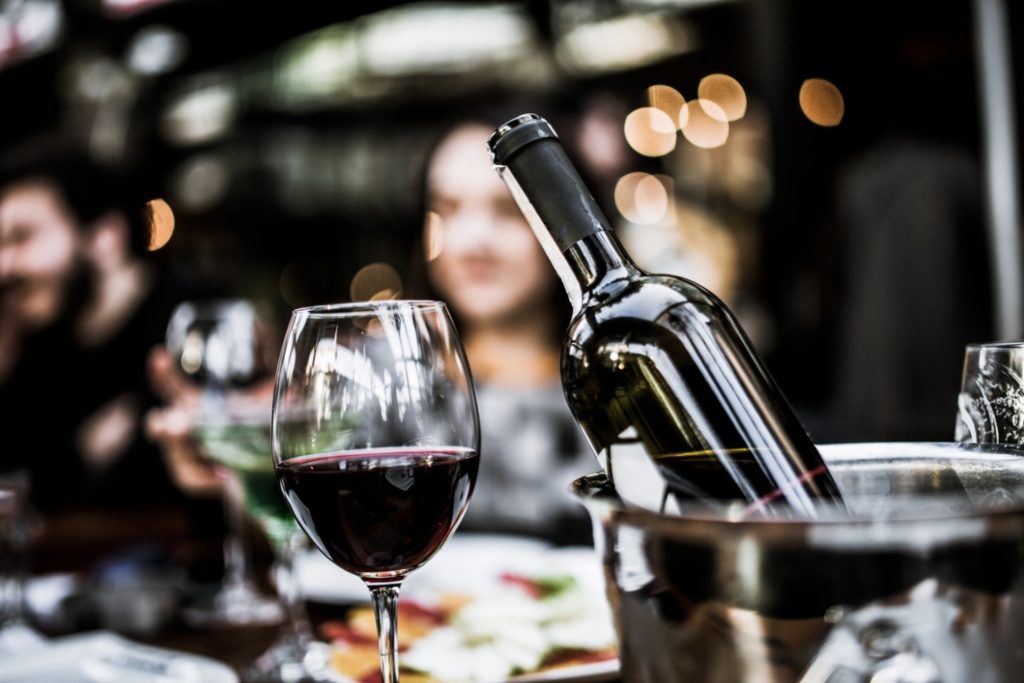
Lambrusco (Lambrusco) – the name of the red wine grape varieties (or rather of a number of varieties) and Italian sparkling wine with a fruity bouquet, produced in the Emilia-Romagna region (and partly in Lombardy).
- What is Lambrusco?
- Differences Lambrusco champagne
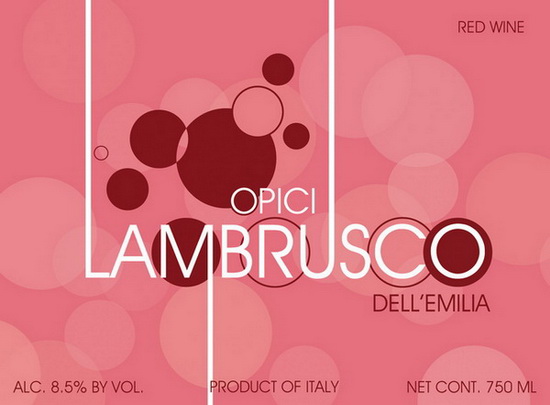
Lambrusco around a lot of intricate stories. Originally, this name meant simply “wine from wild grapes” and refers to a number of local varieties, many of which are still used today: Grasparossa, Maestri, Marani, Monstericco, Salamino, Sorbara. And all different varieties of Lambrusco, despite the fact that in many sources they are called the clones of the same variety. Now the names of these varieties are used as “brand” of wine to distinguish between the range of results that can give those local varieties.
More on that below.
The history of Lambrusco is awesome and at the same time sad.
On the one hand, this is the perfect grapes, which for many years. When you drink Lambrusco, you are drinking wine, which was enjoyed by the ancient Romans. They loved wine from Lambrusco. It is easy to grow, it gave good yields and was very popular. It is possible to imagine Caesar sipping Lambrusco from your Cup, eating a slice of cheese and curled eyes their possessions…
Over the past century came to light the many varieties of Lambrusco. By the end of the 20th century, ampelography had more than 60 varieties of this sort. Novice wine lovers to understand that it is not easy.
If you take, for example, Chardonnay grapes – it will all be genetically identical. It was enough centuries ago to find the perfect Chardonnay – and many years later, we still have copies of the very first vines. Just as in the case of, for example, with the Apple variety red delicious.
However, in the case of Lambrusco is not so simple. In the wild it is pollinated easily with vines of other varieties – as it happens, for example, with dandelions and other wild flowers. The result is a number of varieties of Lambrusco. Yes, they taste similar – as similar to that of the dandelions, but still, they are not exactly the same as most modern wine-making varieties.
Star and the sadness of Lambrusco way
When came the 1970s, America came the fashion for cheap sweet wine, and Lambrusco became extremely popular. It cost cheap, and, despite the fact that this wine is made in a dry version, the Italians filled the American market of sweet options, because the consumer demanded it.
So. The sad part of the history of Lambrusco starts with the development of the taste wine lovers. In the Soviet Union, too, the majority preferred the semi-sweet and sweet wines. And even prestigious in those days the ruler of the collections of Massandra is fortified and sweet, particularly the Muscat wine.
Now is a different era, with different preferences and ideas about what should be “good wine”. And all that was popular in the Soviet Union and America of the ‘ 70s automatically falls into the category of “not”. That cliché has got not only a sweet wine, but incomprehensible to many today pink. Because of the fashion the style and the color of the wine, many people overlook a worthy and interesting examples of “unfashionable” wines – both in budget and premium segment, from affordable pink Portuguese “Vinho Verde” to the luxurious Austrian sweet “ice wines.”
Lambrusco labels
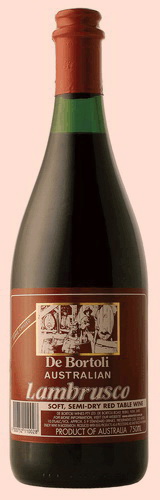
Trying to keep a reputation, the Italians are attempting to limit the use of the name “Lambrusco” on a label exclusively Italian wine. Based on the above reasons, it is likely to come across a bottle labeled “Lambrusco”, filled with cheap wine from his not very successful option.
While the name Lambrusco has not received the international status of the name of controlled origin, which are, for example, champagne and Prosecco (although in Italy there is a category of DOC Lambrusco, establishing rules for Lambrusco, produced in Italy).
What is Lambrusco?
It turns out that you can not come across as cheap and tasteless wine “Lambrusco” and it is a worthy, light, fruity sparkling wine, perfectly suitable for a light summer lunch.
So don’t judge Lambrusco for the first cheap bottle from the supermarket. To tell the truth, Italian in origin – it is not a guarantee of superior taste, although the best examples of it, of course, Italian. Do not jump to conclusions, give him a chance – he is so different!
First, this wine is of various colors: you can find red, pink, and white Lambrusco (Yes, even from red grapes).
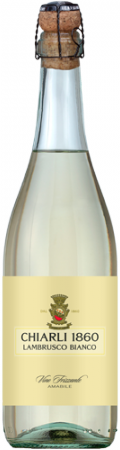
There are dry and semi-dry and sweet versions. There is still wine Lambrusco is a slightly sparkling wine (what the Italians call “frizante” – frizzante), and there are quite sparkling options, with the number of bubbles slightly less than in the sparkling (“Spumante” – spumante, in Italian graduation “of hristoski”).
Almost all Lambrusco is made by the method of Sharma (in which the secondary fermentation, during which bubbles, is not in individual bottles – as is the case with champagne, but in large steel tanks). If you encounter a bottle of Lambrusco, with the inscription on the label “traditional method” (or “classical method”) – then you have an exceptional wine and a rarity among Lambrusco.
The pigment of Lambrusco berries able to give the wine a seductive ruby color, if given the vine due attention and give the grapes to properly ripen. Then the glass is a wine with a rich aroma and less intense color.
With purple Lambrusco can compete except that the color of the grapes anchellotta – one varieties permitted for this wine Lambrusco DOC rules (i.e. rules that describe the content requirements of the Italian bottles of Lambrusco inscription on the label).
Anchellotta (Ancellotta) is not a form of Lambrusco, this is generally a different grade. Ancelotti is used to “fix” the color of Lambrusco wines if the winemaker didn’t follow the productivity, and the wine was pale and watery.
Some wines of the Lambrusco was awarded its own DOC category
Lambrusco di Sorbara (Lambrusco di Sorbara)
Sorbara – Lambrusco of the highest quality from which make decent wine with excellent aromatics.
A distinctive feature of this variety is Lambrusco abnormal flowering when the vine drops the flowers, causing reduced productivity (in some years up to 30%). This leads to higher concentration of flavoring substances: so the loss of more than kompensiruet addition to quality. Color is the easiest of the types of Lambrusco. Sparkling – very tender. The aroma reveals a tone of violet. Besides, it is the most acidic of all Lambrusco is therefore well suited to fatty foods and grill. DOC Sorbara admits the use of these varieties salamino wines, but not more than 40%.
Lambrusco grasparossa di Castelvetro
(Lambrusco Grasparossa di Castelvetro)
This wine is inky red color, with crimson foam, with aromas of violets, strawberries, fresh plums and black cherries. It is more solid and contains more alcohol and noticeably more tannin than the other wines are Lambrusco.
Grasparossa is powerful enough to cope with local food – zampone (skin pork feet, pork stuffed with minced meat). If the label stated DOC Lambrusco Grasparossa di Castelvetro, in the composition of the wine must be at least 85% Lambrusco grasparossa. The remaining 15% can be other varieties of Lambrusco or a grade of malbo Gentile (Malbo Gentile)
Lambrusco Salamino di Santa Croce
(Lambrusco Salamino di Santa Croce)
If you see such inscription on the label, you wine, made at least of 90% Lambrusco salamino, perhaps with the addition of varieties brugnola and anchellotta. This wine is made in dry and semi-sweet version in the style of frizzante (semi-sparkling).
The name of the variety was named for the dense clusters of cylindrical shape, resembling a loaf of salami.
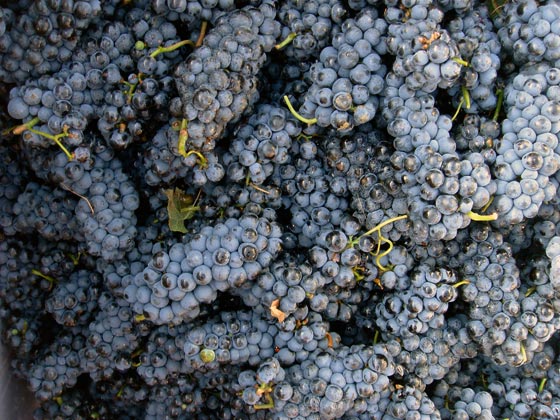
As Lambrusco Sorbara, is a wine created to be drunk young. It perfectly complements the specialty of the local cuisine – cotechino (pork sausages slow cooking).
Reggiano (Reggiano)
The biggest regions that produce wine from Lambrusco. The name of the province of Reggio Emilia (Reggio Emilia), which produces these wines. All wines Reggiano is made from variations of Lambrusco, sparkling red but in addition, it can be quiet dry red and sparkling white wines. Classic Lambrusco is a red sparkling wine is a mixture of different variations of this variety, from almost dry to semi-sweet versions.
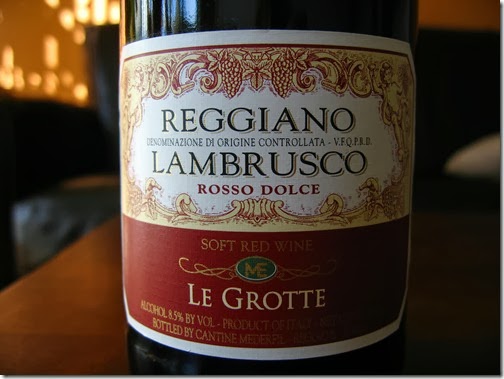
Reggiano is especially known for its amabile (semisweet) and dolce (sweet) versions, which contain up to 15% of partially fermented grapes anchellotta, giving the wine its natural sweetness; the rest 85% is for other varieties of Lambrusco (Maestri, Marani, Salamino and Monstericco).
Sweet versions, usually made semi-sparkling – frizzante. White sparkling made from the same varieties, but without contact with the ridges and the skin of fruit, to avoid staining and enrichment of the wine tannins. Pink with short contact with the skins of the grapes.
The best examples Reggiano is a perfect balance of ripeness, fullness and acidity, perfectly combined with local food: zampone, Parma ham, cheese and some Parmigiano Reggiano.
Mantovano Lambrusco (Lambrusco Mantovano )
Lambrusco mantovano is a separate DOC (controlled area of origin of the wine) in Lombardy. And this is the only territory outside of the traditional Lambrusco Emilia-Romagna, which allowed its production.
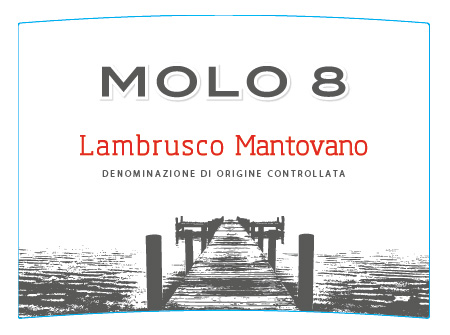
Although the surroundings of Mantua received the DOC status in 1987, the history of local wine making go back centuries and dates back to the time of the Benedictines.
The wine-growing area lies between the Northern banks of the Po river and the city of Mantua in the South-Eastern part of Lombardy – where it is wedged between the neighboring regions of Emilia-Romagna and Veneto.
Here Lambrusco do, as a rule, dry – rosso (red) and rosato (rose), although there are a small number of semi-dry versions. The alcohol content is typically low.
In accordance with the requirements of DOC Lambrusco Mantovano wine must be 85% composed of varieties of Lambrusco viadanese (Viadanese , which they call Grapello Ruperti), Maestri (Maestri), cellar (Marani) and/or Salamino (Salamino). The remaining 15% are anchellotta (Ancellotta), brugnola (Brugnola, aka Fortana), Sorbara (Sorbara) and/or grasparossa (Grasparossa, here called Grappello Grasparossa).
These wines have a ruby color and a bouquet reminiscent of the scent of violets.
Serve Lambrusco should be chilled to around 10 degrees (Celsius). However, if it is a very simple option, with a simple brute bouquet , it makes sense to cool it even stronger by 2-3 degrees.
What Lambrusco is different from champagne?
Strictly speaking, between champagne and Lambrusco have nothing in common, except for the presence of bubbles and similar bottle shape.
- Grade. Lambrusco is made from the same and other local varieties, which in France do not grow.
- Taste. Depends not only on varieties, but also to a very large extent, from the growing of grapes and the production method. Therefore, even if Lambrusco made from the same varieties and in the same way as champagne, the taste would still be different (due to differences in climate, soil composition, etc.)
- The method of production. Lambrusco is produced on the simplified technology, which is called “the Sharma method” and champagne is a complex and expensive “classic champagne technology”.
- Color. Champagne is not red. Max pink.
- Sweetness. Lambrusco often make sweet. Champagne is almost always dry and very dry wine.